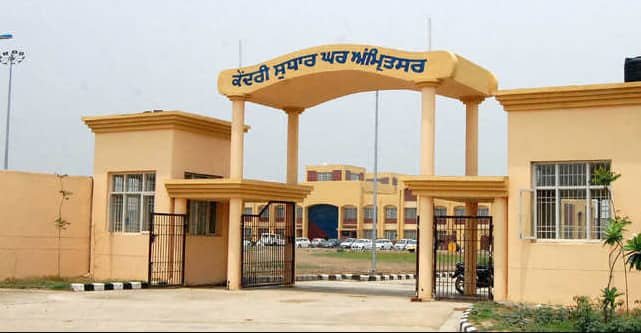
Amritsar Central Jail is one of Punjab’s most important and sensitive prisons, sitting close to the city’s famous Golden Temple. Unusually, it’s actually made up of two separate prisons within a single complex — Central Jail I and Central Jail II, the latter also known as the Security Jail. Since its upgrade to Central Jail status in 1969, the facility has served as a key administrative hub overseeing several other prisons across the wider Amritsar region, though its high-security profile has also made it the site of past jailbreaks and ongoing security concerns.
| Quick Facts | Details |
|---|---|
| Full name | Amritsar Central Jail (Amritsar Prison) |
| Location | Airport Road, Amritsar, Punjab |
| Present complex established | 1957, as a District Jail |
| Upgraded to Central Jail | 1969 |
| Elevated to Headquarter Jail | 1976 |
| Structure | Two separate prisons: Central Jail I and Central Jail II (Security Jail) |
| Status | Operational |
| Managed by | Punjab Prisons Department |
Where Exactly Is It Located
Amritsar Central Jail sits along Airport Road in Amritsar city, roughly 4 km southwest of the Golden Temple, one of Sikhism’s holiest sites.
- Address: Central Jail, Airport Road, Amritsar, Punjab – 143009
- Nearby landmark: About 4 km from the Golden Temple and Akal Takht
- Access: Well connected via Amritsar’s city bus network and easily reachable by auto or cab from most parts of the city, including Amritsar Junction railway station
Its location along Airport Road places it on one of the city’s key transit corridors, connecting central Amritsar toward the airport and surrounding districts.
The Origins: From a Small City Jail to a Major Complex
Before the current prison complex existed, Amritsar’s jail was a comparatively small facility located near the Red Cross Building in the city.
- The present Prison Complex came into existence in 1957, initially operating as a District Jail
- It was upgraded to full Central Jail status in 1969
- In 1976, the facility was elevated further to become a Headquarter Jail, given administrative control over several other prisons across the wider region — including the Central Jails of Gurdaspur and Jalandhar, the District Jails of Kapurthala and Hoshiarpur, and the Sub Jails of Patti, Phagwara, Dasuya, and Pathankot
This administrative elevation placed Amritsar at the top of a regional prison hierarchy, overseeing facilities across multiple districts of Punjab rather than functioning as a standalone jail.
A Complex Within a Complex
One of the more distinctive features of Amritsar’s prison system is its dual structure.
- Central Jail I functions as the primary facility within the complex
- Central Jail II, also known as the Security Jail, operates as a separate high-security section within the same overall complex, intended for more sensitive or higher-risk inmates
This split structure allows the facility to segregate different categories of prisoners while still functioning under unified administrative oversight, a design not commonly seen at other Indian central jails covered so far.
Security Incidents
Given its designation as one of Punjab’s “most important and sensitive” prisons, Amritsar Central Jail has faced periodic security challenges over the years.
- A notable jailbreak saw three inmates escape by scaling the jail’s 25-foot perimeter wall, prompting authorities to propose installing an electric barbed wire fence along the walls as a security upgrade
- Scanners and other security equipment have been installed at the facility over time as part of ongoing efforts to tighten security protocols
These incidents reflect challenges common to several of Punjab’s high-security prisons, where overcrowding and contraband smuggling have repeatedly tested jail security measures.
Proposed Relocation
At one point, Punjab authorities floated plans to relocate Amritsar Central Jail entirely, repurposing its existing site for commercial development.
- A proposal was raised to build a world-class trade centre and residential complex on the jail’s current land, once the facility was vacated and shifted to a new location
- As with several similar relocation proposals for older Indian jails, this plan does not appear to have progressed to completion, and the jail continues to operate at its original Airport Road site
Community and Rehabilitation Programs
Amritsar Central Jail has hosted a number of outreach and rehabilitation initiatives over the years.
- A “Prison Community Interface” program was organised at the facility in November 2006, aimed at connecting inmates with the broader community
- A national training program titled “Seeing is Learning” was also conducted at the prison
- Spiritual leader Swami Ramdev visited the facility in November 2006, extending outreach to inmates
Can You Visit Amritsar Central Jail
Amritsar Central Jail is not open to the general public, since it functions as an active correctional facility, including a dedicated high-security section. Visits are restricted to legal representatives and approved family members under standard Punjab Prisons Department procedures.
FAQs
Q1: Why does Amritsar have two central jails in one complex?
A. The facility is structured as Central Jail I and Central Jail II (the Security Jail), allowing the complex to separate general inmates from those requiring higher security within the same administrative site.
Q2: Is Amritsar Central Jail being relocated?
A. A proposal was floated at one point to shift the jail and redevelop its site into a trade centre and residential complex, but as of available information, it continues operating at its original location.
Q3: What administrative role does Amritsar Central Jail play in Punjab’s prison system?
A. Since 1976, it has functioned as a Headquarter Jail, exercising administrative oversight over several other prisons across the region, including facilities in Gurdaspur, Jalandhar, Kapurthala, Hoshiarpur, and other nearby towns.
Q4: Has the jail experienced any major security breaches?
A. Yes, it has seen at least one notable jailbreak in which inmates scaled the perimeter wall, prompting proposals for enhanced security measures like electric fencing.