The District and Sessions Court Faridabad — located in Sector 12, Faridabad, Haryana, barely a mile from the National Highway — is the apex trial court for one of India’s most industrially significant and densely populated districts, serving a city founded in 1607 by Sufi saint Shaikh Farid and now ranking as Haryana’s largest city and one of the National Capital Region’s most important manufacturing and industrial centres. Established on December 8, 1980, under the administrative supervision of the Punjab and Haryana High Court at Chandigarh, the Faridabad District Court has grown from a modest six-judge establishment to a comprehensive multi-court institution serving millions of citizens — and its new court complex building inaugurated in 2017 stands as one of Haryana’s finest contemporary judicial infrastructure achievements.
History
The city of Faridabad carries one of Haryana’s most historically layered origin stories. The city of Faridabad was founded in the year 1607 by Shaikh Farid, also known as Baba Farid — an eminent Sufi saint and treasurer of the Mughal emperor Jahangir — established in order to protect the Grand Trunk Road. The city was later announced as the headquarters of Faridabad Pargana under the rule of Ballabgarh. After the death of Aurangzeb, Tewatia Jat Sardar Gopal Singh attacked the city, established a treaty with Murtija Khan — the Mughal officer of Faridabad — and became the Chaudhary of the Pargana. After the British takeover, and following the partition of India in 1950, a large influx of refugees from Pakistan settled here, with industries established to rehabilitate them, transforming Faridabad into one of north India’s most significant industrial cities.
Initially part of the district of Gurgaon, Faridabad was established as a separate district on August 15, 1979. District Courts Faridabad came into existence on December 8, 1980, with Shri A.P. Chaudhary as the first District and Sessions Judge, Sh. Surinder Saroop as Additional District and Sessions Judge, and Sh. B.P. Jindal as Senior Sub Judge-cum-CJM. From an initial Bar Association strength of 50-55 members, the bar has grown to approximately 2,000 advocates today.
The foundation stone of the new court complex was laid on July 7, 2012 by Justice T.S. Thakur, then Judge of the Supreme Court of India, in the presence of Acting Chief Justice Punjab and Haryana High Court and other senior judges. The new complex was inaugurated on April 29, 2017 by Justice A.K. Sikri, Judge of the Supreme Court of India, in the presence of the Chief Justice of the Punjab and Haryana High Court and other dignitaries.
Structure and Composition
| Dimension | Detail |
| Established | December 8, 1980 |
| First District and Sessions Judge | Shri A.P. Chaudhary |
| Location | Sector 12, Faridabad, Haryana — one mile from National Highway |
| City founded | 1607 — by Sufi saint Shaikh Farid (Baba Farid) |
| Faridabad became separate district | August 15, 1979 |
| Foundation stone of new complex | July 7, 2012 — by Justice T.S. Thakur, Supreme Court |
| New complex inaugurated | April 29, 2017 — by Justice A.K. Sikri, Supreme Court |
| New complex structure | Seven-storey building — 19 air-conditioned courtrooms |
| Bar Association strength | Approximately 2,000 advocates enrolled |
| High Court supervision | Punjab and Haryana High Court, Chandigarh |
| Jurisdiction | Faridabad Sessions Division |
| Digital services | e-Courts Mission Mode Project — virtual hearings, e-filing, SMS alerts |
| Legal Aid | District Legal Services Authority Faridabad — SBI Collect online |
Architecture — The Modern Seven-Storey Complex
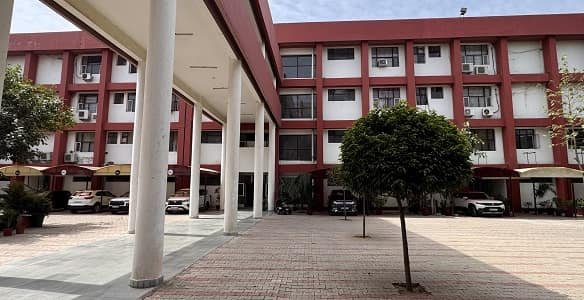
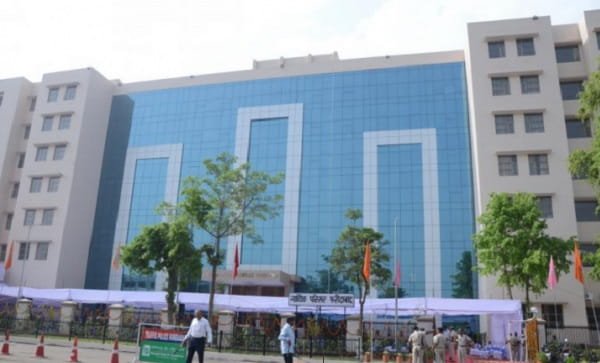
The new court complex at Sector 12, Faridabad, inaugurated in April 2017, represents a landmark investment in Haryana’s district judicial infrastructure. The seven-storey building houses 19 fully air-conditioned courtrooms — a significant improvement over the earlier facilities — along with dedicated administrative spaces, judge chambers, advocates’ facilities, and public service areas. All 19 courtrooms being air-conditioned reflects a genuine commitment to the physical comfort of litigants, advocates, witnesses, and court staff who spend long hours in these spaces pursuing justice.
The complex’s strategic location in Sector 12, approximately one mile from the National Highway, ensures accessibility for litigants from across Faridabad’s extensive industrial belt — from Ballabgarh in the south to NHPC Colony in the north — as well as from the areas adjoining Delhi that constitute Faridabad’s dense residential zones. The District Legal Services Authority operates from within the court complex, providing free legal aid to eligible citizens and facilitating mediation and alternative dispute resolution.
Frequently Asked Questions
Q: When was the Faridabad District Court established?
A: December 8, 1980.
Q: Who was the first District and Sessions Judge?
A: Shri A.P. Chaudhary.
Q: When was Faridabad established as a separate district?
A: August 15, 1979 — carved out from Gurgaon district.
Q: Who founded the city of Faridabad?
A: Sufi saint Shaikh Farid — also known as Baba Farid — in 1607, to protect the Grand Trunk Road.
Q: When was the new court complex inaugurated?
A: April 29, 2017 — by Supreme Court Judge Justice A.K. Sikri.
Q: What is the new complex’s structure?
A: A seven-storey building with 19 fully air-conditioned courtrooms.
Q: Which High Court supervises the Faridabad District Court?
A: The Punjab and Haryana High Court at Chandigarh.
Q: How many advocates are enrolled in the Faridabad Bar Association?
A: Approximately 2,000 advocates.