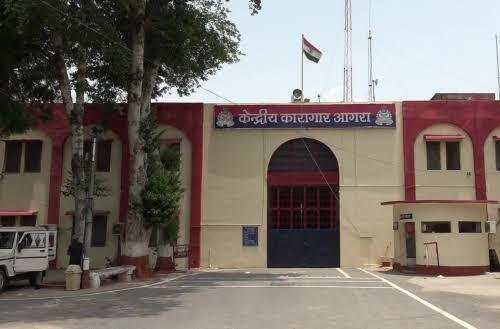
Agra Central Jail holds the distinction of being Uttar Pradesh’s first central jail, with construction beginning in 1849 under British colonial administration. What sets this facility apart from most other Indian prisons, though, is its extraordinary reputation as a centre of world-class carpet weaving — a craft so refined that a rug woven here was gifted to Queen Victoria, and prisoners were sent to London to showcase their work at the 1886 Colonial and Indian Exhibition. Today, the jail continues to operate in Agra’s Lohamandi area, still grappling with the same overcrowding challenges common to many of India’s older central prisons.
| Quick Facts | Details |
|---|---|
| Full name | Agra Central Jail |
| Location | Lohamandi, Agra, Uttar Pradesh |
| Construction began | 1849 |
| Distinction | First central jail in Uttar Pradesh |
| Authorised capacity | 1,350 inmates |
| Actual population | Around 2,000 inmates |
| Status | Operational |
| Managed by | Uttar Pradesh Prisons Department |
Where Exactly Is It Located
Agra Central Jail is located in the Lohamandi area of Agra city, a locality that has grown up around the historic prison over generations.
- Address: Central Jail, Lohamandi, Agra, Uttar Pradesh
- Nearby landmark: Located within the Lohamandi locality of Agra
- Access: Well connected via Agra’s city bus network and easily reachable by auto or cab from most parts of the city
Agra’s status as a major historical and tourist hub, home to the Taj Mahal and Agra Fort, means the jail sits within a city otherwise defined by Mughal-era monuments rather than colonial infrastructure — making it something of an outlier in the city’s architectural landscape.
The Origins: Uttar Pradesh’s First Central Jail
Construction of Agra Central Jail began in 1849 under the supervision of William Woodcock of the Bengal Civil Service, making it the first facility of its kind established in what is now Uttar Pradesh.
- Some sources cite the jail’s formal establishment as a central jail in 1884, though construction itself dates back to 1849
- Built during a period when the British colonial administration was formalising long-term prison infrastructure across northern India
- Predates several other well-known UP central jails, including Naini and Bareilly, in terms of when construction first began
The Carpet Weaving Legacy
Agra Central Jail’s most distinctive historical claim to fame lies not in its role as a detention facility, but in its extraordinary output as a manufacturing centre for high-quality carpets.
- John W. Tyler, a British surgeon, took over as the jail’s superintendent in 1876 and held the position for 14 years, during which he transformed the prison into a major carpet-weaving hub
- In 1877, a carpet woven at the jail was gifted to Queen Victoria, cementing the facility’s reputation for exceptional craftsmanship
- In 1886, Tyler personally escorted 34 Indians, most of them prisoners, to London for the Colonial and Indian Exhibition, where their carpet weaving was put on public display
- A carpet designed by John Lockwood Kipling and Bhai Ram Singh for Queen Victoria’s Durbar Hall was reportedly woven by women prisoners at Agra
- Abdul Karim, who later became famous as “the Munshi,” Queen Victoria’s close confidant, worked as an assistant clerk at the jail before travelling to London for the same 1886 exhibition
This carpet-making tradition placed Agra Central Jail at the intersection of colonial labour exploitation and genuine artistic craftsmanship — prison-made carpets from British India became internationally recognised products, sold into European markets even as the labour behind them was forced.
Notable Figures Associated with the Jail
Beyond Tyler, the jail’s administrative history includes other notable British figures.
- Sir Horace Williamson was based at the jail in the early 20th century
- The prison’s carpet-weaving program continued to be recognised for its craftsmanship well beyond the colonial period, with its legacy still referenced in discussions of Indian jail-made textiles today
Present-Day Function and Overcrowding
Agra Central Jail continues to operate as an active correctional facility, though it faces significant capacity pressures common to many of India’s older central prisons.
- Authorised to hold 1,350 inmates, but current estimates suggest the jail houses around 2,000 prisoners, well above capacity
- Prisoners engage in various labour activities, earning daily wages ranging from roughly Rs 30 to Rs 40
- The facility includes a music room, library, and ongoing vocational training programs aimed at rehabilitation
- Overcrowding and sanitation challenges have been flagged as significant concerns affecting inmate health and wellbeing
- Notably, the jail does not house women prisoners, who are held at separate facilities
In 2022, inmates at Agra Central Jail made headlines after 29 of them cleared their board exams, reportedly inspired by the Bollywood film Dasvi, which focuses on an incarcerated politician pursuing his tenth-grade education — a small but notable example of the jail’s ongoing educational rehabilitation efforts.
Can You Visit Agra Central Jail
Agra Central Jail is not open to the general public, since it functions as an active correctional facility. Visits are restricted to legal representatives and approved family members under standard Uttar Pradesh Prisons Department procedures.
FAQs
Q1: Why is Agra Central Jail famous for carpets?
A. Under superintendent John W. Tyler, the jail became a major carpet-weaving centre in the late 19th century, producing work so refined that one carpet was gifted to Queen Victoria in 1877, and prisoners’ weaving was showcased at London’s 1886 Colonial and Indian Exhibition.
Q2: Is Agra Central Jail really the first central jail in Uttar Pradesh?
A. Yes, it’s widely recognised as UP’s first central jail, with construction beginning in 1849, predating several other well-known central jails in the state.
Q3: How overcrowded is Agra Central Jail?
A. It’s authorised for 1,350 inmates but currently holds around 2,000, putting it significantly over its rated capacity.
Q4: Did any well-known historical figures work at Agra Central Jail?
A. Yes, Abdul Karim, who later became Queen Victoria’s close confidant known as “the Munshi,” worked as an assistant clerk there before travelling to London for the 1886 exhibition.