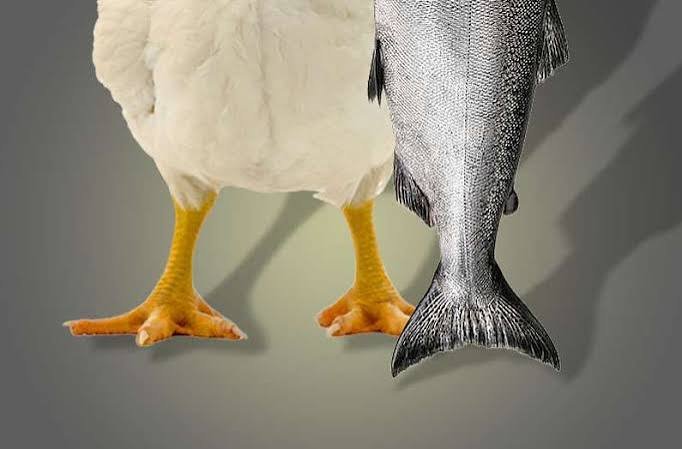
“Chicken or fish?” sounds like a simple protein question until you compare chicken breast with salmon, rohu with chicken thigh, or grilled fish with fried chicken. Both foods provide complete, high-quality protein, but their fat composition and micronutrients can differ considerably depending on the exact variety and cut.
Lean chicken is particularly useful when the goal is a protein-rich food with relatively little fat. Fish can provide similar amounts of protein while certain oily varieties also supply long-chain omega-3 fatty acids that chicken contains only in much smaller amounts.
So, chicken is an excellent lean and versatile protein source, while fish has an advantage when protein is combined with beneficial omega-3 fats and certain micronutrients. For people who eat both, including variety is generally more useful than permanently choosing one.
Chicken vs Fish: Quick Comparison
| Feature | Chicken | Fish |
|---|---|---|
| Protein quality | Complete, high-quality | Complete, high-quality |
| Protein content | High | High |
| Fat | Depends strongly on cut and skin | Depends strongly on fish species |
| Omega-3 fats | Relatively low | High in certain oily fish |
| Vitamin B12 | Provides some | Many fish are good sources |
| Vitamin D | Usually limited | Some oily fish are useful sources |
| Calories | Low to moderate in lean cuts | Varies from very lean to energy-dense |
| Cooking versatility | Excellent | Excellent |
| Indian dishes | Extremely versatile | Strong regional variety |
| Main advantage | Lean, convenient protein | Protein plus useful fats in certain species |
How Much Protein Does Chicken Provide?
Chicken is a concentrated source of animal protein.
The exact amount depends on the cut and whether values are measured before or after cooking.
Skinless chicken breast is particularly protein-dense because it contains relatively little fat.
Chicken thigh contains high-quality protein too but generally has more fat than breast.
This means saying simply “chicken contains X grams of protein” can be misleading without specifying:
- Breast or thigh
- Skin-on or skinless
- Raw or cooked
- Preparation method
As a general guide, cooked chicken can provide roughly 25–30 grams or more of protein per 100 grams, depending on the cut and preparation.
How Much Protein Does Fish Provide?
Fish is also a high-quality protein food.
Many commonly eaten fish provide approximately 20–25 grams of protein per 100 grams when cooked, although values vary substantially among species and preparation methods.
Indian consumers have a wide variety of fish available, including:
- Rohu
- Katla
- Hilsa
- Pomfret
- Surmai
- Mackerel
- Sardines
- Salmon in some markets
- Various regional freshwater and marine fish
They should not be treated as nutritionally identical.
A fatty fish such as mackerel has a different nutritional profile from a relatively lean fish.
1. Protein Quantity
Winner: Chicken has a slight advantage in some comparisons
Lean chicken breast can provide a particularly high amount of protein relative to its weight.
Many fish provide slightly less protein per 100 grams, although the difference is often modest.
Both can easily function as the main protein component of a meal.
For most people, a difference of a few grams per 100 grams is less important than the overall dietary pattern.
The serving size matters too.
A larger serving of fish can obviously provide more protein than a smaller serving of chicken.
2. Protein Quality
Winner: Tie
Both chicken and fish provide complete protein.
That means they supply all nine essential amino acids.
Both are also generally highly digestible.
From a basic protein-quality perspective, there is little reason to declare one dramatically superior.
People who consume a varied diet can meet their protein needs using either alongside other foods.
3. Fat Content
Winner: Depends on the cut or fish
Chicken is often called a lean food, but that description fits some forms better than others.
Skinless chicken breast is relatively lean.
Chicken thigh and skin-on chicken generally contain more fat.
Fish varies even more.
Some fish are very lean, while others are naturally rich in fat.
However, the amount of fat does not tell the whole story. The type of fat is also important.
That is where certain fish have a nutritional advantage.
4. Omega-3 Fatty Acids
Winner: Oily fish
Certain fish provide long-chain omega-3 fatty acids, particularly EPA and DHA.
Examples of fish known for useful omega-3 content include oily varieties such as:
- Sardines
- Mackerel
- Salmon
Exact levels vary by species, source and preparation.
Chicken does not provide comparable amounts of these marine omega-3 fats in typical servings.
This is one of the strongest reasons to include suitable fish in a varied diet rather than looking only at protein grams.
5. Calories
Winner: Depends on the comparison
Skinless chicken breast can provide a lot of protein without a large amount of fat, making it relatively energy-efficient.
Lean fish can be similarly light.
Oily fish contains more fat and therefore more calories.
But higher calories do not automatically make oily fish nutritionally worse. Some of that energy comes from nutritionally useful unsaturated fats, including omega-3 fatty acids.
For children and teenagers, food selection should not be based on unnecessary calorie restriction. Adequate energy and nutrients are essential for normal growth.
6. Vitamin B12
Winner: Fish often has an advantage
Fish can be an excellent source of vitamin B12, although amounts vary considerably among species.
Chicken also provides B vitamins, including B12 in smaller or varying quantities depending on the cut.
Vitamin B12 supports normal red blood cell formation and nervous-system function.
However, neither chicken nor fish should be selected based on one vitamin alone.
Their overall nutrient profiles differ.
7. Vitamin D
Winner: Certain oily fish
Vitamin D occurs naturally in relatively few foods.
Some fatty fish can provide useful amounts.
Chicken is generally not a major natural source of vitamin D.
Again, not every fish contains the same amount.
Choosing fish solely because “fish has vitamin D” oversimplifies the issue. Species matters.
8. Minerals
Winner: Both provide useful minerals
Chicken and fish provide minerals, although the amounts and types differ.
Both can contribute nutrients such as:
- Phosphorus
- Selenium
- Zinc
- Other trace minerals
Certain fish eaten with edible small bones, such as some preparations of small fish, may also contribute calcium.
The nutritional value therefore depends partly on what type of fish is eaten and how it is prepared.
9. Digestion
Winner: Individual dependent
Fish is sometimes described as universally easier to digest than chicken.
That is too broad.
Texture, fat content, portion size and cooking method all affect how a meal feels after eating.
A lightly cooked fish dish may feel very different from heavily fried fish.
Similarly, grilled chicken breast differs from a rich butter-based chicken curry.
People should consider their own tolerance rather than relying on a universal digestion ranking.
10. Indian Cooking
Winner: Tie
Both have enormous culinary versatility in India.
Chicken can be prepared as:
- Chicken curry
- Tandoori chicken
- Chicken tikka
- Chicken stew
- Chicken pulao
- Grilled chicken
Fish has equally diverse regional applications:
- Bengali fish curry
- Kerala fish curry
- Goan fish curry
- Fish tikka
- Tawa fish
- Steamed fish
- Mustard-based fish preparations
The better ingredient often depends on the cuisine and dish rather than nutrition.
11. Frying Changes the Comparison
Winner: Grilling, steaming or moderate-oil cooking can keep either simpler
A food does not retain the exact same nutritional profile after every cooking method.
Deep-frying adds substantial cooking fat.
Breading or battering can also add refined flour and additional calories.
This means:
Deep-fried fish is not automatically a better meal than grilled chicken simply because it is fish.
Likewise, chicken cooked in a heavy cream-and-butter gravy differs from lightly cooked fish.
Useful cooking methods can include:
- Grilling
- Baking
- Steaming
- Tandoor cooking
- Light pan cooking
- Curry preparation with sensible amounts of oil
There is no need to eliminate traditional preparations, but cooking method should be considered when comparing the finished meals.
12. Food Safety
Winner: Both require careful handling
Raw chicken and raw fish are perishable foods and require proper storage and preparation.
Keep them refrigerated appropriately, prevent raw foods from contaminating ready-to-eat foods and cook them properly.
Separate utensils or thoroughly cleaned surfaces can help prevent cross-contamination.
Fish freshness also matters considerably.
Purchase seafood and poultry from reliable sources and follow appropriate refrigeration and storage instructions.
13. Fish Requires One Extra Consideration
Fish species differ not only in nutrients but also in their potential exposure to environmental contaminants.
Mercury is one example.
Some large predatory fish can accumulate higher mercury concentrations than many smaller species.
This does not mean fish should simply be avoided. Fish can provide valuable nutrients.
Rather, variety and appropriate species selection matter, particularly for groups such as pregnant people and young children, who may need to follow local food-safety guidance regarding certain fish.
Chicken or Fish: Which Should You Choose for Protein?
Choose chicken if:
- You want a versatile high-protein food.
- Lean protein is a priority.
- Skinless chicken breast is readily available.
- You frequently prepare curries, tikkas or grilled meals.
- You prefer its taste and texture.
Choose fish if:
- You want high-quality protein with greater nutritional variety.
- You eat oily fish that provides omega-3 fats.
- You enjoy regional fish dishes.
- You want foods that can contribute nutrients such as vitamin B12 and, in certain species, vitamin D.
- Fresh, appropriate fish is readily available.
If you eat both, rotating them can provide advantages from each.
Protein Is Only Part of the Meal
It is easy to compare chicken and fish by looking at a single protein number.
A better comparison considers what accompanies them.
For example:
Fish + rice + vegetables
and
Chicken + roti + vegetables
can both provide balanced combinations of protein, carbohydrates, fats and micronutrients.
Protein can also come from other foods throughout the week, including:
- Eggs
- Milk and curd
- Paneer
- Dal
- Chickpeas
- Rajma
- Soy foods
- Nuts and seeds
Chicken’s major strength is its ability to provide a large amount of high-quality protein, particularly from lean cuts.
Fish’s distinctive advantage is that certain varieties combine high-quality protein with substantial long-chain omega-3 fatty acids and useful micronutrients.
For people who consume both foods, dietary variety is generally more useful than trying to make every meal contain the single highest-protein option.
FAQs
Q1. Which has more protein, chicken or fish?
A. Lean chicken breast often provides slightly more protein per 100 grams than many fish, but both are high-quality protein sources. Exact values depend on the chicken cut, fish species and cooking method.
Q2. Why is fish considered a good protein source?
A. Fish provides complete, highly digestible protein. Certain oily fish also provide long-chain omega-3 fatty acids, while some species are useful sources of vitamin B12 and vitamin D.
Q3. Is chicken healthier than fish?
A. Neither is universally healthier. Skinless chicken can be very lean and protein-rich, while oily fish provides nutrients such as EPA and DHA omega-3 fats. Variety can provide advantages from both.
Q4. Which fish are good sources of omega-3 fats?
A. Oily fish such as sardines, mackerel and salmon are well known for their omega-3 content. The exact amount varies by species, source and preparation.
Q5. Does frying reduce the nutritional advantage of chicken or fish?
A. Frying does not remove all their protein or nutrients, but deep-frying can add substantial cooking fat and calories. Grilling, steaming, baking, tandoor cooking or moderate-oil curries can provide alternatives for regular meals.