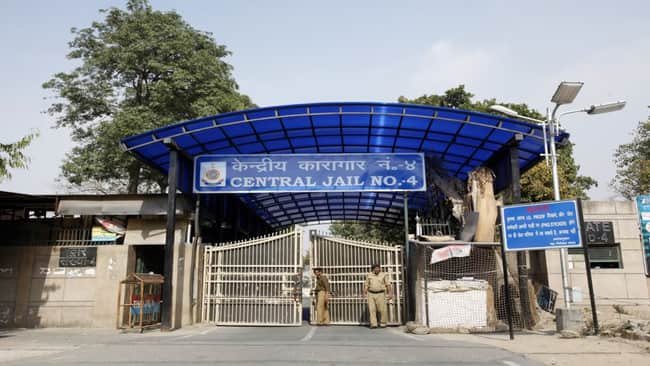
Tihar Jail is the largest prison complex in South Asia, sprawling across more than 400 acres in west Delhi. What began in 1958 as a single modest central jail with room for just 1,273 inmates has grown into a sprawling nine-prison complex housing tens of thousands of people today. Few Indian prisons have witnessed as much national history unfold within their walls — from the execution of Indira Gandhi’s assassins to the hanging of the Nirbhaya case convicts, and a roster of inmates spanning politicians, gangsters, serial killers, and student activists.
| Quick Facts | Details |
|---|---|
| Full name | Tihar Prisons (Tihar Jail) |
| Location | Tihar Village, West Delhi |
| Established | 1958 |
| Structure | 9 central prisons + 1 district jail complex |
| Total area | Over 400 acres |
| Sanctioned capacity | Around 10,000+ across facilities |
| Actual population | Regularly exceeds 14,000–17,000+ inmates |
| Status | Operational |
| Managed by | Department of Delhi Prisons, Government of Delhi |
Where Exactly Is It Located
Tihar Jail sits in Tihar Village, roughly 8 km from Chanakya Puri in west Delhi, close to Ashok Nagar.
- Address: Tihar Prisons Complex, Tihar Village, New Delhi
- Nearby landmark: Close to Chanakya Puri and Ashok Nagar, approximately 8 km from central Delhi
- Access: Well connected via Delhi Metro (Tihar-affiliated stations nearby) and the city’s extensive bus network
Its location was originally chosen precisely because it sat far from Delhi’s main city area at the time, offering the space needed for a facility of this scale — space that has proven essential as the complex has expanded repeatedly over the decades.
The Origins: A Modest Beginning Under Punjab’s Control
Before Tihar existed, Delhi’s main jail was a small facility near Delhi Gate. The site’s move to Tihar Village in 1958 marked the beginning of what would eventually become India’s most famous prison.
- Commissioned in 1958 with a sanctioned capacity of just 1,273 prisoners
- Despite being physically located in Delhi, the jail initially remained under the administrative control of the Punjab government, a legacy arrangement from before Delhi’s reorganisation as a Union Territory in 1956
- Control was formally transferred from Punjab to the Delhi administration in 1966
- The Punjab Jail Manual continued to govern Delhi’s prisons until April 1988, when a dedicated Delhi Jail Manual was finally drafted
Expansion Into a Nine-Prison Complex
Tihar’s growth from a single jail into South Asia’s largest prison complex happened gradually, in a series of expansions across four decades.
- 1980: A District Jail was constructed with capacity for 740 prisoners
- 1984–85: The original Central Jail was trifurcated into Central Jail No. 1, 2, and 3, with individual capacities of 565, 455, and 740 prisoners respectively
- 1990: The District Jail was elevated to Central Jail status, becoming Central Jail No. 4
- 1996: Central Jail No. 5 was commissioned specifically for adolescent prisoners aged 18 to 21, with capacity for 750
- 2000: Central Jail No. 6 was commissioned exclusively for female prisoners, with capacity for 400
This piecemeal expansion eventually produced the current complex of 9 functional prisons spread across over 400 acres, run under the unified Department of Delhi Prisons.
Prison Industries and Rehabilitation
Tihar has developed one of India’s most extensive prison industry programs, built around the “Tihar” brand of inmate-manufactured goods.
- The Prison Factory opened in 1961 at Central Jail No. 2, producing carpentry, handloom and powerloom weaving, tailoring, chemical products, handmade paper, commercial art, and bakery items
- A shoe manufacturing plant launched in 2009 currently employs around 700 inmates, with 25% of their earnings deposited into a Victim Welfare Fund supporting compensation for victims and their families
- Under Inspector General Kiran Bedi, the jail underwent notable reform-focused changes to inmate treatment and rehabilitation programs
High-Profile Executions
Tihar has hosted some of independent India’s most significant capital punishment cases.
- Ranga and Billa — convicted of raping and murdering a teenage girl and killing her brother, hanged on 31 January 1982
- Satwant Singh and Kehar Singh — convicted in the assassination of Prime Minister Indira Gandhi
- Afzal Guru — the main convict in the 2001 Indian Parliament attack, hanged in February 2013
- The four Nirbhaya case convicts — Mukesh Singh, Pawan Gupta, Vinay Sharma, and Akshay Thakur, hanged together at 5:30 AM on 4 March 2020, marking the first time in Tihar’s history that four convicts were executed simultaneously, following the 2012 gang rape and murder of a 23-year-old physiotherapy student
Notable Inmates
Few Indian prisons can match Tihar’s roster of high-profile inmates across politics, crime, and activism.
- Politicians: Sanjay Gandhi, Lalu Prasad Yadav (fodder scam case), P. Chidambaram (INX Media case), D.K. Shivakumar, Arvind Kejriwal, Manish Sisodia, Satyendra Kumar Jain, Kanhaiya Kumar, Umar Khalid, Kanimozhi, A. Raja
- Criminals and gangsters: Charles Sobhraj (the “bikini killer,” who famously escaped from Tihar), Chhota Rajan, Sher Singh Rana (who also escaped in February 2004), Lawrence Bishnoi, Yasin Malik
- Business figures: Subrata Roy, industrialist Lalit Mohan Thapar
- Activists and academics: Anna Hazare, Nobel laureate Abhijit Banerjee (during his JNU student days)
- Others: Sportsman Milkha Singh (briefly, for a minor railway offence), and separatist leader Maqbool Bhat
Overcrowding
Despite its scale, Tihar has long struggled with severe overcrowding relative to its sanctioned capacity.
- Sanctioned capacity across facilities sits around 6,250 to 10,000, depending on the counting method used across different jail numbers
- Actual population has regularly run between 14,000 and 17,000+ inmates, with undertrials making up the overwhelming majority of the population
- This chronic overcrowding has been linked to recurring reports of internal violence, suicides, and disciplinary issues within the complex
Can You Visit Tihar Jail
Tihar Jail is not open to the general public, since it functions as an active maximum-security correctional complex. Visits are restricted to legal representatives and approved family members under standard Department of Delhi Prisons procedures.
FAQs
Q1: Why was Tihar Jail initially run by Punjab instead of Delhi?
A. Because Delhi’s administrative reorganisation as a Union Territory in 1956 didn’t immediately transfer control of its institutions, Tihar remained under Punjab’s jurisdiction until 1966.
Q2: How many prisons make up the Tihar complex today?
A. It comprises 9 central prisons plus a district jail, spread across more than 400 acres, making it one of the largest prison complexes in South Asia.
Q3: What was historic about the 2020 Nirbhaya case hangings?
A. It marked the first time in Tihar’s history that four convicts were executed simultaneously, following the 2012 Delhi gang rape and murder case.
Q4: How overcrowded is Tihar Jail?
A. Despite a sanctioned capacity generally cited around 10,000, the complex has regularly held between 14,000 and 17,000+ inmates, with undertrials forming the large majority.