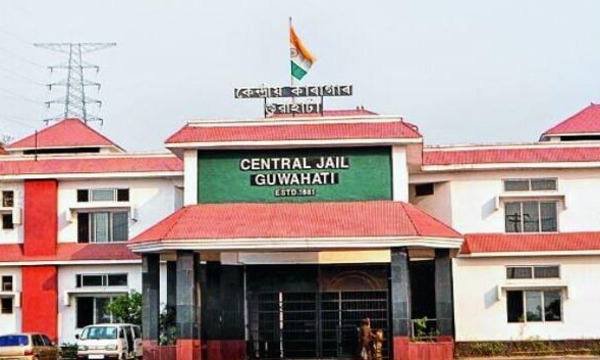
Guwahati Central Jail is Assam’s primary central prison, with a history stretching back to 1881 when it first opened in the heart of the old city at Fancy Bazaar. In 2010, after 129 years at that cramped location, the jail was relocated to a purpose-built campus at Sarusajai, giving it far more room to operate. Over the decades, it has held a striking mix of inmates — from Manipuri insurgent leader Rajkumar Meghen, who ran a music school and library from behind bars, to prominent anti-CAA activists like Akhil Gogoi and Sharjeel Imam, whose detentions here drew national attention.
| Quick Facts | Details |
|---|---|
| Full name | Guwahati Central Jail |
| Location | Sarusajai, Guwahati, Assam |
| Original jail opened | 1881, at Fancy Bazaar |
| Relocated to Sarusajai | 30 April 2010; new jail operational from April 2012 |
| Total area | 28 acres (including 11 acres of actual jail area) |
| Authorised capacity | 1,000 inmates (900 male, 100 female) |
| Security class | Maximum |
| Status | Operational |
| Managed by | Assam Prisons Department |
Where Exactly Is It Located
Guwahati Central Jail now sits in the Sarusajai area, along National Highway 37 near Lokhra Road, having moved from its original cramped location in the busy Fancy Bazaar commercial district of central Guwahati.
- Address: Central Jail, National Highway 37, Lokhra Road, Sarusajai, Guwahati, Assam – 781034/781040
- Nearby landmark: Close to Lokhra and the Sarusajai Sports Complex area
- Access: Around 10 km from Guwahati Railway Station and roughly 27 km from Lokpriya Gopinath Bordoloi International Airport; well connected via city bus routes and NH 37
The move to Sarusajai gave the jail considerably more breathing room compared to its original site, which had sat right in the middle of one of Guwahati’s busiest commercial areas for well over a century.
The Origins: 1881, Fancy Bazaar
The first jail in Guwahati was established in 1881 at Fancy Bazaar, with an original capacity of 500 inmates. This places it in the same generation as several other British-era central jails built across India during the late 19th century, part of the broader colonial push to formalise the prison system following the Prisons Act of 1894.
- Built as part of the expanding colonial penal infrastructure in Assam following the East India Company’s consolidation of the region after the Treaty of Yandabo in 1826
- Predated by Tezpur Jail, which was established in 1846 as Assam’s first prison facility
- Operated at the Fancy Bazaar site for well over a century, becoming increasingly unsuitable as Guwahati grew into a major urban centre around it
The 2010 Relocation to Sarusajai
By the early 2000s, the ageing Fancy Bazaar jail had become a serious constraint, sitting in the heart of a rapidly urbanising city with no room to expand. The Assam government responded with a multi-phase project to build a new facility.
- Approved during the 2002–03 financial year as a joint public-private modernisation effort
- The new complex at Sarusajai was completed and the jail formally moved there on 30 April 2010
- Upgraded capacity to 1,000 inmates (900 male and 100 female) as part of the relocation
- The new facility became fully operational in April 2012, when 805 inmates were transferred there
This shift mirrors similar relocations seen at other Indian central jails that had outgrown their original colonial-era city-centre sites.
Notable Inmates
Guwahati Central Jail has held a wide range of prisoners over the years, from insurgent leaders to prominent political activists.
- Rajkumar Meghen (alias Sanayaima), chairman of the Manipur-based United National Liberation Front (UNLF), served a 10-year sentence here starting in 2016 after conviction on charges of criminal conspiracy, terrorist activity, and waging war against the nation. During his imprisonment, he set up a music school, a library, and a rock garden for fellow inmates, contributing to a reduction in his sentence for good behaviour. He was released in 2019.
- Akhil Gogoi, founder of the Krishak Mukti Sangram Samiti (KMSS) and a prominent anti-Citizenship Amendment Act (CAA) activist, was detained here from December 2019 until his acquittal by an NIA court on 1 July 2021.
- Sharjeel Imam, the former JNU student arrested over remarks related to the anti-CAA protests, was also held at Guwahati Central Jail, where he tested positive for COVID-19 during his custody in 2020.
- Ranjan Daimary, a former leader of the now-disbanded militant group NDFB, was also lodged here at various points.
Protests and Human Rights Concerns
The jail has seen several notable episodes of internal unrest and scrutiny over prisoner treatment.
- In October 2010, eight inmates staged a hunger strike demanding clean drinking water and adequate food, following a clash between inmate groups that left one striker seriously injured
- In June–July 2020, amid the COVID-19 pandemic, over 1,200 inmates across Assam’s jails, including Guwahati Central Jail, went on hunger strike demanding the release of Akhil Gogoi and raising concerns about healthcare access during the pandemic
- Human rights organisations, including People’s Watch and Human Rights Alert, raised concerns with the National Human Rights Commission (NHRC) over delays in medical treatment for Gogoi during his detention, citing severe back pain and kidney-related complications
- The jail was declared a COVID-19 containment zone in 2020 after several high-profile inmates, including Gogoi and Imam, tested positive for the virus
Can You Visit Guwahati Central Jail
Guwahati Central Jail is not open to the general public, since it functions as an active maximum-security correctional facility. Visits are restricted to legal representatives and approved family members under standard Assam Prisons Department procedures.
FAQs
Q1: When did Guwahati Central Jail move to its current location?
A. The jail relocated from its original Fancy Bazaar site to Sarusajai on 30 April 2010, with the new facility becoming fully operational in April 2012.
Q2: Who was Rajkumar Meghen and why is he notable at this jail?
A. He was the chairman of the Manipur-based insurgent group UNLF, who served a 10-year sentence here and became known for setting up a library, music school, and garden for fellow inmates during his imprisonment.
Q3: Why did Akhil Gogoi become associated with Guwahati Central Jail?
A. The anti-CAA activist and KMSS founder was detained here from December 2019 to July 2021 under UAPA charges, and his prolonged detention and health concerns drew significant national attention and NHRC scrutiny.
Q4: How old is Guwahati Central Jail?
A. The original jail dates back to 1881, though the current facility at Sarusajai has only been operational since 2010–2012, following the relocation from its century-old Fancy Bazaar site.