Maharashtra — the second-most populous state in India, home to 36 districts and serving over 120 million citizens — operates one of India’s most extensive and institutionally complex district court networks, functioning under the administrative supervision of the Bombay High Court. From the colonial-era court buildings of Pune and Nashik to the modern complexes of Navi Mumbai and Nagpur, Maharashtra’s district judiciary spans the Marathwada region, Vidarbha, Konkan coast, and the highly urbanised Mumbai Metropolitan Region — each geographic zone generating distinct types and volumes of litigation reflecting the extraordinary economic and demographic diversity of India’s most commercially powerful state.
History
The legal history of Maharashtra is inseparable from the legal history of the Bombay Presidency — the vast colonial administrative unit whose judicial traditions have shaped courts from Mumbai’s High Court benches to the smallest taluka magistrate’s court across the state. The legal history of Bombay began in 1661, when Bombay became a British possession as part of the dowry of the Portuguese Princess Catherine of Braganza when she married King Charles II. From those origins — when Bombay was little more than a small fishing village — grew the judicial administration of one of India’s most complex provincial and state court systems.
The first British Court of Justice was inaugurated in Bombay in 1672. The establishment of the Bombay High Court on August 14, 1862 under Letters Patent created the apex supervisory authority for all district and subordinate courts across the Bombay Presidency — and subsequently across Maharashtra — establishing a continuous institutional relationship between the High Court and the district courts that has functioned unbroken for over 163 years.
With the formation of the State of Maharashtra on May 1, 1960, following the bifurcation of the bilingual Bombay State, the district court network became exclusively Maharashtra’s — with the Bombay High Court’s benches at Nagpur and Aurangabad (and subsequently Kolhapur from August 18, 2025) extending supervisory reach across the state’s vast geography.
Structure — Maharashtra’s 36 District Courts
| Region | Key Districts | High Court Bench |
| Mumbai Metropolitan Region | Mumbai, Thane, Raigad, Palghar | Bombay High Court — Principal Seat |
| Pune Division | Pune, Nashik, Ahmednagar, Kolhapur | Bombay HC — Kolhapur Bench (Aug 2025) |
| Aurangabad Division | Aurangabad (Chhatrapati Sambhajinagar), Latur, Osmanabad, Jalgaon | Bombay HC — Aurangabad Bench |
| Nagpur Division | Nagpur, Amravati, Yavatmal, Wardha | Bombay HC — Nagpur Bench |
Each of Maharashtra’s 36 districts has a District and Sessions Court as the apex trial court, below which function Sub-Courts, Civil Judge Senior Division courts, Civil Judge Junior Division courts, Judicial Magistrate First Class courts, Chief Judicial Magistrates’ Courts, Additional Chief Judicial Magistrates’ Courts, Family Courts, and various special courts under central and state legislation.
Architecture — A Range from Colonial Heritage to Modern Campuses
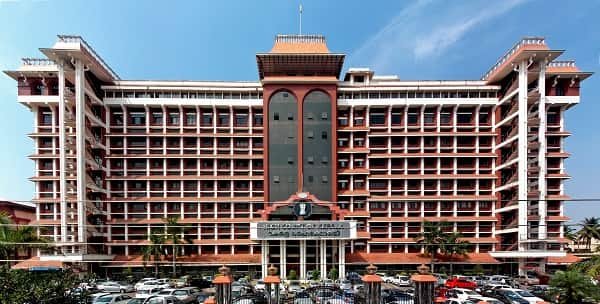
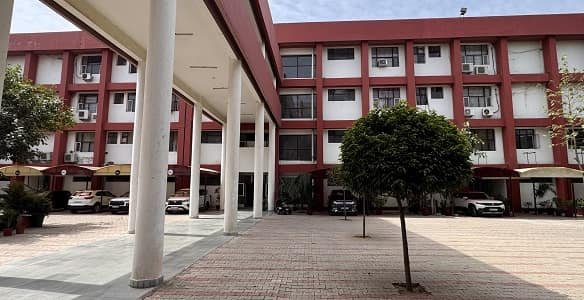
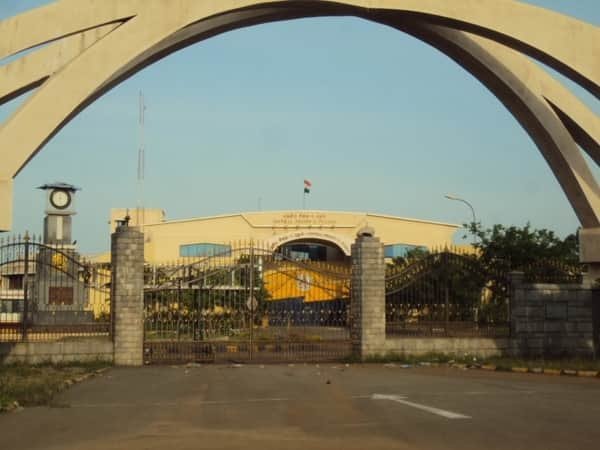
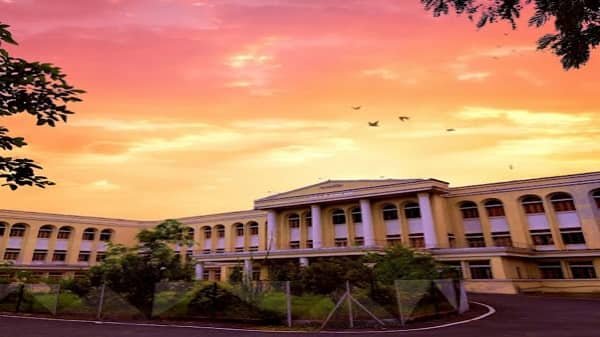
Maharashtra’s district court buildings reflect the state’s extraordinary architectural diversity across its 36 districts. The oldest court buildings — including the 1928 Pune District Court at Shivajinagar and the colonial-era Nashik District Court building — reflect the architectural legacy of the Bombay Presidency’s Public Works Department, where consulting architects from the Government of Bombay designed institutional buildings that balanced European structural conventions with climatic adaptations for the Deccan and Konkan environments. The Nagpur District Court building reflects the legacy of the Nagpur High Court era, when Nagpur was the judicial capital of the Central Provinces.
At the other end of the spectrum, newer complexes — including the Navi Mumbai City Civil and Sessions Court and various district court complexes developed under the Bombay High Court’s building committee — represent contemporary multi-storey judicial campuses with dedicated courtrooms, judges’ chambers, advocates’ facilities, and digital infrastructure meeting 21st-century requirements.
Frequently Asked Questions
Q: How many districts fall under Maharashtra’s district court network?
A: 36 districts — each with a District and Sessions Court as the apex trial court.
Q: Which High Court supervises all Maharashtra district courts?
A: The Bombay High Court — with benches at Nagpur, Aurangabad, and Kolhapur (August 2025) in addition to the principal seat at Mumbai.
Q: When was the legal history of Bombay’s judicial system established?
A: 1661 — when Bombay became a British possession; the first Court of Justice was established in 1672.
Q: When was the State of Maharashtra formed?
A: May 1, 1960 — following bifurcation of the bilingual Bombay State.
Q: When was the Kolhapur Bench of the Bombay High Court established?
A: August 18, 2025 — covering Satara, Sangli, Solapur, Kolhapur, Ratnagiri, and Sindhudurg.
Q: What types of courts function below the district court level?
A: Sub-Courts, Civil Judge Senior and Junior Division courts, CJM and ACJM courts, JMFC courts, Family Courts, and various special courts.
Q: What digital services are available in Maharashtra district courts?
A: e-Filing under Bombay High Court’s e-filing rules, video conferencing static links, eCourts portal for case management, and virtual hearing facilities.