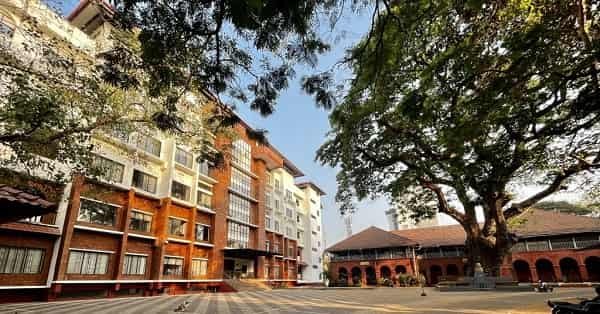
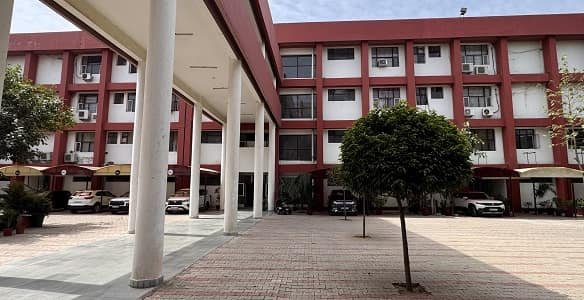
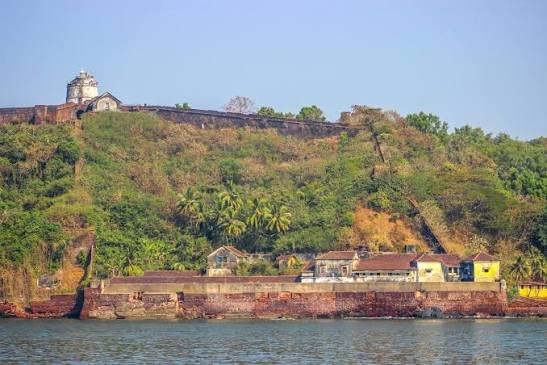
The District Court Ernakulam — the apex trial court for Ernakulam district in the state of Kerala — holds a constitutionally and historically unique position in India’s district court landscape: it is the only district court in India that shares its city with the High Court of the state it serves. The Kerala High Court is located in Ernakulam town — and even after the formation of the Kerala State on November 1, 1956, the High Court has not been shifted from Ernakulam. This creates a judicial geography found nowhere else in India — a district court and its supervisory High Court functioning within the same urban area, making Ernakulam simultaneously the judicial capital of Kerala at both the superior court and the district court levels. The District Court Ernakulam traces its origins to the Hukm-nama of April 1813 under the Cochin State’s judicial reorganisation by Colonel Munro — a history spanning over 210 years that makes it one of Kerala’s oldest continuously functioning judicial institutions.
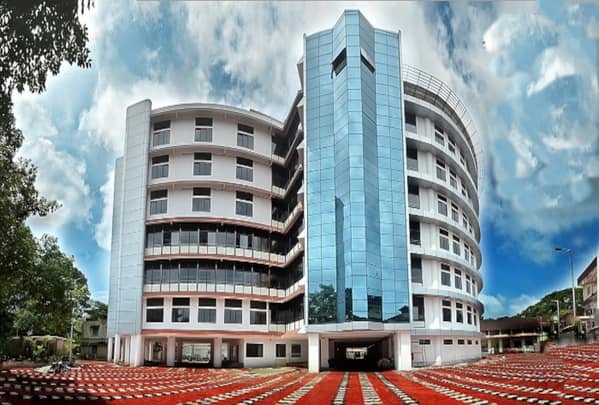
Ernakulam Court History
The history of the District Court Ernakulam begins in the Cochin area under the Dewanship of Colonel Munro — the reforming British administrator who introduced the establishment of courts presided over by regularly paid judges as one of his landmark administrative reforms. By the Hukm-nama of April 1813, a Cheria or Subordinate Court was established at Tripunithura and a Valia or Huzur Court was established at Ernakulam. The Subordinate Court was presided over by a Hindu and a Christian judge and a Sastri. The Huzur Court was presided over by the Dewan, a Hindu and a Christian Judge and a Sastri. All disputes were to be settled according to the provisions of the Dharma Sastras and the custom of the land.
In 1818 during the Dewanship of Nanjappayya, a Proclamation was issued converting the Huzur Court into an Appeal Court, and the Subordinate Court at Tripunithura was removed to Ernakulam and designated the Zilla Court of Anchikaimal. The Zilla Court was empowered to inquire into and dispose of all cases subject to confirmation by the Appeal Court. By Regulation I of 1036 — passed in June 1861 — a Munsiff’s Court was set up at Ernakulam for the trial of cases not exceeding Rs 100 in value, to relieve the Zilla Court where the volume of work had increased considerably. In 1877, a separate Munsiff’s Court was established for the Cochin Taluk — the first such court establishment at Kochi.
Ernakulam District holds a place of honour in the scheme of judicial administration in Kerala — as the Kerala High Court is located in Ernakulam town, the district is simultaneously the seat of Kerala’s apex judicial institution and its principal district court. The District Judge, Ernakulam, remains the highest authority in matters pertaining to the administration of justice in the District.
Structure and Composition
| Dimension | Detail |
| Judicial history origin | April 1813 — Hukm-nama of Colonel Munro era |
| First courts | Cheria Court at Tripunithura + Huzur Court at Ernakulam |
| First Munsiff’s Court at Kochi | 1877 |
| High Court supervision | Kerala High Court — located in the same city |
| Unique distinction | Only district court in India sharing its city with the state High Court |
| District Judge | Highest authority for district justice — with 3 Additional District Judges |
| Family Courts | 4 Family Courts — Ernakulam city, Muvattupuzha, North Paravur, Aluva |
| JFCM Courts | 28 JFCM courts across Ernakulam district |
| Subordinate Judges | 9 courts — 4 at Ernakulam city, 2 at North Paravur, 1 each at Kochi, Perumbavoor, Muvattupuzha |
| Special Courts | SC/ST Act court, NDPS designated court, MP/MLA court, Economic Offences ACJM court |
| Gram Nyayalaya | Vadavucode — within jurisdiction |
| Digital infrastructure | e-Courts, e-filing, Kerala District Judiciary filing portal, video conferencing |
Architecture and Judicial Setup
The District Court Ernakulam operates across a comprehensive network of court locations — the principal district court complex at Ernakulam city, the new building at Thoppumpady (where Subordinate Courts were shifted on May 27, 1995), and sub-court and JFCM complexes distributed across the extensive Ernakulam district covering Aluva, Muvattupuzha, North Paravur, Perumbavoor, Kothamangalam, Kochi, and numerous other taluks. The co-location of the Kerala High Court within Ernakulam gives the district court an unusual institutional relationship — litigants whose cases travel from the district court to the High Court on appeal do not need to leave the same city, providing a practically unique level of appellate court accessibility for Ernakulam’s citizens.
The Addl. CJM (Economic Offences) Court at Ernakulam carries all-Kerala jurisdiction — one of the rare instances of a district court-level special court exercising jurisdiction across an entire state — for trial of economic offence cases. The MP/MLA court at Ernakulam further demonstrates the significance of this district court in national judicial architecture.
Frequently Asked Questions
Q. When does the judicial history of Ernakulam begin?
A. April 1813 — when the Hukm-nama of the Cochin State under Colonel Munro established the first formal courts.
Q. What makes Ernakulam District Court constitutionally unique in India?
A. It is the only district court in India that shares its city with the state High Court — the Kerala High Court is located in Ernakulam.
Q. When was the first Munsiff’s Court established at Kochi?
A. 1877 — the first court establishment at Kochi.
Q. How many Family Courts function in Ernakulam district?
A. 4 Family Courts — at Ernakulam city, Muvattupuzha, North Paravur, and Aluva.
Q. What is the Addl. CJM (Economic Offences) court’s unique feature?
A. It has all-Kerala jurisdiction for economic offences — exercising state-wide authority from a district court level.
Q. Which High Court supervises the Ernakulam District Court?
A. The Kerala High Court — located in the same city of Ernakulam.
Q. How many JFCM Courts function in Ernakulam district?
A. 28 JFCM courts distributed across Ernakulam city, Kochi, Aluva, Muvattupuzha, Perumbavoor, North Paravur, Kothamangalam, and other areas.
Q. What digital filing facilities are available?
A. e-Filing through the Kerala District Judiciary filing portal, video conferencing links for courts across the district, and eCourts Mission Mode Project integration for case management.