The District and Sessions Court Amritsar — located in the District Court Complex on Ajnala Road, Amritsar, Punjab — is one of India’s most historically significant district courts, carrying a judicial legacy of more than 150 years rooted in one of the Indian subcontinent’s most spiritually sacred and historically layered cities. As the home of the Golden Temple — the holiest shrine of the Sikh faith — Amritsar is a city of profound national and international significance, and its district court has been the arena for some of the most consequential civil and criminal proceedings in Punjab’s history. The court’s origins can be traced to the British annexation of Punjab in 1849 and the systematic establishment of a formal judicial infrastructure that replaced the pre-annexation era when the Sadar Adalat was the sole court under Maharaja Ranjit Singh’s rule, and only chieftains decided cases as per their personal discretion without written laws.
District Court Amritsar History
The history of the District Court at Amritsar dates back to more than one hundred and fifty years. During the era of Maharaja Ranjit Singh — the famous Sikh Ruler of Punjab — there were no written laws or judicial courts and no established judicial authority. Only chieftains would decide cases as per their own discretion. The Sadar Adalat Court — the Chief Court — was the sole court in his realm.
The annexation of the Punjab by the British in 1849 was immediately followed by the creation of a Board of Administration with powers of a Sadar Court of Judicature and a Sadar Board of Revenue. In 1853, the Board of Administration was replaced by a Chief Commissioner, with two Principal Commissioners separately appointed for Judicial and Administrative work. The Judicial Commissioner was the chief judge of appeal and his Court was the final appellate court.
By 1856, Tehsildars were empowered to exercise the powers of a Subordinate Judge in small courts, dealing with suits of value up to Rs 300. Thus, the civil courts started functioning at Amritsar in the year 1856. During 1862, Honorary Native Magistrates for the disposal of petty criminal cases were appointed at Amritsar. By the Punjab Courts Act (XIX of 1865), seven classes of courts were created in the civil jurisdiction, ranging from the Court of Tehsildar at the bottom to the Court of the Judicial Commissioner at the top.
The Punjab Courts Act of 1877 replaced earlier legislation, and the Punjab Courts Act of 1918 was a landmark that abolished the Court of Munsif and reorganised the judicial structure. By the Act of 1918, the administration of Judicial Courts at Amritsar was controlled by the High Court of Judicature at Lahore — whose vast jurisdiction ranged over 28 districts including Shimla, Gurgaon, Kangra, Gujranwala, Lyallpur, and Hissar. Since the separation of the executive from the Judiciary on October 2, 1964, the administration of both civil and criminal justice in the district has been controlled by the District and Sessions Judge, Amritsar.
Structure and Composition
| Dimension | Detail |
| Judicial history origin | 1849 — British annexation of Punjab |
| Civil courts functioning from | 1856 |
| Criminal magistrates appointed | 1862 |
| Location | District Court Complex, Ajnala Road, Amritsar, Punjab — 143001 |
| High Court supervision | Punjab and Haryana High Court, Chandigarh |
| Separation of judiciary | October 2, 1964 |
| Current courts functioning | 35 courts — District and Sessions Judge, 9 Additional District and Sessions Judges, Small Causes Court |
| Process serving agency | 2 Nazars, 8 Naib Nazars, 9 Bailiffs, 79 Process Servers |
| Courts Act applied | Punjab Courts Act 1918 — fundamental structure |
| Digital infrastructure | e-Courts Mission Mode Project — e-filing 3.0, automated summons generation via CIS |
| Legal Aid | District Legal Services Authority, Amritsar — Legal Aid Defence Counsel |
| Accessibility | Disability accessibility committee for court access |
Architecture and Digital Infrastructure
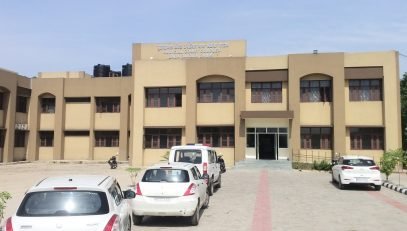
The District Court Complex at Ajnala Road, Amritsar has developed progressively from the early colonial-era judicial infrastructure into a contemporary multi-court complex housing 35 courts across the Sessions Division. The complex accommodates the full range of district-level judicial functions — civil, criminal, family matters, small causes — alongside the District Legal Services Authority infrastructure for free legal aid and the process-serving agency that executes court processes across Amritsar’s extensive jurisdiction.
Amritsar’s district court serves a jurisdiction of extraordinary strategic sensitivity — as the city bordering Pakistan and home to the Golden Temple, it regularly handles cases of significant national security, religious, and cross-border commercial significance. The court has implemented the eCourts Mission Mode Project with e-filing 3.0 infrastructure, automated generation of summons and notices through the Case Information System — which also sends SMS alerts to parties and witnesses — and video conferencing for certain proceedings.
Frequently Asked Questions
Q. How far back does the Amritsar District Court’s history go?
A. Over 150 years — formal judicial infrastructure established from the British annexation of Punjab in 1849.
Q. When did civil courts begin functioning at Amritsar?
A. 1856 — when Tehsildars were empowered to exercise subordinate judge powers.
Q. What was the judicial system like before British annexation?
A. Under Maharaja Ranjit Singh, only chieftains decided cases — no written laws, no established judicial courts.
Q. Where is the court located?
A. District Court Complex, Ajnala Road, Amritsar, Punjab — 143001.
Q. How many courts currently function in the Amritsar Sessions Division?
A. 35 courts — including the District and Sessions Judge and nine Additional District and Sessions Judges.
Q. When was the judiciary separated from the executive in Amritsar?
A. October 2, 1964.
Q. Which High Court supervises the Amritsar District Court?
A. The Punjab and Haryana High Court, Chandigarh.
Q. What digital services are available?
A. e-Filing 3.0, automated summons generation through CIS, SMS case alerts, and video conferencing facilities.