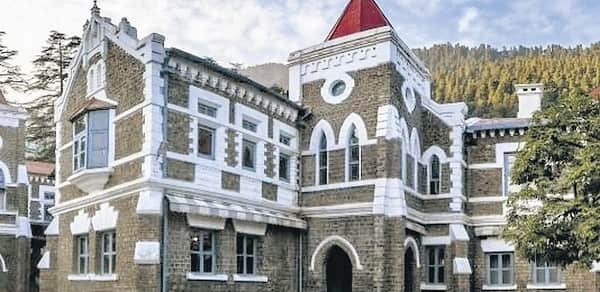
The High Court of Madhya Pradesh — one of India’s most historically layered and architecturally distinguished superior courts — is the apex judicial institution for the Heart of India, exercising jurisdiction over a state that spans 308,252 square kilometres and serves a population of over 80 million citizens. With its principal seat in Jabalpur and permanent benches at Indore and Gwalior, the court reaches every corner of India’s second-largest state by area, ensuring that justice is accessible to litigants across Madhya Pradesh’s vast geography — from its tribal heartlands and agricultural plains to its thriving urban centres. The court’s principal seat building at Jabalpur is itself a remarkable piece of history — a magnificent structure of mixed baroque and oriental architecture constructed in 1889, carrying the weight of over a century of judicial proceedings within its ornamental walls. The MP High Court stands as a pillar of constitutional governance for a state whose diversity of landscapes, communities, and legal needs is matched only by the court’s determination to serve them equitably and effectively.
History and Establishment
The story of the Madhya Pradesh High Court begins not in Jabalpur but in Nagpur — and traces a rich institutional journey that mirrors India’s own political evolution from colonial province to independent republic to a reorganised federal state. The region that is now Madhya Pradesh was originally administered as the Central Provinces from November 2, 1861, with the Judicial Commissioner’s Court at Nagpur serving as the highest judicial authority. Following the conversion of the Central Provinces into a Governor’s Province in 1921, and the addition of Berar in 1933 giving the territory its name Central Provinces and Berar, the Nagpur High Court was formally established on January 2, 1936 by Letters Patent issued under the Government of India Act, 1915.
The transformative moment in the court’s history arrived on November 1, 1956, when the States Reorganisation Act created the new enlarged state of Madhya Pradesh. Under Section 49 of the Act, the Nagpur High Court was by legal fiction deemed to be the High Court of the new state of Madhya Pradesh, with its principal seat shifted to Jabalpur — the centrally located city that Prime Minister Jawaharlal Nehru and the founders of the new state recognised as the natural judicial heart of Madhya Pradesh. Temporary benches at Indore and Gwalior were constituted on November 1, 1956 itself, and by Presidential Notification dated November 28, 1968, these became permanent benches serving the western and northern regions of the state respectively. On November 1, 2000, when Chhattisgarh was carved out of Madhya Pradesh under the Madhya Pradesh Reorganisation Act, the High Court of Madhya Pradesh at Jabalpur became the exclusive High Court for the successor state of Madhya Pradesh.
Jurisdiction and Powers
The Madhya Pradesh High Court exercises the full spectrum of superior court jurisdiction across its principal seat and two permanent benches — functioning simultaneously as an appellate court, a constitutional court, and a supervisory court for all subordinate courts and tribunals across the state. Under Articles 214 to 231 of the Constitution of India, the court exercises appellate jurisdiction over the decisions of district courts and sessions courts in civil and criminal matters, writ jurisdiction under Articles 226 and 227 for the enforcement of fundamental rights and the constitutional oversight of all governmental authorities, and administrative and supervisory jurisdiction over every civil and criminal court subordinate to it across Madhya Pradesh.
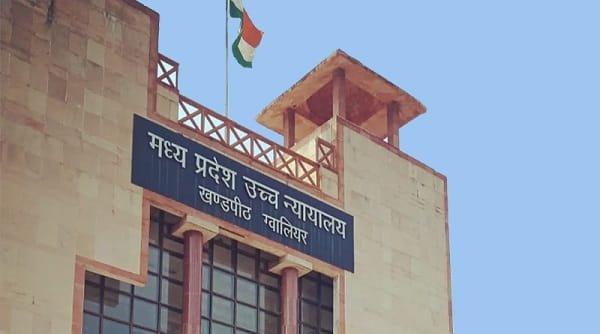
The Indore Bench, established as a permanent bench in 1968, serves the districts of Indore, Ujjain, Ratlam, Dhar, Jhabua, Mandsaur, Neemuch, and Harda — covering Madhya Pradesh’s most commercially active western region. The Gwalior Bench similarly serves the northern districts of the state, bringing the court’s jurisdiction within practical reach of litigants who would otherwise face enormous travel to reach Jabalpur. This three-seat structure makes the Madhya Pradesh High Court one of India’s most geographically distributed superior courts, reflecting a deliberate commitment to access to justice across a state whose road and rail connectivity varies significantly across its vast territory.
Structure, Composition, and Key Facts
| Dimension | Detail |
| Original establishment | January 2, 1936 — as Nagpur High Court |
| Present form established | November 1, 1956 — as MP High Court |
| Principal Seat | Jabalpur, Madhya Pradesh |
| Permanent Benches | Indore and Gwalior |
| Sanctioned judge strength | 53 judges (including Chief Justice) |
| Building construction year | 1886–1889 — designed by Henry Irwin |
| Building constructed by | Raja Gokul Das — grandfather of Seth Govind Das MP |
| Architecture style | Mixed baroque and oriental |
| Jurisdiction area | Entire state of Madhya Pradesh |
| Official contact — Principal Seat | Jabalpur — 482001 |
The court operates through Division Benches for constitutional matters, first appeals, and high-stakes criminal appeals, and Single Benches for writ petitions, bail matters, revisions, and first instance matters at the principal seat. Judges are appointed through the Supreme Court collegium process — drawn from senior advocates practising at the High Court with at least ten years standing and from the Madhya Pradesh Higher Judicial Service. The three-city structure requires meticulous coordination — rosters are maintained separately for Jabalpur, Indore, and Gwalior, with the Chief Justice’s administrative authority extending across all three seats simultaneously.
The Historic Court Building — Jabalpur’s Architectural Treasure
| Building Feature | Detail |
| Built by | Raja Gokul Das — donated to government |
| Designed by | Henry Irwin, C.I.E., P.W.D. |
| Design commenced | 1886 |
| Construction completed | 1889 |
| Construction cost | Approximately Rs 3 lakh — remarkable for the era |
| Architecture style | Mixed baroque and oriental — ornamental towers and cornices |
| Original use | Collector’s Office, Law Courts, and Treasury |
| Donated on | Gifted to government — originally on nominal rent of Re 1 per month |
| Extensions | North and South Blocks added — cost over Rs 3 crore |
| South Block | Conference Hall — capacity 300-400 persons + 2 courtrooms |
The court building at Jabalpur is one of India’s most visually distinctive High Court premises — an 1889 structure whose ornamental towers, baroque cornices, and oriental arches give it a visual grandeur that few judicial buildings in the country match. Raja Gokul Das, who constructed the building, initially provided it to the government on a nominal monthly rent of one rupee before donating it outright — an act of extraordinary civic generosity that the court honours through the quality of justice it continues to dispense from its halls. The building’s subsequent extension through the construction of North and South Blocks has added modern courtrooms and a large conference hall while preserving the architectural character of the original 19th-century structure.
Digital Transformation and Access to Justice
The Madhya Pradesh High Court has made significant strides in embracing technology to improve access to justice across its vast jurisdiction. In June 2021, then Supreme Court Justice D.Y. Chandrachud, as Chairman of the e-Committee of the Supreme Court, officially launched the Secure Wi-Fi project for the MP High Court, the National Service for tracking electronic processes in the district judiciary, and the implementation of CIS software integrated with land records — a combination that brought digital case management infrastructure to both the High Court and the subordinate courts simultaneously.
The court has implemented mandatory e-filing requirements progressively from November 2024 and January 2025, transforming how advocates and parties file cases across all three seats. Video conferencing infrastructure enables virtual hearings, and digital cause lists allow litigants to track case proceedings from anywhere in the state — making the court accessible to individuals in Madhya Pradesh’s remotest tribal and rural areas who previously faced significant logistical challenges in accessing justice at Jabalpur, Indore, or Gwalior.
Frequently Asked Questions
Q: When was the Madhya Pradesh High Court established?
A: The court’s origins trace to January 2, 1936 when it was established as the Nagpur High Court. It became the High Court of Madhya Pradesh on November 1, 1956 under the States Reorganisation Act.
Q: Where is the principal seat of the MP High Court?
A: The principal seat is in Jabalpur, Madhya Pradesh, with permanent benches at Indore and Gwalior.
Q: What is the sanctioned judge strength of the MP High Court?
A: The sanctioned strength is 53 judges, including the Chief Justice.
Q: Who designed the MP High Court building at Jabalpur?
A: The building was designed by Henry Irwin, C.I.E., P.W.D. in 1886, constructed between 1886 and 1889 by Raja Gokul Das and later donated to the government.
Q: What is the architectural style of the MP High Court building?
A: The building features a distinctive mixed baroque and oriental architectural style with ornamental towers, cornices, and decorative arches and bastions at the corners.
Q: Does the MP High Court have benches outside Jabalpur?
A: Yes. The court has two permanent benches — at Indore and Gwalior — both established permanently by Presidential Notification on November 28, 1968.
Q: What jurisdiction does the Indore Bench exercise?
A: The Indore Bench serves the districts of Indore, Ujjain, Ratlam, Dhar, Jhabua, Mandsaur, Neemuch, and Harda.
Q: What types of cases does the MP High Court hear?
A: The court hears civil and criminal appeals, writ petitions under Articles 226 and 227 of the Constitution, bail applications, revisions, constitutional matters, service disputes, and public interest litigation.
Q: Can judgments of the MP High Court be appealed?
A: Yes. Judgments can be appealed to the Supreme Court of India through statutory appeal where provided by law or through a Special Leave Petition under Article 136 of the Constitution.
Q: What is the official language of the MP High Court?
A: English is the official language of court proceedings. Hindi is also used in certain proceedings given the state’s predominantly Hindi-speaking population.