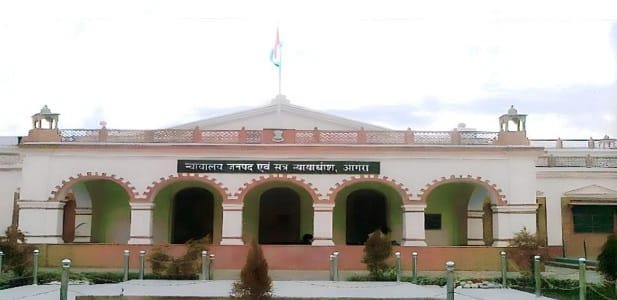
The District Court Madurai — the apex trial court for the Madurai Judicial District in the state of Tamil Nadu — is one of India’s oldest, most historically storied, and institutionally complex district courts, serving a city whose documented continuous civilisational history spans over 2,500 years. Known as the Athens of the East, the cultural capital of Tamil Nadu, and one of the oldest continuously inhabited cities in the world, Madurai’s judicial history mirrors its civilisational depth — beginning with the first Zilla Court established in 1808 and evolving through successive transformations into the comprehensive judicial campus that serves millions of citizens today. Under the supervision of the Madras High Court — which maintains a permanent bench at Madurai inaugurated on July 24, 2004 — the Madurai District Court carries the distinction of being known historically as the most litigious district in Tamil Nadu, a characterisation that reflects the city’s ancient tradition of intellectual assertion, commercial activity, and civic engagement with the formal justice system.
History
The judicial history of Madurai is as layered as the city’s political and cultural history. The last of the Naicks — the ruling dynasty that had given Madurai two centuries of relative peace and prosperity — faded from power in 1736 when Rani Meenakshi died. The subsequent decades of confused political transition, marked by competing claimants and successive English military expeditions, ultimately placed Madurai under British administrative consolidation. A regular Zilla Court began to function in Madurai from 1813 — after its initial establishment in 1808, transfer to Ramnad in 1812, and retransfer back to Madurai in 1813. The year 1809 saw an Assistant to the Zilla Judge appointed. The native commissioner under the Zilla Judge was designated the Sadar Amin in 1809 with enlarged powers, and the first District Munsif was appointed in 1816 — a landmark in Madurai’s judicial history that placed formal civil adjudication at the grassroots level for the first time.
Madurai was known as a district highly litigious — the majority of contestants in Madurai courts had a penchant for mutual ruination through extended litigation, a characteristic that Sir Thomas Munro, the indefatigable administrator, was alert to and attempted to address through the rationalisation of tribunals and the simplification of procedure.
The courts in Madurai were initially housed in various parts of the city. At one time, for want of accommodation, some Munsif Courts were shifted to Choultries at Tirupparankundram — a historically significant temple town 8 kilometres from Madurai. History after 1962 is marked by the bifurcation through which Ramnad District was carved out of Madurai — but rather than diminishing the city’s judicial stature, the bifurcation actually added to it. A double set of courts came to function in Madurai following the bifurcation, earning the city a distinction not enjoyed by any other district headquarters in Tamil Nadu — the simultaneous presence of courts for both the Madurai and Ramnad judicial districts within the same city.
The historic District Court Complex building in Madurai served as the Madurai-Ramnad District Court after independence until 1970, when it was designated a Protected Monument by the State Archaeology Department, affirming its heritage significance. The permanent bench of the Madras High Court was inaugurated at Madurai on July 24, 2004 — giving Madurai the constitutional and judicial stature of a city with both a principal district court and a permanent High Court bench.
Structure and Composition
| Dimension | Detail |
| Zilla Court established | 1808 — with subsequent retransfers |
| Regular Zilla Court functional | 1813 — after retransfer from Ramnad |
| First District Munsif appointed | 1816 |
| Madurai’s judicial reputation | Most litigious district in Tamil Nadu |
| Ramnad District bifurcation | Post-1962 — added judicial stature with double court presence |
| Heritage building | Protected Monument — designated post-1970 by State Archaeology Dept. |
| Madras HC Permanent Bench Madurai | Inaugurated July 24, 2004 |
| High Court supervision | Madras High Court — Chennai and Madurai Bench |
| Location | Madurai, Tamil Nadu |
| Court complex | Houses Civil Court, Family Court, Labour Court and multiple divisions |
| Historical identity | Athens of the East — oldest continuously inhabited city |
| City known for | Meenakshi Amman Temple — UNESCO Tentative List — Pan-India cultural capital |
| Digital services | eCourts Mission Mode — Virtual Justice Clock, e-filing, case status |
Architecture — The Protected Monument Heritage Building
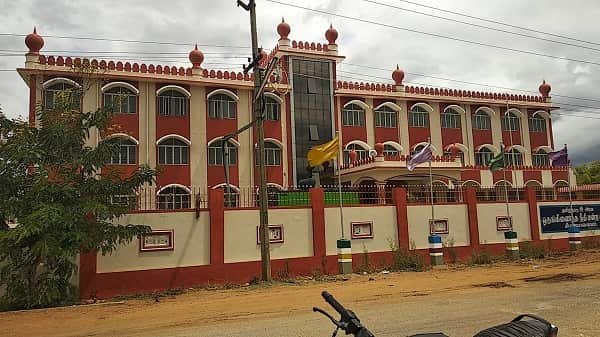
The Madurai District Court Complex is one of Tamil Nadu’s most historically significant judicial buildings — a colonial-era structure that earned designation as a Protected Monument by the State Archaeology Department after 1970, placing it in the same category of state heritage protection as historically irreplaceable archaeological and architectural assets. The building served as the Madurai-Ramnad District Court after independence until 1970, accumulating over a century of continuous judicial use before receiving its heritage recognition.
Madurai’s court complex sits within a city defined by one of India’s most spectacular architectural legacies — the Meenakshi Amman Temple, whose towering gopurams rise above the city skyline and dominate the urban landscape that surrounds the court complex. This proximity to one of India’s most revered and architecturally magnificent temples gives the Madurai District Court setting a cultural grandeur that few district courts anywhere in the world can match.
The Tamil Nadu State Judicial Academy established a Regional Centre at Madurai, inaugurated in February 2016, bringing training and judicial education infrastructure to Tamil Nadu’s second judicial capital. The Mediation and Conciliation Centre at the Madurai Bench of the Madras High Court was inaugurated on September 17, 2005, extending mediation services to the Madurai judicial community alongside the district court’s own alternative dispute resolution facilities.
Frequently Asked Questions
Q: When was the first Zilla Court established in Madurai?
A: 1808 — though it functioned regularly at Madurai only from 1813 after a transfer to Ramnad and retransfer.
Q: When was the first District Munsif appointed in Madurai?
A: 1816 — placing grassroots civil adjudication formally within Madurai district for the first time.
Q: What was Madurai historically known as within its judicial context?
A: The most litigious district in Tamil Nadu — citizens having a noted tradition of pursuing extended court contests.
Q: What happened to the Madurai court’s stature after the Ramnad bifurcation?
A: It actually increased — a double set of courts for both Madurai and Ramnad functioned in the city, earning a distinction not enjoyed by any other Tamil Nadu district headquarters.
Q: When was the Madurai District Court heritage building declared a Protected Monument?
A: After 1970 — designated by the State Archaeology Department for its architectural and historical significance.
Q: When was the Madras High Court Permanent Bench inaugurated at Madurai?
A: July 24, 2004.
Q: Which High Court supervises the Madurai District Court?
A: The Madras High Court — with both its principal seat in Chennai and permanent bench in Madurai.
Q: What is Madurai’s cultural identity?
A: Known as the Athens of the East and the cultural capital of Tamil Nadu — home to the Meenakshi Amman Temple, one of India’s most spectacular architectural monuments.