A morning that begins with repeated sneezing, a blocked nose and watery discharge can raise an obvious question: Is this an allergy or have I caught a cold? The symptoms overlap enough that it is not always easy to tell during the first day.
The underlying causes, however, are very different. Allergic rhinitis occurs when the immune system reacts to an allergen such as pollen, dust mites or animal dander. A common cold is a viral infection of the upper respiratory tract.
That difference affects how symptoms begin, how long they last and which additional symptoms are likely to appear.
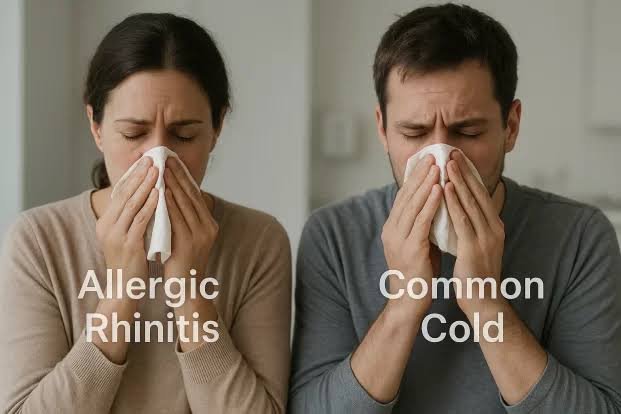
Allergic Rhinitis vs Common Cold: Quick Comparison
| Factor | Allergic Rhinitis | Common Cold |
|---|---|---|
| Cause | Reaction to allergens | Viral infection |
| Contagious? | No | Yes |
| Sneezing | Common, sometimes repeated | Common |
| Runny nose | Common | Common |
| Nasal congestion | Common | Common |
| Itchy nose | Common | Less typical |
| Itchy/watery eyes | Common | Less typical |
| Sore throat | Less typical, though irritation can occur | Common |
| Fever | Not caused by allergic rhinitis | Can occur, though often absent or mild |
| Body aches | Not typical | Can occur |
| Duration | May persist while exposure continues | Usually improves within about 1–2 weeks |
| Trigger pattern | May follow allergen exposure | Follows viral infection |
What Is Allergic Rhinitis?
Allergic rhinitis is an allergic condition affecting the nose.
It develops when the immune system reacts to substances that are normally harmless to most people.
Common allergens can include:
- Pollen
- Dust mites
- Animal dander
- Mould
When a susceptible person encounters an allergen, the immune response can produce inflammation inside the nose.
This may result in:
- Sneezing
- Runny nose
- Nasal congestion
- Itchy nose
- Itchy or watery eyes
Symptoms can be seasonal or occur throughout the year, depending on the allergen.
What Is a Common Cold?
The common cold is a viral respiratory infection.
Many different viruses can cause it, which is one reason people can experience multiple colds over time.
Cold symptoms can include:
- Runny nose
- Blocked nose
- Sneezing
- Sore throat
- Cough
- Feeling generally unwell
- Mild body aches in some cases
- Fever in some people, particularly children
Unlike allergic rhinitis, a cold can spread from one person to another.
1. Itching Strongly Suggests an Allergy
One of the most useful clues is itching.
Allergic rhinitis commonly causes itching involving the:
- Nose
- Eyes
- Roof of the mouth or throat in some people
Eyes may become watery as well.
A cold can certainly make the nose and eyes uncomfortable, but pronounced itching is less characteristic.
If sneezing and a runny nose repeatedly occur together with itchy, watery eyes, an allergic cause becomes more likely.
2. Fever Points Away From Allergic Rhinitis
Allergic rhinitis itself does not cause fever.
A viral infection can.
That does not mean every cold causes a fever. Many people have a common cold without developing one.
But if fever accompanies nasal symptoms, allergic rhinitis alone is unlikely to explain the complete picture.
A high or persistent fever may also suggest something other than a simple cold and should be assessed appropriately.
3. A Sore Throat Is More Common With a Cold
A sore or scratchy throat commonly occurs with viral respiratory infections.
For some people, it is one of the earliest signs of a cold.
Allergies can still make the throat uncomfortable. Nasal drainage, mouth breathing or exposure to an allergen can contribute to irritation.
However, a sore throat followed by congestion and coughing often fits a viral respiratory illness better than isolated allergic rhinitis.
4. Both Can Cause a Runny Nose
The appearance of nasal mucus is not a perfect diagnostic test.
Both allergic rhinitis and a cold can initially produce clear, watery nasal discharge.
With allergies, the discharge often remains watery while allergen exposure continues.
Cold-related mucus may change in consistency or colour as the illness progresses.
Importantly, yellow or green mucus does not automatically mean a bacterial infection or that antibiotics are required. Changes in mucus colour can occur during an ordinary viral respiratory infection.
5. Repeated Sneezing Can Occur With Both
Sneezing is common in both conditions.
Allergic rhinitis may cause bouts of repeated sneezing, particularly after exposure to a trigger.
For example, symptoms might appear:
- After cleaning a dusty room
- During a particular pollen season
- Around an animal
- In a particular indoor environment
Cold-related sneezing is usually accompanied by the broader progression of a viral illness rather than repeatedly appearing after the same environmental exposure.
6. Allergies Can Last Much Longer
Duration can be one of the strongest clues.
A common cold generally runs its course and improves, often within roughly one to two weeks.
Allergic rhinitis can continue considerably longer.
If someone is continuously exposed to the responsible allergen, symptoms may last for:
- Weeks
- A season
- Much of the year
Someone who develops similar symptoms every spring, for example, may have seasonal allergic rhinitis rather than repeatedly catching an identical cold.
7. Allergies Can Start Quickly After Exposure
Allergic symptoms may begin relatively quickly after encountering a trigger.
Imagine someone enters a dusty storage room and soon develops:
Sneezing → itchy nose → watery eyes → runny nose
That pattern can fit an allergic response.
A common cold does not begin simply because you walked into a dusty room. It develops following infection with a respiratory virus.
Recognising repeated trigger patterns can therefore be useful.
8. A Cold Is Contagious; Allergic Rhinitis Is Not
You cannot catch allergic rhinitis from another person.
A person with pollen or dust-mite allergy does not transmit that allergy by coughing or sneezing.
Colds are different.
The viruses responsible can spread between people, including through respiratory secretions and contaminated hands or surfaces.
Basic hygiene therefore matters when someone has cold symptoms:
- Wash hands regularly.
- Avoid sharing personal items.
- Cover coughs and sneezes appropriately.
- Avoid unnecessary close contact when actively unwell.
9. Cough Can Occur With Either Condition
Coughing is often associated with respiratory infections, but it does not automatically prove someone has a cold.
Allergic rhinitis can lead to nasal drainage and throat irritation that may contribute to coughing.
A viral cold can also produce cough directly as part of the respiratory infection.
The surrounding symptoms provide more useful information.
Cough + sore throat + feeling unwell may favour a viral illness.
Cough + itchy eyes + repeated sneezing after allergen exposure may favour allergies.
Persistent cough deserves further assessment because many conditions other than allergies and colds can cause it.
10. Fatigue Doesn’t Always Separate Them
A viral infection can leave someone feeling tired or generally unwell.
Allergic rhinitis can also interfere with sleep when nasal congestion is significant, which can lead to daytime tiredness.
Therefore, fatigue by itself is not a reliable way to distinguish the two.
Body aches and a general feeling of illness, however, are more consistent with an infection than uncomplicated allergic rhinitis.
Can You Have Allergic Rhinitis and a Cold at the Same Time?
Yes.
Having allergies does not prevent someone from catching a respiratory virus.
This can make symptoms confusing.
A person who normally has:
- Sneezing
- Itchy eyes
- Nasal congestion
from allergies may suddenly develop a sore throat, cough or other symptoms because a viral infection has occurred at the same time.
A noticeable change from the person’s usual allergy pattern can be informative.
How Is Allergic Rhinitis Managed?
Management depends partly on identifying and reducing relevant allergen exposure where practical.
Depending on the person and severity, treatment may include medicines such as:
- Antihistamines
- Nasal corticosteroid sprays
- Other allergy treatments
The appropriate option depends on age, symptoms and medical history.
Children and teenagers should not repeatedly self-medicate without involving a parent or guardian and an appropriate healthcare professional, particularly when symptoms are persistent.
People with frequent or severe symptoms may benefit from medical evaluation and, in some cases, allergy testing.
How Is a Common Cold Managed?
Most uncomplicated common colds improve without specific antiviral treatment.
Supportive care may include:
- Adequate rest
- Drinking enough fluids
- Comfortable meals
- Appropriate management of individual symptoms
Antibiotics do not treat ordinary viral colds.
Cold medicines also need to be chosen carefully because products can contain multiple active ingredients, and some are inappropriate for younger children.
Parents should follow age-specific medical advice rather than automatically giving children adult cold medicines.
Is It Allergies or a Cold? Look at the Pattern
No single symptom can always provide the answer.
Instead, look at several clues together.
Allergic rhinitis is more likely when:
- Your nose or eyes are particularly itchy.
- Your eyes are watery.
- Symptoms repeatedly appear after a particular exposure.
- Similar symptoms occur during the same season.
- There is no fever.
- Symptoms continue for weeks while exposure continues.
A common cold is more likely when:
- You have a sore throat.
- You feel generally unwell.
- A cough develops as the illness progresses.
- There may be mild fever or body aches.
- Someone around you recently had similar respiratory symptoms.
- Symptoms gradually resolve over roughly one to two weeks.
These patterns are useful clues, not a substitute for medical diagnosis.
When Should You See a Doctor?
Medical advice may be appropriate when:
- Symptoms are severe or repeatedly interfere with sleep or school.
- Nasal symptoms continue for a long time without a clear explanation.
- You are unsure whether symptoms represent allergies, infection or another condition.
- Allergy symptoms remain poorly controlled.
- A cough persists.
- There is significant facial pain or other worsening symptoms.
- Fever is high or persistent.
Seek prompt medical attention if there is difficulty breathing, significant wheezing, unusual drowsiness, dehydration or another severe or rapidly worsening symptom.
For children and teenagers, a parent or guardian should be told about persistent or concerning symptoms so appropriate healthcare can be arranged.
Why Identifying the Cause Matters
Because the symptoms overlap, it is easy to treat every runny nose as a cold or every episode of sneezing as an allergy.
The distinction matters.
Allergic rhinitis is an immune reaction to an allergen and is not contagious. A common cold is caused by a virus and can spread between people.
Itching, watery eyes, recurring triggers and prolonged symptoms tend to favour allergic rhinitis. Sore throat, feeling generally unwell, possible fever and a relatively short illness tend to favour a cold.
If symptoms keep returning, last longer than expected or do not match either pattern clearly, professional assessment can help identify whether allergies, infection or another respiratory condition is responsible.
FAQs
Q1. What is the easiest way to tell allergies from a cold?
A. Itchy eyes or nose, watery eyes and symptoms that repeatedly follow a particular environmental exposure favour allergic rhinitis. Sore throat, general illness and possible fever are more consistent with a viral cold.
Q2. Can allergic rhinitis cause fever?
A. Allergic rhinitis itself does not cause fever. If fever occurs alongside allergy-like symptoms, an infection or another cause may also be present.
Q3. How long does allergic rhinitis last compared with a cold?
A. A common cold generally improves within about one to two weeks. Allergic rhinitis can continue for weeks or longer if exposure to the responsible allergen continues.
Q4. Are allergies contagious?
A. No. Allergic rhinitis is caused by an immune response to allergens and cannot be transmitted to another person. Common colds are viral infections and are contagious.
Q5. Can a person have a cold and allergies at the same time?
A. Yes. Someone with allergic rhinitis can still catch a respiratory virus. New symptoms such as a sore throat or feeling generally unwell may indicate that an infection has developed in addition to the person’s usual allergies.