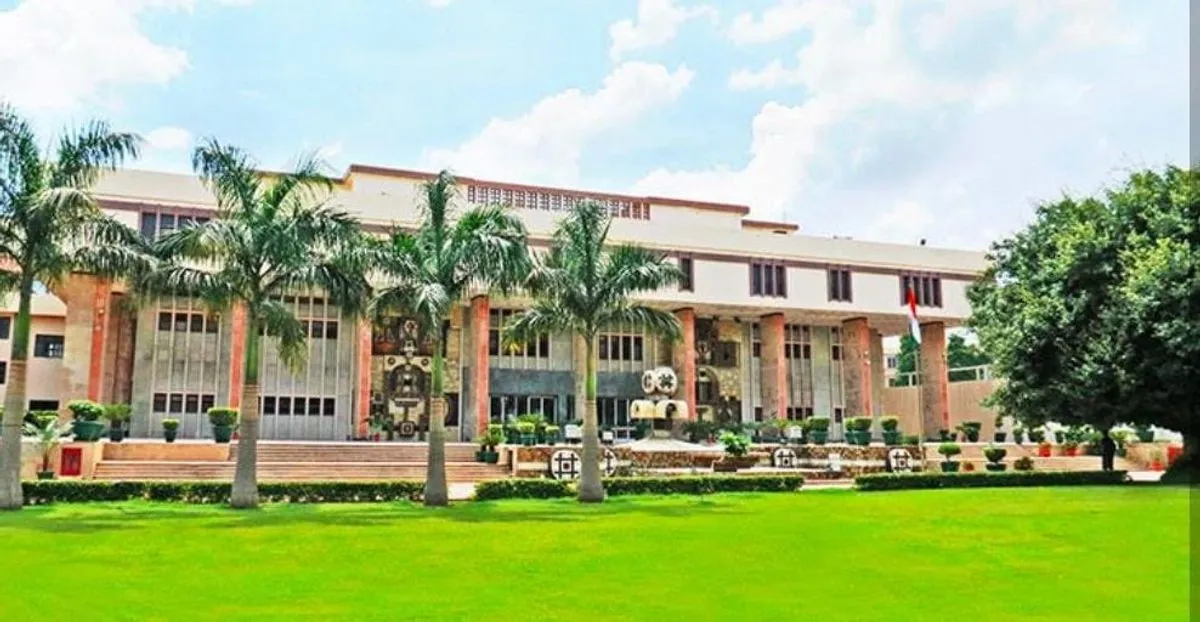
The Delhi High Court — one of India’s most consequential and judicially celebrated superior courts — stands as both the constitutional guardian of the National Capital Territory of Delhi and one of the most influential High Courts in the entire Indian judicial system. Established in 1966, it hears cases involving individuals, corporations, the Central Government, diplomatic missions, and every institution housed in the country’s capital. Its judgments are watched nationally, frequently appealed to the Supreme Court, and consistently cited across states for their reasoning and precedential value. With a jurisdiction covering Delhi’s 33 million residents alongside Union Territory government and Central Government matters, the Delhi High Court is among the busiest and most respected superior courts in the world’s largest democracy.
History and Establishment
The Delhi High Court was established on October 31, 1966 under the Delhi High Court Act, 1966, following the recognition of Delhi as a Union Territory requiring its own superior court. The court began operations at its current home on Sher Shah Road in New Delhi — a building whose institutional gravity has grown across nearly six decades of landmark decisions that have shaped Indian law at every level. Justice K.S. Hegde served as the court’s first Chief Justice, laying the foundation for a judicial tradition of independence, rigour, and constitutional commitment that the court has honoured across every subsequent generation of judges and advocates.
India is among the country’s most historically significant courts in terms of the sheer range and national importance of matters it adjudicates — from Central Government service disputes to constitutional questions, from international commercial arbitration to public interest litigation that has transformed how Delhi functions as a city. The court’s establishment was itself a milestone in post-independence institutional development, signalling that the capital required dedicated judicial infrastructure matching the scale and complexity of its governance responsibilities.
Jurisdiction and Powers
The Delhi High Court exercises original civil jurisdiction over cases with pecuniary value above Rs 2 crore — one of the very few High Courts in India to exercise such original jurisdiction alongside appellate powers. This dual role means the court functions simultaneously as a first court for high-value civil matters and as an appellate court for decisions from Delhi’s district courts, family courts, and tribunals — giving it an extraordinary breadth of exposure to the full range of legal disputes that arise in India’s capital.
The court exercises writ jurisdiction under Articles 226 and 227 of the Constitution — the foundational constitutional provisions that empower High Courts to protect fundamental rights and ensure that all authorities within their territorial jurisdiction act within the law. Through this jurisdiction, the Delhi High Court has protected citizens’ rights, corrected administrative excess, and enforced the rule of law in matters involving the highest offices of government. It also exercises jurisdiction over Central Government service matters, intellectual property disputes, international commercial arbitration under the Arbitration and Conciliation Act, and a growing body of technology and digital law disputes that reflect Delhi’s position at the centre of India’s digital economy.
Structure, Composition, and Key Facts
|
Dimension |
Detail |
|
Established |
October 31, 1966 |
|
First Chief Justice |
Justice K.S. Hegde |
|
Sanctioned strength |
60 judges (including Chief Justice) |
|
Location |
Sher Shah Road, New Delhi |
|
Official language |
English (Hindi permitted) |
|
Jurisdiction |
National Capital Territory of Delhi |
|
Working hours |
Monday to Friday — 10:30 AM to 4:30 PM |
|
Subordinate courts supervised |
All district and family courts in Delhi |
|
Principal Seat |
New Delhi (single seat) |
The court operates through Division Benches — two-judge benches for constitutional matters and appeals — and Single Benches for first instance cases. Judges are appointed through the Supreme Court collegium process, drawing from advocates with at least ten years of practice before the court and from Delhi’s judicial service officers. The Delhi High Court bar is one of India’s most distinguished, producing Supreme Court judges, Solicitors General, and leading Senior Advocates whose arguments have shaped jurisprudence nationally.
Public Interest Litigation and Judicial Activism
The Delhi High Court’s writ jurisdiction has been deployed consistently to protect citizens’ rights, the environment, and public welfare through Public Interest Litigation that has produced tangible improvements in Delhi’s quality of life and governance standards. The court has suo motu taken up causes of public importance — intervening on pollution, urban infrastructure, welfare scheme implementation, rights of vulnerable populations, and civic service delivery — and sustained judicial monitoring of government action until measurable improvement was achieved.
During the COVID-19 pandemic, the court demonstrated institutional courage and care by actively overseeing Delhi’s healthcare response — directing Central and Delhi governments on oxygen supply, hospital bed management, and vaccine accessibility, providing citizens a constitutional platform for urgent relief during the country’s most serious public health crisis in generations. The court was simultaneously among the first High Courts in India to implement comprehensive virtual hearings, ensuring that justice delivery continued without interruption and establishing a digital court infrastructure that has substantially improved access to justice for every litigant in Delhi. This technological transformation — e-filing, video conferencing hearings, digitised case management — has made the court more accessible than at any point in its history.
Frequently Asked Questions
1. When was the Delhi High Court established?
The Delhi High Court was established on October 31, 1966, under the Delhi High Court Act, 1966.
2. Who was the first Chief Justice of the Delhi High Court?
Justice K.S. Hegde was the first Chief Justice of the Delhi High Court from its establishment in 1966.
3. Where is the Delhi High Court located?
The court is located on Sher Shah Road, New Delhi, operating from a single principal seat with no circuit benches.
4. What is the sanctioned judge strength of the Delhi High Court?
The sanctioned strength is 60 judges, including the Chief Justice, making it one of India’s larger High Courts.
5. What types of cases does the Delhi High Court hear?
It hears original civil cases above Rs 2 crore, writ petitions under Articles 226 and 227, criminal appeals, constitutional matters, service disputes, intellectual property cases, commercial arbitration matters, and public interest litigation.
6. Does the Delhi High Court have original civil jurisdiction?
Yes. Unlike most High Courts in India, it exercises original civil jurisdiction in cases valued above Rs 2 crore, allowing parties to file directly before the High Court.
7. Can a judgment of the Delhi High Court be appealed?
Yes. Judgments can be appealed to the Supreme Court of India through statutory appeal or through a Special Leave Petition under Article 136 of the Constitution.
8. What is the official language of the Delhi High Court?
English is the official language of proceedings. Hindi is also permitted in certain proceedings.
9. What is the working schedule of the Delhi High Court?
The court functions Monday through Friday from 10:30 AM to 4:30 PM, subject to vacation periods and designated court holidays.
10. What makes the Delhi High Court significant nationally?
Its location in India’s capital gives it jurisdiction over Central Government matters, diplomatic institutions, and every major national authority — making its judgments uniquely impactful on governance, fundamental rights, and commercial law across the entire country.