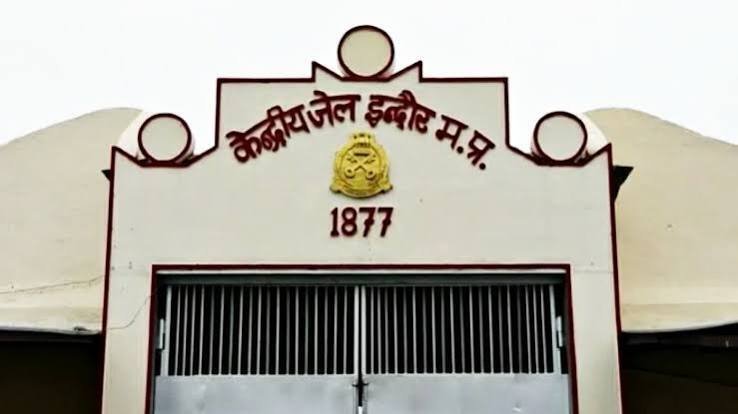
Indore Central Jail stands as one of Central India’s oldest correctional facilities, built during the era of Holkar rule under a distinctive minister who reformed the princely state’s administration. Located right in the middle of Indore city, this century-and-a-half-old prison has earned a somewhat unexpected reputation — a Madhya Pradesh High Court Chief Justice once remarked that it surpasses even Delhi’s Tihar Jail in terms of inmate facilities. Despite this recognition, chronic overcrowding has pushed authorities to plan relocating the facility to the city’s outskirts.
| Quick Facts | Details |
|---|---|
| Full name | Central Jail Indore |
| Location | Snehlataganj, Indore, Madhya Pradesh |
| Established | 1876–77 |
| Built under | Minister T. Madhava Rao, during Holkar-era administration |
| Total area | 13.60 acres |
| Structure | 33 blocks and 3 special cells |
| Authorised capacity | 1,150 inmates |
| Actual population | Over 2,500 inmates |
| Status | Operational; relocation to city outskirts under consideration |
| Managed by | Madhya Pradesh Jail Department |
Where Exactly Is It Located
Indore Central Jail sits in Snehlataganj, right in the middle of Indore’s busy commercial and residential belt — a location that has increasingly put the century-old facility at odds with the growing city around it.
- Address: Central Jail, Jail Road, Snehlataganj, Indore, Madhya Pradesh – 452003
- Nearby landmark: Close to Devi Ahilya Bai Holkar International Airport and Snehlataganj Main Road
- Access: Well connected via Indore’s city bus and auto network; easily reachable from most parts of the city given its central location
Being embedded within Indore’s core urban area, rather than on the outskirts like many colonial-era jails, has made this one of the more geographically unusual central prisons in India — and a key reason behind ongoing relocation plans.
The Origins: Built Under Holkar-Era Reform
Before 1875, Indore city faced a serious shortage of proper jail infrastructure. This changed when the Central Jail was constructed in 1876–77, during the ministership of T. Madhava Rao, a respected administrator who served the Holkar state of Indore during a period of notable administrative reform.
- Built at a time when Indore was under princely state rule, rather than direct British administration
- Has continued operating in the same original building for nearly 150 years since its construction
- Reflects a broader pattern seen in several princely states of India, where local rulers and their ministers, rather than the British directly, established modern penal infrastructure
This makes Indore Central Jail somewhat distinct from prisons like Yerawada or Naini, which were built directly under British colonial administration rather than a princely state government.
Structure and Scale
Indore Central Jail occupies a compact but intensively used campus at the heart of the city.
- Spread across 13.60 acres, considerably smaller than some of India’s larger central jails
- Comprises 33 separate blocks along with 3 dedicated cells for specific categories of prisoners
- Authorised to hold 1,150 inmates, though the actual population has consistently run more than double that figure, often exceeding 2,500
This level of overcrowding is one of the most severe among India’s central jails relative to its rated capacity, and it has directly shaped decisions about the facility’s future.
A Model Jail: Vocational Training and Rehabilitation
Despite its age and overcrowding, Indore Central Jail has built a strong reputation as one of India’s better-managed correctional facilities, with an unusually broad set of vocational and rehabilitation programs.
- Inmates receive training in manufacturing steel utensils, leather products, screen printing, offset printing, tailoring, carpentry, wood carving, and pottery
- The jail runs a basic computer literacy program, with plans to expand into more advanced IT training
- Products made by inmates, including items like herbal colours prepared for festivals such as Holi, are sold through an outlet set up outside the jail premises
- Festivals, including Holi, are celebrated with inmates as part of state government directives promoting humane treatment within the prison
In a notable comparison, Madhya Pradesh High Court Chief Justice Suresh Kumar Kait, after inspecting the facility, stated that Indore Central Jail had surpassed Delhi’s Tihar Jail in terms of prisoner facilities — a striking assessment given Tihar’s far larger scale and resources.
High-Profile Legal Cases
Indore’s courts and Central Jail have been connected to some notable national security cases in recent years.
- In 2017, an Indore court sentenced Safdar Nagori and nine other alleged Students Islamic Movement of India (SIMI) operatives to life imprisonment on charges of sedition and terrorist activity, following their trial in the city
- These convicts were subsequently transferred to Bhopal Central Jail for higher security, though the case originated and was tried through Indore’s judicial system
Plans to Relocate the Jail
Given the severe overcrowding and the jail’s location amid Indore’s dense business and residential districts, authorities have proposed shifting the facility to a new site roughly 12 km outside the city.
- The relocation is primarily driven by the need for more space to accommodate the growing prisoner population
- As of the most recent available information, the jail continues to function at its original Snehlataganj site, with the move still in the planning stage rather than completed
Given how central this decision could be to the facility’s future, anyone tracking developments closely should check the Madhya Pradesh Jail Department’s latest updates for confirmation.
Can You Visit Indore Central Jail
Indore Central Jail is not open to the general public, since it operates as an active correctional facility holding thousands of convicts and undertrials. Visits are restricted to legal representatives and approved family members under standard jail procedures.
FAQs
Q1: How old is Indore Central Jail?
A. It was established in 1876–77 under the ministership of T. Madhava Rao during the Holkar-era administration, making it nearly 150 years old.
Q2: Is Indore Central Jail really better than Tihar Jail?
A. According to Madhya Pradesh High Court Chief Justice Suresh Kumar Kait’s assessment after an inspection, Indore Central Jail’s facilities for prisoners were found to surpass those at Delhi’s Tihar Jail.
Q3: Why is Indore Central Jail being considered for relocation?
A. Severe overcrowding, with more than double its authorised capacity of 1,150 inmates, combined with its location amid the city’s commercial and residential areas, has driven plans to shift it roughly 12 km to the outskirts.
Q4: What kind of vocational training do inmates receive here?
A. Inmates are trained in trades including steel utensil manufacturing, leather work, tailoring, carpentry, wood carving, pottery, and basic computer literacy, with products often sold to the public.