A security alarm that makes a loud sound when a door opens unexpectedly can still be useful—but modern homeowners often expect much more. They may want to know about the event while they are away, see a camera feed, check whether a door is locked, or receive a phone notification when a sensor is triggered.
That is the main difference between smart home security systems and traditional alarm systems.
A traditional alarm focuses primarily on detecting an event and raising an alarm locally or through a dedicated monitoring arrangement where available. A smart security system adds connected features such as app notifications, remote controls, cameras and home-automation integration.
Smart systems generally provide greater visibility, remote access and flexibility. Traditional alarms can offer simpler operation and less dependence on internet-connected features. The better choice depends on the property, connectivity, privacy preferences and how much remote control the household actually needs.
Smart Security vs Traditional Alarm: Quick Comparison
| Factor | Smart Home Security | Traditional Alarm |
|---|---|---|
| Local siren | Usually | Yes |
| Phone alerts | Usually | Not on basic systems |
| Remote access | Yes | Limited/none on basic systems |
| Camera integration | Easy | May require separate system |
| Internet dependence | Higher | Often lower |
| Automation | Excellent | Limited |
| Installation | Wired, wireless or hybrid | Often wired/hybrid |
| Privacy considerations | Higher with cloud-connected devices | Generally fewer online components |
| Expandability | Excellent | Depends on control panel |
| Power backup | Product-dependent | Often available |
| Best for | Connected/remote monitoring | Simple, dedicated alarming |
What Is a Traditional Alarm System?
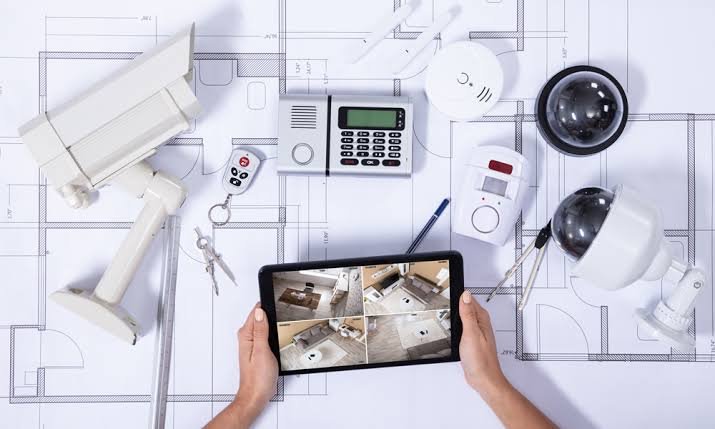
A traditional home alarm system usually consists of a central control unit connected to security devices such as:
- Door sensors
- Window sensors
- Motion detectors
- Siren
- Keypad
- Other compatible detectors
When an armed sensor detects an event, the system activates an alarm.
Some systems can also communicate with external monitoring services or other communication devices, while basic installations may primarily sound a local siren.
Traditional does not necessarily mean outdated. Modern professional alarm panels can be sophisticated while remaining largely independent of consumer smart-home platforms.
What Is a Smart Home Security System?
A smart security system combines sensors and alarms with network-connected controls.
Depending on the system, it may include:
- Door/window sensors
- Motion sensors
- Smart cameras
- Video doorbell
- Smart locks
- Siren
- Mobile app
- Remote notifications
- Automation
- Cloud or local video storage
The defining feature is connectivity.
Instead of discovering an alarm only when you are home or when someone nearby hears it, you may receive an alert remotely.
1. Remote Alerts
Winner: Smart security system
This is one of the biggest advantages of smart security.
Suppose you are away from home and a door sensor activates.
A connected system may send an alert directly to your phone.
Depending on the equipment, you might then be able to check:
- Which sensor triggered
- Camera footage
- Door status
- Alarm status
A basic traditional alarm cannot provide the same level of remote information.
For people who frequently travel or leave their homes empty during the day, remote notifications can be valuable.
2. Local Alarm Reliability
Winner: Traditional system for simplicity
A traditional alarm does not necessarily need cloud services to perform its core local function.
A sensor communicates with the control system, and the siren activates when required.
Smart systems can also have local sirens and local functionality, but some advanced features may depend on:
- Internet connectivity
- Wi-Fi
- Manufacturer servers
- Apps
- User accounts
When choosing a smart system, find out what continues working when the internet is unavailable.
The best connected system should not become completely ineffective simply because Wi-Fi goes down.
3. Security Cameras
Winner: Smart security system
Smart systems commonly integrate video surveillance directly into the same ecosystem.
A single app may provide access to:
- Entrance camera
- Video doorbell
- Indoor cameras
- Outdoor cameras
This can make it easier to understand why an alert occurred.
For example, a motion notification alone tells you that movement was detected.
A camera can provide additional visual context.
Traditional alarm systems can also be combined with CCTV, but the camera system may operate separately.
4. Smart Locks and Door Access
Winner: Smart security system
Connected security systems can integrate with compatible smart locks.
Depending on the product, homeowners may be able to:
- Check lock status
- Lock a door remotely
- Receive access notifications
- Use temporary access permissions
However, convenience should not replace physical security quality.
A connected lock still needs appropriate mechanical construction and proper installation.
Home security should be designed in layers rather than relying on one smart device.
5. Internet Dependence
Winner: Traditional alarm
Basic traditional alarms generally have less reliance on home internet.
This can be valuable where broadband or Wi-Fi is unreliable.
Smart security devices may lose remote functionality during an internet outage.
Some systems compensate with features such as:
- Local recording
- Local alarms
- Backup communication
- Offline sensor operation
These capabilities vary significantly by product.
Before buying, ask:
What exactly stops working if my internet connection fails?
6. Power Cuts and Backup
Winner: Depends on system design
Power cuts can affect both smart and traditional security systems.
A properly designed traditional alarm may include battery backup for the control panel and sensors.
Smart systems may use:
- Battery-powered sensors
- Rechargeable cameras
- UPS-backed hubs
- Battery-backed routers
However, even if the security hub remains powered, remote alerts may stop if the router or internet equipment loses power.
For Indian homes where outages may occur, backup power should be planned across the complete communication chain.
7. Installation
Winner: Smart wireless systems for simple retrofits
Many smart security products use wireless communication.
This can reduce the need for extensive cabling in an existing finished home.
Wireless devices can be attractive for:
- Flats
- Rental homes
- Completed interiors
- Small houses
Traditional wired systems can require more installation work but can provide stable dedicated connections.
For new construction, security cabling can be planned before walls are finished, making wired or hybrid systems easier to install neatly.
8. Expandability
Winner: Smart security system
A smart system can often be expanded gradually.
You might start with:
Door sensors + hub
and later add:
- Cameras
- Video doorbell
- Motion sensors
- Smart lock
- Additional outdoor devices
This can make the initial project more manageable.
Traditional alarm systems can also be expanded, but the number and type of supported devices depend on the control panel and wiring.
9. Cost
Winner: Depends on the required features
A basic traditional alarm may cost less than building a complete connected security ecosystem.
But smart security does not always need to be installed all at once.
Costs can include:
- Sensors
- Cameras
- Hub
- Smart locks
- Storage
- Installation
- Backup power
- Optional subscriptions
Do not compare only the starter-kit price.
Consider the complete cost of the security features you actually intend to use.
10. Ongoing Costs
Winner: Traditional system, potentially
Some smart cameras and security platforms offer optional or required paid services for features such as:
- Cloud video storage
- Extended recording history
- Advanced notifications
- Professional monitoring
Traditional local alarm systems may have fewer recurring digital-service costs, although professionally monitored systems can also involve ongoing charges.
Before purchasing any security system, determine which features continue to work without a subscription.
11. Privacy
Winner: Traditional system for fewer connected components
Internet-connected cameras and microphones introduce additional privacy considerations.
Homeowners should understand:
- Where recordings are stored
- Who can access the account
- Whether cloud storage is used
- How long recordings are retained
- What security settings are available
Use strong, unique passwords and enable stronger account protection such as multi-factor authentication when supported.
Traditional alarms without internet-connected cameras generally collect less sensitive digital information.
12. Automation
Winner: Smart security system
Automation is one of the clearest strengths of a connected system.
Depending on device compatibility, an event can trigger multiple actions.
For example, when the system is armed, compatible devices might adjust automatically.
When a sensor detects an event, the system might activate a light or send a notification.
Automation can improve convenience, but important security functions should not become unnecessarily complicated.
A simple, reliable security rule is often better than a large chain of automations that nobody understands.
13. False Alarms
Winner: Depends on configuration
Both systems can produce unwanted alerts if sensors are poorly positioned or incorrectly configured.
Possible causes include:
- Pets
- Curtains
- Movement near sensors
- Incorrect sensitivity
- User mistakes
Smart systems can provide additional context through cameras or detailed notifications, making it easier to determine what happened.
Proper installation and configuration remain important regardless of technology.
14. Rental Homes
Winner: Smart wireless system
Wireless smart devices can be particularly attractive for tenants because many can be installed with relatively limited permanent modification.
A tenant may also be able to take compatible equipment when moving.
A fully wired traditional system is more naturally suited to a permanent property installation.
Tenants should still obtain any necessary permission before drilling, mounting cameras or changing locks.
15. Independent Houses
Winner: Hybrid security approach
Independent houses can have more potential access points than flats.
Security planning may need to consider:
- Main entrance
- Rear entrance
- Ground-floor windows
- Terrace access
- Gate
- Garage
- Outdoor areas
For these properties, a hybrid approach can be effective.
A dedicated alarm system can provide core intrusion detection, while selected smart cameras and remote alerts provide additional information.
The objective should be layered security rather than dependence on one device.
16. Flats and Apartments
Winner: Smart system for many households
Flats often have fewer external access points.
A simple setup might focus on:
- Main entrance sensor
- Video doorbell or entrance camera
- Internal siren
- Selected motion detection
Remote notifications can be particularly convenient when occupants are at school, work or travelling.
However, cameras should be positioned with privacy and building rules in mind, especially around common areas.
Smart System or Traditional Alarm: Which Should You Choose?
Choose a smart home security system if:
- You want phone notifications.
- Remote monitoring matters.
- You want integrated cameras.
- You plan to add smart locks or other connected devices.
- You prefer a system that can expand gradually.
- Your internet connection is reasonably reliable.
Choose a traditional alarm system if:
- You mainly want reliable local intrusion detection.
- Internet independence is important.
- You prefer simpler technology.
- You do not need remote video access.
- You want fewer cloud-connected devices.
Consider a hybrid system if you want the strengths of both.
Why a Hybrid Approach Can Be Better
The choice does not need to be purely smart versus traditional.
A robust home setup can combine:
Dedicated alarm + local siren + door/window sensors + battery backup
with:
Smart cameras + remote alerts + video doorbell
This keeps important local security functions available even when some connected features are unavailable.
It also allows homeowners to use smart technology where it adds genuine value rather than making every component dependent on the internet.
Which Is Better?
For homeowners who want remote alerts, cameras, app control and easy expansion, a smart home security system provides more functionality.
For people who prioritise simplicity, local operation and minimal dependence on internet-connected services, a traditional alarm system remains a practical choice.
For many Indian homes, the strongest solution may be a carefully designed hybrid.
Whatever technology you choose, avoid judging home security only by the number of gadgets installed. Door and window quality, appropriate locks, lighting, sensible access control, reliable alarms and household habits all contribute.
Smart features can tell you more about what is happening. A dependable core security system ensures the home is still protected when the smart features are unavailable.
FAQs
Q1. Is a smart home security system better than a traditional alarm?
A. A smart system offers more features such as phone alerts, remote access and camera integration. A traditional alarm may provide simpler local operation with less dependence on internet-connected services. The better option depends on the homeowner’s priorities.
Q2. Will a smart security system work if the internet goes down?
A. It depends on the product. Some systems retain local sensors and sirens while losing remote notifications or cloud features. Check the manufacturer’s offline functionality and backup options before choosing a system.
Q3. Do smart home security systems require a subscription?
A. Not always. Some systems provide basic functions without recurring fees, while cloud recording, extended video history, monitoring or advanced features may require a subscription. This varies by provider.
Q4. Are wireless security systems suitable for flats?
A. They can be particularly convenient for flats because installation may require less cabling and the system can often be expanded gradually. Device placement, building rules and privacy should still be considered.
Q5. Can I combine a traditional alarm with smart cameras?
A. Yes. A hybrid approach can use a dedicated alarm for local intrusion detection and smart cameras for remote viewing and notifications. This can provide connected features without making every security function dependent on one platform.