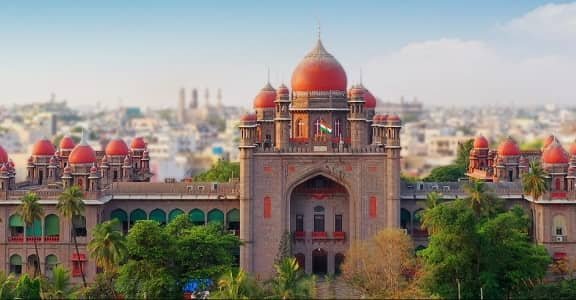
The Gauhati High Court — with its principal seat in Guwahati, the gateway city of India’s northeast, on the banks of the mighty Brahmaputra — is one of India’s most constitutionally distinctive and geographically extraordinary superior courts. It has the largest jurisdiction in terms of states, with its area covering the states of Assam, Arunachal Pradesh, Nagaland, and Mizoram — four of India’s eight northeastern states whose diverse tribal cultures, distinct legal traditions, and vast forest territories present judicial challenges that no other High Court in the country faces in comparable complexity. Originally established as the High Court of Assam, renamed through three institutional transformations across seven decades, and currently serving as the common High Court for four northeastern states, the Gauhati High Court is a unique institution in the Indian judicial system.
History
On September 9, 1947, the Assam Legislative Assembly adopted a resolution that a High Court be established for the Province of Assam. In exercise of power conferred by the Government of India Act 1935, the Governor General of India promulgated the Assam High Court Order 1948, establishing the High Court of Assam with effect from April 5, 1948. Sir Harilal Kania, the then Chief Justice of India, came to preside over the inauguration at the invitation of His Excellency the Governor of Assam Sir Akbar Hydari and the Premier of the Province, Gopinath Bardoloi. Sir R.F. Lodge was sworn in as the first Chief Justice on April 5, 1948.
The Assam High Court initially had its sittings at Shillong but shifted to Gauhati from August 14, 1948. It came to be known as the High Court of Assam and Nagaland on the constitution of the State of Nagaland with effect from December 1, 1963. On reorganisation of the North-Eastern region by the North Eastern Areas (Reorganisation) Act, 1971, a common High Court was established for five North-Eastern States and two Union Territories, called as the Gauhati High Court.
The Gauhati High Court occupied the unique position of being the common High Court of seven states of North East India until March 23, 2013, when separate High Courts began functioning in Meghalaya, Manipur, and Tripura. Today it serves four states — Assam, Arunachal Pradesh, Nagaland, and Mizoram — from its principal seat and three outlying permanent benches.
Structure and Composition
| Dimension | Detail |
| Established | April 5, 1948 — as High Court of Assam |
| Renamed Gauhati High Court | 1971 — North Eastern Areas (Reorganisation) Act |
| First Chief Justice | Sir R.F. Lodge — sworn in April 5, 1948 |
| Principal Seat | Guwahati, Assam |
| Kohima Bench (Nagaland) | Established December 1, 1972 |
| Aizawl Bench (Mizoram) | Established July 5, 1990 |
| Itanagar Bench (Arunachal Pradesh) | Established August 12, 2000 |
| Sanctioned judge strength | 24 judges (including Chief Justice + 5 Additional Judges) |
| Jurisdiction | Assam, Arunachal Pradesh, Nagaland, Mizoram |
| First Virtual Court in NE India | November 12, 2020 — state of Assam |
Architecture and Digital Initiatives
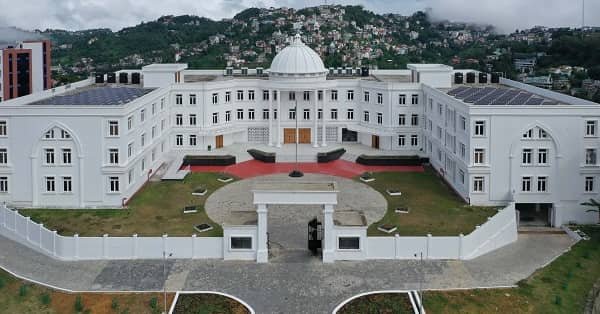
The Gauhati High Court building at Guwahati sits within the broader urban landscape of one of India’s most dynamic and rapidly growing northeastern cities — a structure that reflects the court’s evolution from its modest beginnings at Shillong through its growth into a multi-bench institution serving four states. The court complex accommodates the Division Bench and Single Bench courts, judges’ chambers, the registry, a well-maintained library, and bar facilities that serve the advocates of Assam and the northeastern legal fraternity.
The Gauhati High Court inaugurated the first Virtual Court of North-East India on November 12, 2020, in the presence of Justice D.Y. Chandrachud, then Judge and Chairperson of the e-Committee of the Supreme Court of India. The court commissioned a Judicial Network for the State of Assam, facilitating seamless data transfer to the National Judicial Data Grid and video conferencing between courts and jails. The Gauhati High Court took a proactive role in implementing e-Challans, enabling virtual courts for traffic violations, and conducting awareness camps on e-Courts services at district court complexes across Assam.
Frequently Asked Questions
Q: When was the Gauhati High Court established?
A: The High Court of Assam was established on April 5, 1948. It was renamed the Gauhati High Court in 1971.
Q: Who was the first Chief Justice?
A: Sir R.F. Lodge was sworn in as the first Chief Justice of Assam High Court on April 5, 1948.
Q: Where is the principal seat located?
A: Guwahati, Assam.
Q: Which states does it currently serve?
A: Assam, Arunachal Pradesh, Nagaland, and Mizoram.
Q: How many permanent benches does it have?
A: Three — Kohima (Nagaland), Aizawl (Mizoram), and Itanagar (Arunachal Pradesh).
Q: What is the sanctioned judge strength?
A: 24 judges including the Chief Justice and 5 Additional Judges.
Q: What digital distinction does the Gauhati High Court hold?
A: It established the first Virtual Court of North-East India on November 12, 2020.
Q: Where did the Assam High Court first sit before moving to Guwahati?
A: The Assam High Court initially sat at Shillong before shifting to Gauhati on August 14, 1948.