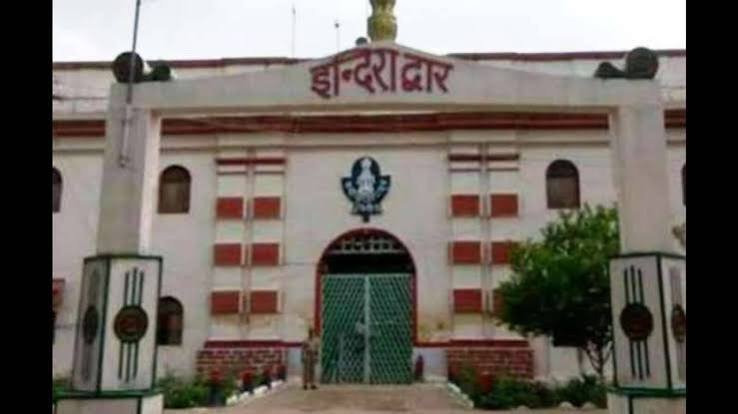
The District and Sessions Court Indore — located at New Siyaganj, Indore, Madhya Pradesh, approximately 0.35 kilometres from the Indore BG Railway Station — is the apex trial court for Indore district, the largest city and commercial capital of Madhya Pradesh. Serving a city that is the only one in India to simultaneously house an Indian Institute of Management and an Indian Institute of Technology, the Indore District Court combines a heritage architectural building of exceptional historical significance — constructed in 1905 during the reign of Maharaja Tukaroji Holkar III — with a contemporary role as the judicial hub of one of central India’s most dynamic and rapidly growing commercial metropolises. The court functions under the supervision of the Madhya Pradesh High Court, which maintains a permanent bench at Indore.
District Court Indore History
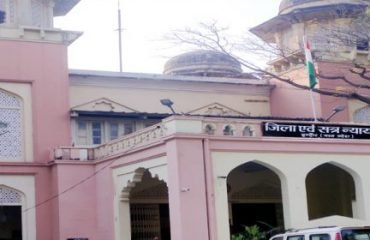
The historical building of Indore District Court was formed in 1905 by the Regency Council during the reign of Maharaja Tukaroji Holkar III of the Holkar dynasty — the Maharashtrian ruling family that had made Indore the capital of the Indore Princely State. The famous architectural firm M/s Stevenson and Company designed the building in celebration of the proposed Indore visit of England’s future emperor George V — making the building a deliberate statement of civic grandeur and political symbolism created at the intersection of Indian princely ambition and British imperial occasion.
Indore itself carries a history of extraordinary civilisational layering. The city was founded in 1715 as a trade market on the Narmada River valley route by local landowners who erected Indreshwar Temple in 1741 — from which the name Indore is derived. It became the capital of the Holkar Princely State and was the headquarters of the British Central India Agency and the summer capital of Madhya Bharat from 1948 to 1956. When Madhya Pradesh was formed after states reorganisation in 1956, Indore became one of its most important cities — and its district court became one of the most significant in the newly formed state, falling under the jurisdiction of the MP High Court’s permanent Indore Bench.
District Court Indore Structure and Composition
| Dimension | Detail |
| Building constructed | 1905 — Regency Council, reign of Maharaja Tukaroji Holkar III |
| Architect | M/s Stevenson and Company — colonial firm |
| Occasion for building | Proposed visit of future Emperor George V of England |
| Location | New Siyaganj, Indore, Madhya Pradesh — 452007 |
| Distance from railway station | 0.35 km from Indore BG Railway Station |
| High Court supervision | Madhya Pradesh High Court — permanent Indore Bench |
| City founded | 1715 — trade market; name from Indreshwar Temple (1741) |
| City’s unique distinction | Only Indian city with both an IIM and an IIT |
| Court types | Civil, Criminal, Family Courts, Special Courts |
| Digital infrastructure | eCourts Mission Mode Project — e-filing, case status, virtual hearings |
| Bar Association | Indore District Bar Association — one of MP’s most active |
| Legal aid | District Legal Services Authority, Indore |
Architecture — The 1905 Heritage Building
The Indore District Court building is one of Madhya Pradesh’s most historically significant judicial premises — a 120-year-old structure whose colonial architectural character reflects the specific cultural moment of its construction: the Holkar dynasty’s Indore at the peak of its princely grandeur, commissioning an architectural firm of imperial credentials to create a building worthy of a royal city that was simultaneously a British administrative headquarters.
M/s Stevenson and Company’s design for the Indore District Court reflects the Indo-colonial architectural vocabulary that characterised institutional buildings across the Holkar-era Indore cityscape — a style that combined European structural conventions with decorative elements acknowledging the local princely context. The building stands as one of the rare district court buildings in India whose architectural heritage predates Indian independence by over four decades and whose original commissioning reflects the intersection of princely patronage and colonial institutional design.
The court functions alongside the Madhya Pradesh High Court’s permanent Indore Bench — located within the same city — creating a unique judicial geography where district court litigants have relatively proximate access to both the trial court and the appellate High Court Bench in the same urban area.
Frequently Asked Questions
Q1. When was the Indore District Court building constructed?
1905 — by the Regency Council during the reign of Maharaja Tukaroji Holkar III.
Q2. Who designed the building?
M/s Stevenson and Company — a famous architectural firm of the colonial era.
Q3. What was the occasion for constructing the building?
The proposed visit of England’s future Emperor George V to Indore.
Q4. Where is the court located?
New Siyaganj, Indore, Madhya Pradesh 452007 — 0.35 km from Indore BG Railway Station.
Q5. What is Indore’s unique educational distinction?
It is the only city in India to have both an Indian Institute of Management and an Indian Institute of Technology.
Q6. Which High Court supervises the Indore District Court?
The Madhya Pradesh High Court — which maintains a permanent bench in Indore.
Q7. What digital services are available?
e-Filing, online case status, virtual hearings, and the eCourts Mission Mode Project infrastructure.