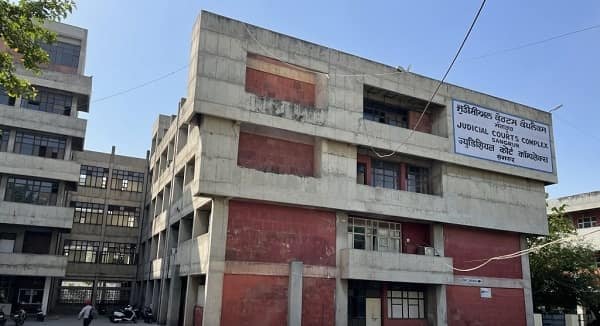
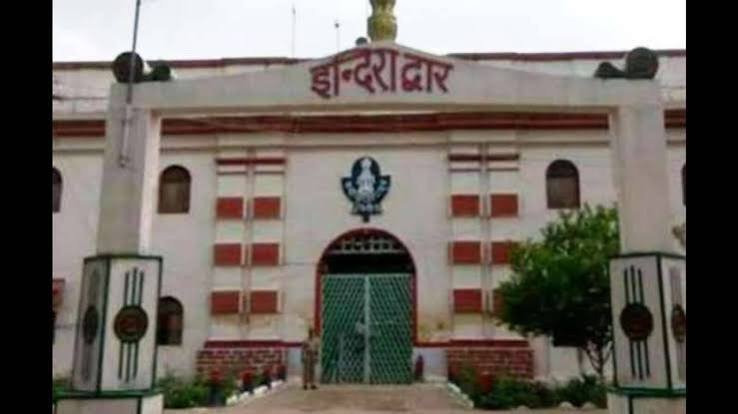
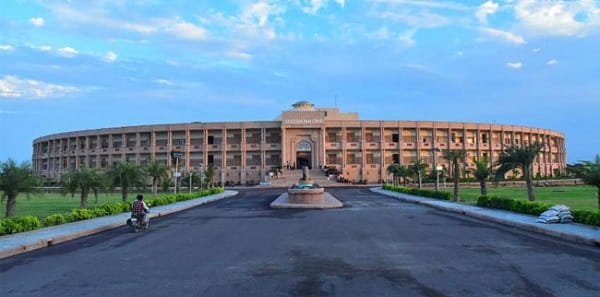
The High Court of Jammu and Kashmir and Ladakh — one of India’s most constitutionally unique and geographically extraordinary superior courts — is the common High Court for both the Union Territory of Jammu and Kashmir and the Union Territory of Ladakh, exercising jurisdiction over two of the country’s most strategically significant and scenically magnificent regions. Established on March 26, 1928, by Maharaja Hari Singh through Order No. 1, the court carries nearly a century of unbroken judicial tradition — predating Indian independence and having served the Dogra Maharaja’s princely state before transitioning to the Indian constitutional framework after accession in 1948. The court possesses a distinction found nowhere else in India’s entire superior court system — its principal seat shifts annually between two capitals, functioning from Srinagar as its summer capital from April to October and from Jammu as its winter capital from November to March, mirroring the centuries-old administrative tradition of the region itself. In 2019, when the Jammu and Kashmir Reorganisation Act bifurcated the former state into two Union Territories — Jammu and Kashmir and Ladakh — the court continued seamlessly as the common High Court for both, adding Ladakh to its jurisdiction and becoming the only High Court in India to serve two Union Territories simultaneously.
History and Establishment
The story of judicial administration in Jammu and Kashmir begins with Maharaja Gulab Singh, who took over the State under the Treaty of Amritsar on March 16, 1846, and in whom was vested the supreme judicial power — the Maharaja himself served as the final authority on all matters of justice, with Chief Courts at Srinagar and Jammu functioning under his ultimate control. In 1889, the British Government asked Maharaja Partap Singh to establish a State Council, and the Judicial Member of that Council exercised appellate powers on both civil and criminal sides — an arrangement that began the gradual formalisation of judicial authority separate from purely personal royal prerogative.
In 1922, Maharaja Partap Singh introduced the Shri Pratap Reforms Regulation which envisaged the reconstitution of the High Court of Judicature in the State, constituting it of judges appointed by the Maharaja with original and appellate jurisdiction in civil and criminal matters and powers of superintendence over all other courts. The full-fledged High Court of Judicature for the Jammu and Kashmir State was formally established in 1928 — by Order No. 1 issued by Maharaja Hari Singh — as a structured, independent judicial institution with its own bench of judges. Lala Kanwar Sain was appointed the first Chief Justice, with Lala Bodh Raj Sawhney and Khan Sahib Aga Syed Hussain as the first puisne judges. Maharaja Hari Singh conferred Letters Patent on the High Court on September 10, 1943, formalising its powers as a court of record with comprehensive jurisdiction.
India attained independence on August 15, 1947, but Jammu and Kashmir acceded to the Indian Union only on October 26, 1947, followed by formal integration on October 17, 1948. After accession, the High Court transitioned to the Indian constitutional framework while retaining the distinctive characteristics shaped by the region’s unique history. In 2018, the court achieved a historic gender milestone when Justice Gita Mittal became Chief Justice and Justice Sindhu Sharma was appointed as a judge — becoming the first and second woman judges of the court in the same year.
The most transformative institutional development in the court’s recent history arrived with the Jammu and Kashmir Reorganisation Act, 2019, passed by Parliament in August 2019 and coming into force on October 31, 2019 — bifurcating the former state of Jammu and Kashmir into two Union Territories. The court continued as the High Court for both Union Territories, formally renamed the High Court of Jammu and Kashmir and Ladakh, extending its jurisdiction to encompass Ladakh’s vast Himalayan geography.
Jurisdiction and Powers
The High Court of Jammu and Kashmir and Ladakh exercises the complete constitutional jurisdiction granted to High Courts under Articles 226 and 227 of the Constitution over both Union Territories — the Union Territory of Jammu and Kashmir covering 42,241 square kilometres and the Union Territory of Ladakh covering 59,146 square kilometres, together spanning over 100,000 square kilometres of Himalayan and sub-Himalayan terrain. The court issues all constitutional writs — habeas corpus, mandamus, certiorari, prohibition, and quo warranto — as the guardian of fundamental rights for the combined population of both Union Territories.
Its appellate jurisdiction extends over all subordinate civil and sessions courts in both Union Territories, its supervisory jurisdiction under Article 227 covers every court and tribunal, and its criminal jurisdiction encompasses appeals, revisions, and bail matters from every district court across the region. Given the Union Territory status of both Jammu and Kashmir and Ladakh, the court also exercises jurisdiction over matters involving Central Government administration in both territories — a jurisdiction dimension that distinguishes it from High Courts serving full states.
Structure, Composition, and Key Facts
| Dimension | Detail |
| Established | March 26, 1928 — Order No. 1 of Maharaja Hari Singh |
| First Chief Justice | Lala Kanwar Sain |
| Letters Patent conferred | September 10, 1943 — by Maharaja Hari Singh |
| Jurisdiction (post-2019) | UT of Jammu and Kashmir + UT of Ladakh |
| Summer seat | Srinagar — functions April to October |
| Winter seat | Jammu — functions November to March |
| Sanctioned judge strength | 17 judges (13 permanent + 4 additional) |
| Acting Chief Justice (2024–present) | Justice Tashi Rabstan |
| Judicial Academy | Established 2001 — campuses in Jammu and Srinagar |
| First woman judges | Justice Gita Mittal (CJ) and Justice Sindhu Sharma — 2018 |
| Unique distinction | Only High Court in India serving two Union Territories |
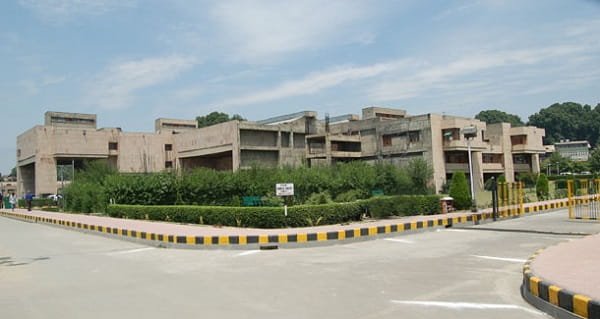
The court’s dual-capital structure — moving between Srinagar and Jammu annually — is operationally unique in Indian judicial history. The administrative machinery, judges’ chambers, registry, and judicial academy all migrate with the court between the two cities, maintaining judicial continuity across the seasonal transition. The Jammu and Kashmir State Judicial Academy, established in 2001, maintains dedicated infrastructure in both cities — in the premises of the High Court at Jammu and at Mominabad in Srinagar — conducting training programmes for judicial officers from across both Union Territories year-round.
Digital Transformation and Access to Justice
| Digital Initiative | Detail |
| eCourts Services Mobile App | Available for litigants across both UTs |
| JustIS Mobile App | Android version — for judicial officers |
| e-Court Application | Case management and digital filing |
| e-Courts Awareness Webinars | Organised by J&K Judicial Academy |
| Virtual hearings | Implemented during pandemic — continued thereafter |
| ICJS implementation | Inter-operable Criminal Justice System — district courts |
The High Court of Jammu and Kashmir and Ladakh has invested significantly in digital court infrastructure — particularly important given the geographic challenges of serving two of India’s most mountainous, remote, and topographically demanding Union Territories. The eCourts Services Mobile App, JustIS Mobile App, and e-Court Application infrastructure bring case management and judicial access tools to advocates and litigants in areas where physical court access is logistically challenging during winter snowfall. E-Courts Awareness Webinars organised by the J&K Judicial Academy have reached judicial officers across remote districts of Ladakh — including Leh and Kargil — building digital judicial literacy across one of India’s most geographically isolated judicial jurisdictions.
Frequently Asked Questions
Q: When was the Jammu and Kashmir High Court established?
A: The full-fledged High Court of Judicature for Jammu and Kashmir was established on March 26, 1928, by Maharaja Hari Singh through Order No. 1.
Q: Who was the first Chief Justice?
A: Lala Kanwar Sain was appointed the first Chief Justice, joined by Lala Bodh Raj Sawhney and Khan Sahib Aga Syed Hussain as the first puisne judges.
Q: Where does the court sit?
A: The court shifts between two seats annually — Srinagar serves as the summer capital from April to October, and Jammu serves as the winter capital from November to March.
Q: What is the sanctioned judge strength?
A: The sanctioned strength is 17 judges — comprising 13 permanent judges and 4 additional judges including the Chief Justice.
Q: Which Union Territories does the court serve?
A: The court serves both the Union Territory of Jammu and Kashmir and the Union Territory of Ladakh — making it the only High Court in India to serve two Union Territories simultaneously.
Q: When did the court extend its jurisdiction to Ladakh?
A: When the Jammu and Kashmir Reorganisation Act, 2019 came into force on October 31, 2019, the former state was bifurcated into two Union Territories and the court was renamed the High Court of Jammu and Kashmir and Ladakh.
Q: When did the court get its first woman judges?
A: In 2018, Justice Gita Mittal was appointed Chief Justice and Justice Sindhu Sharma was appointed as a judge — becoming the court’s first and second women judges in the same year.
Q: What is the J&K Judicial Academy?
A: The Jammu and Kashmir State Judicial Academy was established in 2001 and conducts training programmes for judicial officers with campuses in both Jammu and Srinagar, migrating with the court between the two cities.
Q: Can judgments of the J&K High Court be appealed?
A: Yes. Judgments can be appealed to the Supreme Court of India through statutory appeal or through a Special Leave Petition under Article 136 of the Constitution.
Q: What makes the J&K High Court constitutionally unique?
A: It is the only High Court in India that serves two separate Union Territories, operates from two seasonal capitals in different cities, and carries a judicial tradition that predates Indian independence by 19 years — having been established in 1928 under a princely state’s royal order before transitioning to the Indian constitutional framework after accession in 1948.