The District Munsif Court — known in some states as the District Munsiff Court or Civil Judge Junior Division Court — is the foundational institution at the base of India’s civil justice pyramid, functioning as the lowest-tier civil court within each district’s hierarchical judiciary. As the first point of contact for millions of ordinary citizens seeking resolution of civil disputes, property disagreements, recovery of money, and contract-related matters involving modest financial stakes, the District Munsif Court occupies a constitutionally vital position that no description of the Indian judicial system can overlook. The term Munsif itself is derived from the Arabic word meaning one who is just or equitable — a name that carries the essence of the institution’s founding purpose: providing accessible, affordable, and fair adjudication for civil disputes that would otherwise overwhelm the higher tiers of the district judiciary. Under the administrative and supervisory control of the respective state High Court and the immediate superintendence of the District and Sessions Judge, the Munsif Court serves as the cornerstone upon which India’s entire district civil justice infrastructure rests.

History
The Munsif Court’s institutional origins trace to the earliest decades of British administrative consolidation of the Indian subcontinent, when the East India Company recognised the impossibility of administering civil justice across India’s vast and densely populated territories through a small number of centralised District Judge courts alone. The Bengal Regulations of the late 18th and early 19th centuries — particularly those of 1793 under Governor-General Lord Cornwallis — established a tiered civil court structure that placed Munsifs at the base, handling small-value civil suits that could be dispensed of quickly and locally without burdening the District Sadar Diwani Adalat or Subordinate Judge with every minor property and money dispute.
In the Madras Presidency, Munsif Courts evolved through a series of legislative enactments across the 19th century — with the Civil Courts Act progressively defining the Munsif’s pecuniary jurisdiction and territorial extent. In the Cochin area, Regulation I of 1036 passed in June 1861 provided for the establishment of Munsiff Courts for the trial of cases not exceeding Rs 100 in value — a specific threshold that captures how targeted the original Munsif jurisdiction was, designed to bring civil justice within the financial and geographic reach of litigants for whom travelling to a District Court represented a prohibitive burden.
The post-independence period saw significant rationalisation of Munsif Court jurisdiction across India’s states. The Civil Courts Act of 1887 — the Bengal, Agra and Assam Civil Courts Act — continued to govern civil court hierarchies across several states including those carved out of the United Provinces and Assam. In southern India, particularly in Andhra Pradesh, Karnataka, Kerala, and Tamil Nadu, the Civil Courts Act and Code of Civil Procedure defined Munsif jurisdiction through specific pecuniary thresholds that state governments periodically revised upward to account for inflation and economic growth.
Structure, Jurisdiction, and Composition
| Dimension | Detail |
| Position in hierarchy | Lowest-tier civil court — below Sub-Judge / Senior Civil Judge |
| Name in different states | Munsif Court (AP, TN, Kerala), Civil Judge Junior Division (UP, Bihar, other states) |
| Presiding officer | Munsiff / Judicial Magistrate / Civil Judge Junior Division |
| Pecuniary jurisdiction | Set by state government — handles suits up to specified monetary limits |
| Territorial jurisdiction | Prescribed by state government — district sub-division or taluka |
| Appellate authority | Appeals from Munsif Court lie to Sub-Judge / Senior Civil Judge |
| Appeals from Sub-Judge | Lie to the District Court |
| Type of cases handled | Civil suits — property disputes, money recovery, contract disputes, injunctions |
| Criminal jurisdiction | None — exclusively civil court |
| Governing legislation | Civil Courts Act and Code of Civil Procedure, 1908 |
| Administrative control | High Court — under Article 235 of the Constitution |
| Superintendence | District and Sessions Judge at district level |
| Location | Sub-divisional headquarters and major taluka towns within each district |
The District Munsif Court is presided over by a Munsiff — a judicial officer appointed to the state judicial service through the State Public Service Commission in consultation with the High Court, following a rigorous written examination and interview process that selects candidates with law degrees and the demonstrated aptitude for civil adjudication. In several states, the same officer exercises both civil powers as a Munsiff and criminal powers as a Judicial Magistrate — the designation Civil Judge cum Judicial Magistrate First Class reflecting this dual functional appointment that minimises the number of judicial officers needed for comprehensive district judicial coverage.
Architecture and Physical Infrastructure
| State Designation | Equivalent Title | Jurisdiction Type |
| Andhra Pradesh / Telangana | Junior Civil Judge Court | Civil — limited pecuniary |
| Tamil Nadu | District Munsif Court | Civil — limited pecuniary |
| Kerala | Munsiff Court | Civil — original |
| Karnataka | Civil Judge Junior Division Court | Civil — limited pecuniary |
| Uttar Pradesh / Bihar | Civil Judge Junior Division | Civil — Rs 3 lakh pecuniary limit |
| West Bengal | Munsif Court | Civil — pecuniary limits set by state |
| Madhya Pradesh / Chhattisgarh | Civil Judge Junior Division | Civil — limited pecuniary |
| Punjab / Haryana | Civil Judge Junior Division | Civil — limited pecuniary |
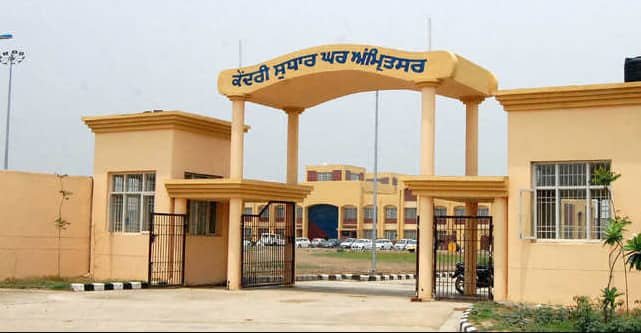
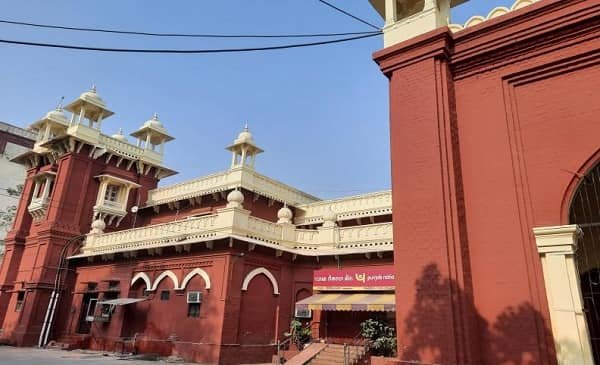
The physical premises of District Munsif Courts across India range from the historic to the contemporary — some courts in older southern Indian cities like Ernakulam, Chennai, Coimbatore, and Mysuru function from colonial-era buildings whose architectural heritage predates Indian independence, while newer Munsif Courts established in recently formed districts or sub-divisional headquarters occupy purpose-built government civil court buildings developed under state PWD programmes or the eCourts Mission Mode Project’s infrastructure investment initiatives. Most Munsif Courts function as part of larger district court complexes — co-located with Sub-Judge courts, Additional District courts, Family Courts, and the District Legal Services Authority within a single campus that allows litigants to access multiple court levels without multiple physical journeys.
Frequently Asked Questions
Q: What does the word Munsif mean?
A: Munsif is derived from an Arabic word meaning one who is just or equitable — reflecting the court’s foundational purpose of providing fair civil adjudication.
Q: What types of cases does a Munsif Court handle?
A: Civil suits including property disputes, money recovery, contract disputes, and injunctions within specified pecuniary limits set by the state government. It has no criminal jurisdiction.
Q: Where does a Munsif Court stand in the judicial hierarchy?
A: At the base of the civil court structure — below the Sub-Judge or Senior Civil Judge Court, which itself is below the District Court.
Q: Who presides over a Munsif Court?
A: A Munsiff — a state judicial service officer appointed through competitive examination in consultation with the High Court.
Q: Can a Munsif Court’s order be appealed?
A: Yes — appeals from Munsif Court decisions lie to the Sub-Judge or Senior Civil Judge Court, and further appeals lie to the District Court.
Q: Which legislation governs Munsif Courts?
A: The Civil Courts Act (state-specific), the Code of Civil Procedure 1908, and each state’s notification of pecuniary and territorial jurisdiction limits.
Q: Which High Court controls Munsif Courts?
A: The respective state High Court — under Article 235 of the Constitution which vests administrative control of subordinate courts in the High Court.
Q: Do Munsif Courts exercise criminal jurisdiction?
A: No — they are exclusively civil courts. In some states, the same officer may hold dual charge as both Munsiff and Judicial Magistrate.