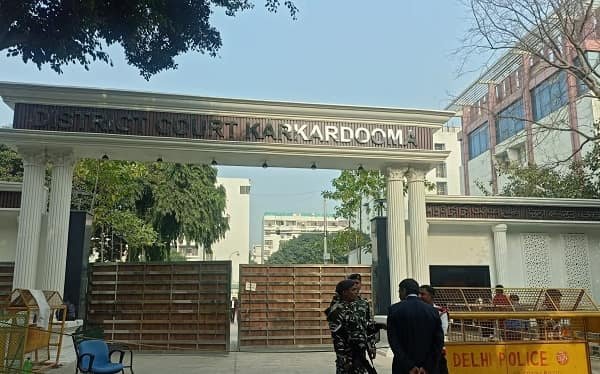
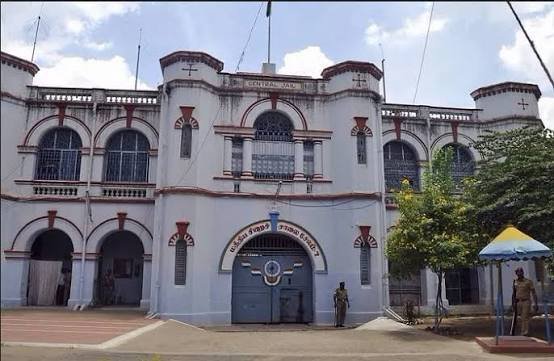
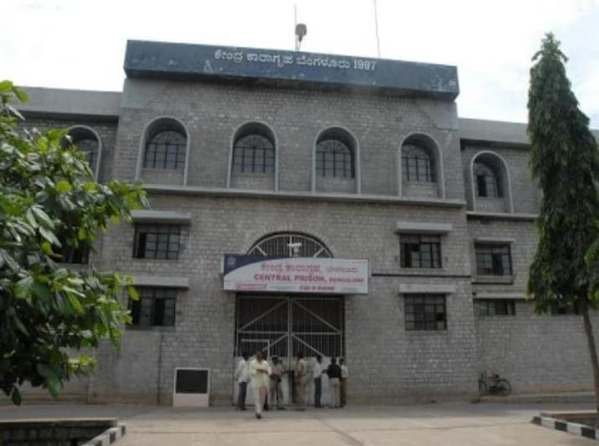
The District Court Bengaluru Urban — the apex trial court for the Bengaluru Urban district in the state of Karnataka — is one of India’s most institutionally complex and architecturally diverse district court systems, serving India’s Silicon Valley and the country’s third-largest city by population, home to over 13 million citizens and hundreds of technology, aerospace, and biotechnology companies. Bengaluru’s unique judicial infrastructure differs fundamentally from a typical district court — the sheer volume of litigation and the specialised nature of commercial disputes arising from the city’s technology economy led to the creation of a dedicated City Civil Court and Small Causes Court as distinct institutions alongside the traditional district judiciary. The City Civil Court, Bengaluru was established on November 17, 1980, and inaugurated by Justice Y.V. Chandrachud, the Chief Justice of India at the time, in the presence of Justice D.M. Chandrashekar, the Chief Justice of Karnataka, Justice M.N. Venkatachalaiah, and Karnataka Chief Minister Sri R. Gundurao. Under the Karnataka High Court, the Bengaluru district courts handle a jurisdiction whose technological and commercial character makes it one of India’s most sophisticated district-level legal ecosystems.
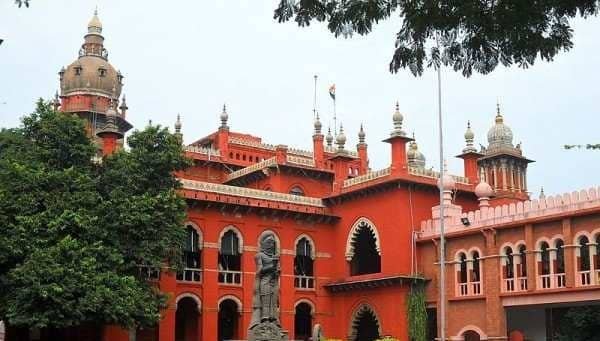
History
Karnataka’s district judicial history traces to 1884 when the Chief Court of Mysore was created. In 1895, one of the three District Courts established by the Mysore Chief Court served Bangalore, with jurisdiction covering the Districts of Bangalore, Kolar, and Tumkur, exercising civil jurisdiction up to Rs 10,000 in pecuniary value and exclusive jurisdiction over Probate, Administration, Land Acquisition, and minors’ estates.
The pivotal institutional transformation in Bengaluru’s judicial history arrived as the city grew from a manageable colonial-era administrative town into a sprawling post-independence metropolis. Earlier, courts in Bengaluru City were like courts in any other district of Karnataka, consisting of Munsiff Courts, Civil Judge’s Courts, and District Courts. Since Bengaluru City was growing enormously and litigation and the filing of cases was also growing in geometric progression, the creation of additional courts to the existing courts was not serving any purpose. This recognition — that a megacity requires a dedicated civil court architecture rather than merely more courts of the same type — led to the City Civil Court’s creation in 1980.
On April 7, 1970, Justice M. Sadashivaiah, the then Chief Justice of Mysore High Court, and the then Law Minister of the Mysore Government laid the foundation stone for the construction of the main building of the Chief Metropolitan Magistrate Court at Nrupatunga Road, Bangalore City. On March 9, 1977, the main building of the Chief Metropolitan Magistrate Court was inaugurated. The commercial courts were later shifted — vide City Civil Court Notification dated February 12, 2021, all eight Commercial Courts were shifted from the City Civil Court Complex to the Commercial Court Complex, functioning in the 2nd and 3rd floor of the BSNL Telephone House, Rajbhavan Road.
Structure and Composition
| Dimension | Detail |
| City Civil Court established | November 17, 1980 — inaugurated by CJI Justice Y.V. Chandrachud |
| CMC Court — foundation stone | April 7, 1970 — by CJ Mysore HC Justice M. Sadashivaiah |
| CMC Court — inaugurated | March 9, 1977 |
| CMC Annexe — foundation stone | October 6, 2005 |
| Small Causes Court established | November 17, 1980 — first Chief Judge: Sri K.N. Kenchanna |
| Commercial Courts shifted | February 2021 — to BSNL Telephone House, Rajbhavan Road |
| High Court supervision | Karnataka High Court, Bengaluru |
| City Civil Court location | Bengaluru Urban District Complex |
| CMC Court location | Nrupatunga Road, Bengaluru |
| Court types | City Civil Court, Sessions Courts, CMC Courts, Family Courts, Small Causes, Commercial Courts, Labour Tribunals |
| Digital services | eCourts Mission Mode — e-ILR Karnataka Series, e-filing, virtual hearings |
Architecture — Mayo Hall and the Multi-Campus Judiciary
Bengaluru’s district court infrastructure is distributed across multiple campuses — a unique multi-site judicial architecture that reflects the city’s spatial expansion. Mayo Hall was built to honour the memory of Lord Mayo, the 4th Viceroy of India. As a tribute, a commemorative building was erected on the South Parade on flat ground with trees, flowering bushes, and a low wall on the south side. It was inaugurated by the British Resident on June 6, 1883. The Bangalore District Gazetteer noted that the building’s elevation was remarkable — a two-storey structure with terraced lawns, built at a cost of Rs 45,000 largely through public donations. This historic building has housed judicial functions at various points in Bengaluru’s judicial history.
The City Civil Court Complex, the Chief Metropolitan Magistrate Complex at Nrupatunga Road, and the new Commercial Courts Complex at BSNL Telephone House together constitute Bengaluru’s distributed district judicial infrastructure — with different specialised courts housed at different strategic locations across the city.
Frequently Asked Questions
Q: When was the City Civil Court Bengaluru established?
A: November 17, 1980 — inaugurated by then Chief Justice of India Justice Y.V. Chandrachud.
Q: Why was a separate City Civil Court needed in Bengaluru?
A: Because litigation was growing in geometric progression with the city’s explosive growth, making the standard district court structure inadequate.
Q: Where are the Commercial Courts in Bengaluru currently located?
A: At the 2nd and 3rd floors of BSNL Telephone House, Rajbhavan Road — shifted from the City Civil Court Complex in February 2021.
Q: When was the CMC Court building inaugurated?
A: March 9, 1977 — foundation stone having been laid on April 7, 1970.
Q: Which High Court supervises the Bengaluru district courts?
A: The Karnataka High Court, Bengaluru.
Q: What is the historical significance of Mayo Hall in Bengaluru’s judicial history?
A: Built in 1883 in honour of Lord Mayo, the 4th Viceroy of India, it has housed judicial functions at various points in Bengaluru’s legal history.
Q: What digital initiatives are in place?
A: e-ILR Karnataka Series launch for digital law reporting, e-filing, virtual hearings, and eCourts Mission Mode Project integration.