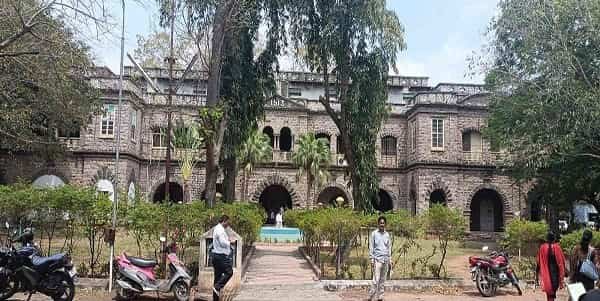
The District Court Bathinda — the apex trial court for the Bathinda Sessions Division in the state of Punjab — is one of North India’s most historically evocative district courts, carrying a judicial legacy that was literally housed inside the ancient Qila Mubarak — the medieval fort of Bathinda — until the upheavals of 1947 forced a relocation. Bathinda’s judicial history is connected to the State of Patiala since 1752 AD when the city became part of the State under Maharaja Ala Singh. Till the disturbances of 1947, the court of District and Sessions Judge, Bathinda was stated to be held in Qila Mubarak and when in 1947, the charge of Qila Mubarak was taken by the Military, the court was shifted to the Muslim High School and remained there up to the year 1954, when it was shifted to Civil Station, old Court Complex. Under the supervision of the Punjab and Haryana High Court at Chandigarh, the court now functions from one of Punjab’s finest modern judicial complexes — inaugurated in 2010 as an ultra-modern all-air-conditioned facility.
History
Earlier, in the year 1943, the state of Patiala was stated to have three posts of District and Sessions Judges — at Patiala, Sunam, and Barnala — but the headquarters of the District and Sessions Judge, Barnala, was at Bathinda. In that year, Raja Shiv Dayal Singh was District and Sessions Judge, Patiala and Shri Kartar Singh Sandhu was District and Sessions Judge at Bathinda. In the Patiala State, the courts were of Naib Nazim Faujdari and Naib Nazim Diwani — the Naib Nazim Diwani was under the control of the District and Sessions Judge while the Naib Nazim Faujdari was under the control of the Nazim, now designated as Deputy Commissioner.
After independence, the Patiala and East Punjab States Union — PEPSU — was formed, and Bathinda became part of this administrative unit. There was only one post of Additional District and Sessions Judge at Bathinda with headquarters at Faridkot. In the Pepsu State, the post of Additional District Magistrates was designated as Chief Judicial Magistrates. The post of Naib Nazim Faujdari and Naib Nazim Diwani were amalgamated into Sub Judges-cum-Judicial Magistrates.
The old building of Judicial Court Complex in which Judicial Courts were functioning up to March 5, 2010, was constructed by the Pepsu Government somewhere in the year 1954, in which some portion of this building was earlier occupied by officers of Excise, Taxation etc. Under the Government Policy for construction of ultra-modern Judicial Courts Complexes for the convenience of people in the State of Punjab, a proposal was framed for construction of Judicial Courts at Bathinda by dismantling the old Judicial Courts building.
Structure and Composition
| Dimension | Detail |
| Historical court location | Qila Mubarak — until 1947 disturbances |
| Shifted to Muslim High School | 1947 |
| Shifted to Civil Station Old Complex | 1954 |
| Old court building constructed | Around 1954 — by Pepsu Government |
| New complex functional from | March 6, 2010 |
| Historical connection | State of Patiala — since 1752 AD under Maharaja Ala Singh |
| High Court supervision | Punjab and Haryana High Court, Chandigarh |
| Block-A structure | Four storeys — 14 courts — total covered area 149,000 sq ft |
| Block-B structure | Four storeys — Judicial Service Centre, Canteen, Bar Room, bank/shops |
| Block-C structure | Single storey — 4 newly constructed courtrooms with future extension provision |
| Air conditioning | All courts air conditioned |
| Security | CCTV installed throughout complex |
| Separate entries | Public, Employees, Advocates, and Judges have separate entry provisions |
| Digital services | eCourts Mission Mode — video conferencing, e-filing, CIS, SMS alerts |
Architecture — The Ultra-Modern Three-Block Complex
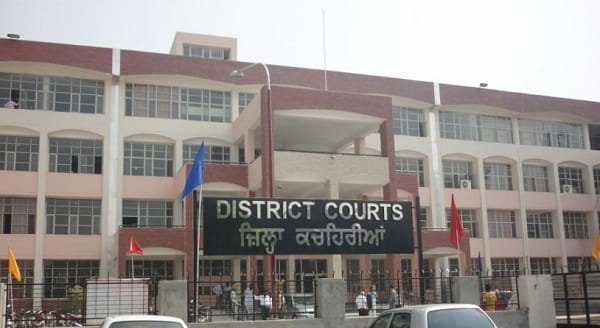
Block-A of the courts complex is a four-storey building consisting of 14 courts with a total covered area of 149,000 square feet. Block-B is also a four-storey building consisting of Judicial Service Centre (Suvidha Centre), Canteen, Bar Room, and space for bank and commercial shops. Block-C consists of four newly constructed courtrooms and other rooms — at present a single-storey building with provision for future extension by building new storeys above it.
The judicial courts have been functioning in the present building (Block-A) since March 6, 2010. The provision for separate entries for Public, Employees, Advocates, and Judges have been made in this court complex. The Courts Complex at Bathinda is incorporated with the latest facilities and systems which not only benefit litigants, advocates, staff, and general public but also help in smooth and efficient working of the judicial system. All courts are air conditioned for the convenience of people coming to the courts.
Frequently Asked Questions
Q: Where was the District Court Bathinda held before 1947?
A: Inside Qila Mubarak — the ancient medieval fort of Bathinda.
Q: Why was the court shifted out of Qila Mubarak in 1947?
A: Because the Military took charge of Qila Mubarak during the 1947 disturbances.
Q: When did the modern court complex at Bathinda become functional?
A: March 6, 2010.
Q: How many blocks does the Bathinda court complex have?
A: Three — Block-A (14 courts, 149,000 sq ft), Block-B (amenities and services), Block-C (4 courtrooms with future expansion provision).
Q: What is the total covered area of Block-A?
A: 149,000 square feet across four storeys.
Q: Which High Court supervises the Bathinda District Court?
A: The Punjab and Haryana High Court, Chandigarh.
Q: What historical judicial terminology was used in the Patiala State courts?
A: Naib Nazim Diwani (civil side) and Naib Nazim Faujdari (criminal side) — later amalgamated into Sub Judges-cum-Judicial Magistrates.
Q: Are all courtrooms at Bathinda air conditioned?
A: Yes — all courts in the complex are centrally air conditioned.