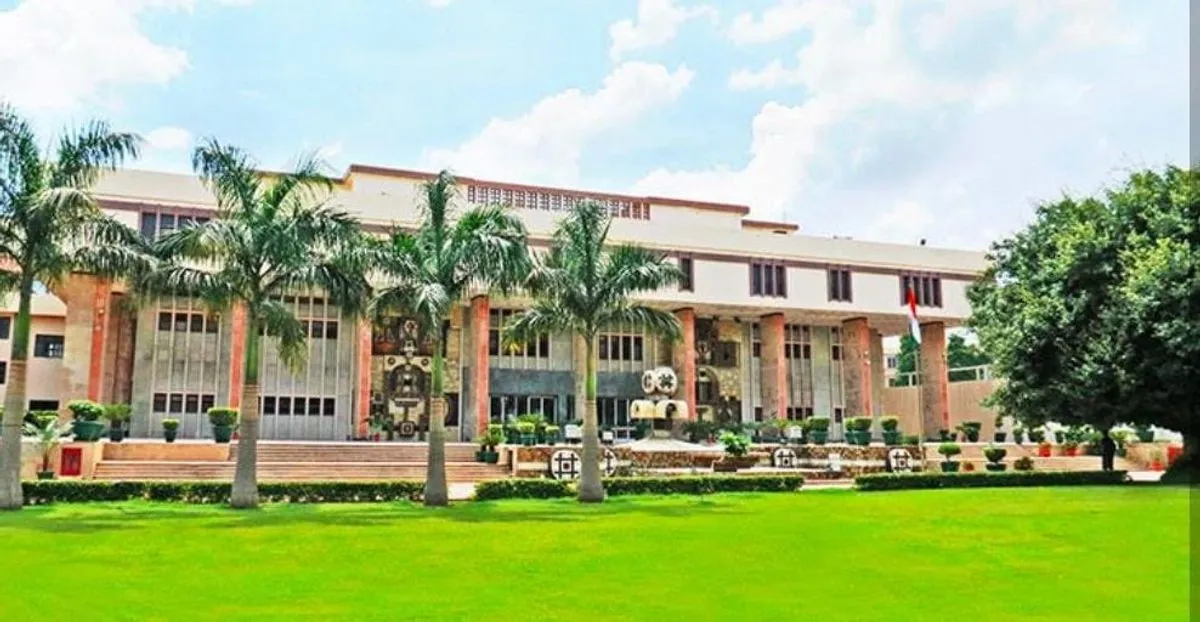
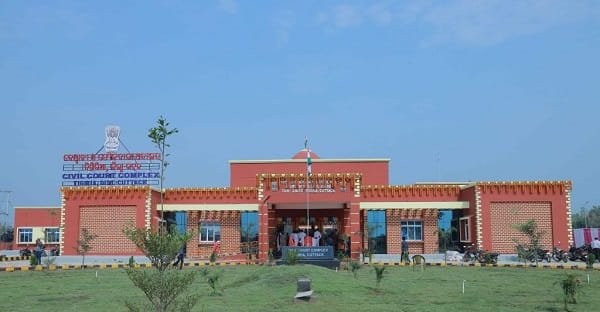
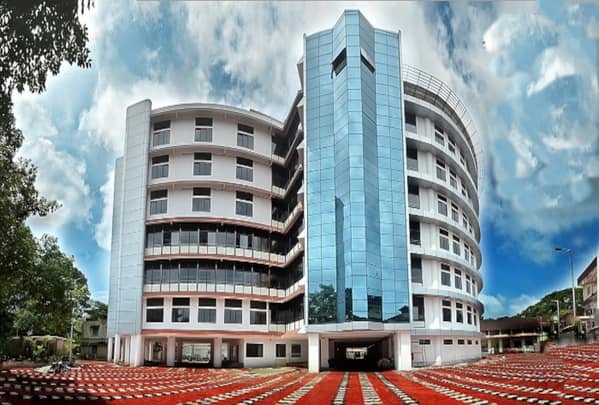
The High Court of Tripura at Agartala — the apex judicial institution for Tripura, the third-smallest state of India nestled in the northeastern corner bordered by Bangladesh on three sides — is one of the three northeastern High Courts established simultaneously on March 23, 2013, alongside the Manipur and Meghalaya High Courts, through the North-Eastern Areas (Reorganisation) and Other Related Laws (Amendment) Act, 2012. While the court is among India’s more recently established independent High Courts, the judicial tradition it carries extends through centuries — from the ancient Kingdom of Tripura whose rulers were the fountainhead of justice, through the merger with independent India in 1949, through decades under the Gauhati High Court’s jurisdiction, to its present status as an independent superior court exercising complete constitutional authority over Tripura’s 43 lakh citizens. The court’s establishment marked the fulfilment of sustained aspirations by Tripura’s legal community and elected representatives who had for many years championed the state’s right to an independent High Court.
History
Tripura’s judicial history traces to the ancient Manikya kingdom — a history that stretches back to the Mahabharata era. A transformative moment in judicial administration arrived in 1873-74, when nine enactments promulgated by the Maharaja — including a Criminal Procedure Code, a Civil Procedure Code, a Police Guide, a Limitation Act, and an Evidence Act — modernised the state’s judicial framework. In 1874, two Magisterial Courts and one Civil Court of original jurisdiction were established at Agartala, alongside appellate courts and special appeal courts. The language of all courts was Bengali. By 1905-06, ten courts of original jurisdiction for civil and criminal cases existed across various sub-divisions.
After the merger of Tripura with the Union of India on October 15, 1949, the Tripura (Courts) Order 1950 came into force from January 26, 1950, establishing the Court of Judicial Commissioner, Court of District Judge, Court of Subordinate Judge, and Court of the Munsiff. The judicial setup of Tripura then became similar to other Indian states. When the North-Eastern Areas (Reorganisation) Act, 1971 established the Gauhati High Court, Tripura received its bench on January 24, 1972 — the same day it attained full statehood. The Judicial Commissioner’s Court was simultaneously upgraded.
The Permanent Bench of the Gauhati High Court at Agartala was established on May 14, 1992, with three permanent judges, by Presidential declaration. After persistent advocacy by Tripura’s legal community and elected representatives, Parliament passed the North-Eastern Areas (Reorganisation) and Other Related Laws (Amendment) Act, 2012. On March 23, 2013, the High Court of Tripura formally came into existence. Justice Deepak Gupta, transferred from the Himachal Pradesh High Court, was appointed as the first Chief Justice. On the same day, the Chief Justice and other judges were administered oaths by the Governor of Tripura, Dr. D.Y. Patil, at the Durbar Hall of the Rajbhavan, in the presence of high dignitaries.
Structure and Composition
| Dimension | Detail |
| Established | March 23, 2013 |
| Enabling legislation | North-Eastern Areas (Reorganisation) and Related Laws (Amendment) Act, 2012 |
| First Chief Justice | Justice Deepak Gupta — March 23, 2013 to May 16, 2016 |
| Predecessor | Permanent Bench of Gauhati HC at Agartala — since May 14, 1992 |
| Gauhati HC bench at Tripura | January 24, 1972 — when Tripura attained statehood |
| Location | Capital Complex, Agartala, Tripura |
| Sanctioned judge strength | 5 judges (4 Permanent + 1 Additional) |
| Jurisdiction | Entire state of Tripura |
| Oath administered by | Governor Dr. D.Y. Patil — Durbar Hall, Rajbhavan |
| Current Chief Justice | Justice M.S. Ramachandra Rao — since July 22, 2025 |
| Digital milestones | e-Filing mandatory for bail applications from September 2023 |
Architecture and Digital Infrastructure
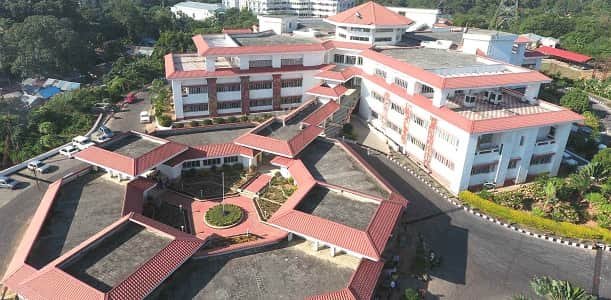
The Tripura High Court is situated in the Capital Complex at Agartala — a purpose-built judicial facility designed to serve as the seat of an independent superior court. The complex houses courtrooms corresponding to the court’s sanctioned judge strength, a Judges’ Library, advocate facilities, and full administrative infrastructure. Video conferencing systems have been installed and upgraded through procurement tenders, enabling virtual hearings that are particularly important given Tripura’s geographic limitations as a state almost entirely bordered by Bangladesh.
The court’s digital transformation journey has been progressive and nationally recognised — the Interoperable Criminal Justice System was rolled out on May 15, 2020; the Case Information System version 3.2 was implemented across district courts by April 2020; digital signatures became mandatory from December 1, 2020; an eSewa Kendra was established in December 2020 and inaugurated at Agartala in September 2021; and e-Filing became mandatory for bail applications from September 2023. Version 3.0 of the e-Filing system, launched in January 2024, facilitates end-to-end electronic filing with payment integration — making the Tripura High Court a digitally progressive institution despite its compact size.
Frequently Asked Questions
Q: When was the Tripura High Court established?
A: March 23, 2013 — under the North-Eastern Areas (Reorganisation) and Other Related Laws (Amendment) Act, 2012.
Q: Who was the first Chief Justice?
A: Justice Deepak Gupta, appointed March 23, 2013, transferred from the Himachal Pradesh High Court.
Q: Where is the court located?
A: Capital Complex, Agartala, Tripura.
Q: What is the sanctioned judge strength?
A: 5 judges — 4 permanent and 1 additional.
Q: When did Tripura first get a High Court bench?
A: January 24, 1972 — a bench of the Gauhati High Court, which became a permanent bench on May 14, 1992.
Q: was unique about the oath-taking ceremony?
A: The Chief Justice and judges were administered oaths at the historic Durbar Hall of the Rajbhavan by Governor Dr. D.Y. Patil.
Q: What digital milestone has the court achieved?
A: e-Filing became mandatory for bail applications from September 2023, and eSewa Kendras provide public digital access.