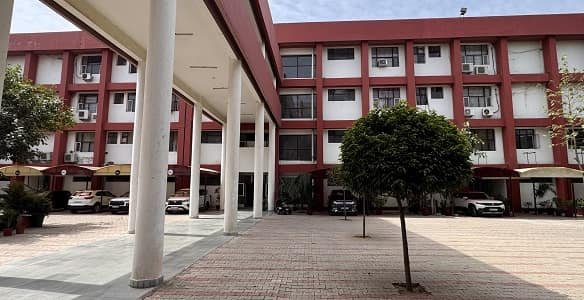
The District Court Bankura — the apex trial court for the Bankura Judgeship in the state of West Bengal — is one of India’s oldest continuously functioning district courts, with court buildings documented as having been built in the year 1807 — over 218 years of unbroken judicial service from the same location. Situated in Bankura town, the headquarters of a district that straddles the plains of Bengal and the Chota Nagpur plateau, the court serves a region of extraordinary historical depth — the ancient Mallabhum, heart of the historic Malla Kingdom of the Bishnupur Rajas whose thousand years of rule over western Bengal shaped one of India’s richest cultural and architectural legacies. Under the supervision of the Calcutta High Court, the Bankura District Court serves three sub-divisions — Bankura Sadar, Bishnupur, and Khatra — and maintains 30 courts across these sub-divisions alongside dedicated Family Courts and Child Friendly POCSO courts that reflect the court’s progressive commitment to victim-sensitive justice.
History
The court buildings of the District Judge and of the Magistrate — the existing old Treasury Building — were built in the year 1807. The then District Judge and District Magistrate was Mr. William Blunt — one of the earliest recorded judicial officers to preside over Bankura’s formal district court. Mr. Brajendra Kumar Sil served as District Judge from 1881 to 1888, followed by Mr. G.W. Plash in 1889. The chair of the District Judge of this Judgeship was also occupied by eminent I.C.S. officers across the colonial period.
The Bankura district’s administrative identity was formalised in 1881 — with the district named after its headquarters town Bankura. The origin of the name carries several traditions: in the language of the Kol-Mundas, orah means habitation; Banku means extremely beautiful; and one influential local tradition holds that the town was named after its founder, a chieftain named Banku Rai. The region’s history is among the most ancient in Bengal — as early as 1000 BC, chalcolithic people had settled on the north bank of the Dwarakeswar river. The district was the centre of the historic Mallabhum — the kingdom of the Malla Rajas of Bishnupur whose rule from around the 7th century to British annexation produced the extraordinary terracotta temple architecture of Bishnupur. The Malla Kingdom was annexed by the British East India Company in 1765, and the modern district took its present form in 1881.
Structure and Composition
| Dimension | Detail |
| Court buildings constructed | 1807 — District Judge’s Court and Magistrate’s Court (old Treasury Building) |
| First recorded District Judge | Mr. William Blunt |
| Notable historical DSJ | Mr. Brajendra Kumar Sil — 1881 to 1888; Mr. G.W. Plash — 1889 |
| District formally constituted | 1881 — named after headquarters town Bankura |
| Location | Bankura town, West Bengal |
| High Court supervision | Calcutta High Court |
| Sub-divisions | Bankura Sadar, Bishnupur, Khatra |
| Courts — Bankura Sadar | 17 courts + 1 Child Friendly Court (POCSO) + 1 Family Court |
| Courts — Bishnupur | 6 courts |
| Courts — Khatra | 6 courts + 1 Child Friendly Court (POCSO) |
| Total courts | 30 regular courts + 2 Child Friendly POCSO Courts + 1 Family Court |
| Digital services | eCourts Mission Mode Project — e-filing, case status, National Judicial Data Grid |
| Legal Aid | District Legal Services Authority, Bankura |
Architecture and Heritage Premises
The Bankura District Court complex is built on a site that carries over two centuries of judicial memory — the 1807 buildings that housed the original District Judge’s Court and the Magistrate’s Court in the old Treasury Building represent some of the oldest surviving judicial infrastructure in West Bengal outside Kolkata. The physical continuity between the 1807 construction and the present court campus gives the Bankura District Court an architectural heritage of extraordinary depth for a district-level institution — most district courts in India have relocated, replaced, or substantially reconstructed their premises multiple times across two centuries, whereas Bankura’s judicial presence has remained rooted in the same historic location.
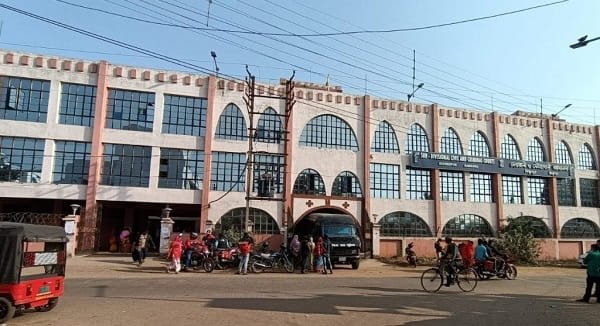
The Bishnupur sub-divisional court campus reflects the architectural character of Bishnupur — India’s most celebrated terracotta temple town, where the Malla Rajas constructed a series of Hindu temples in the 17th and 18th centuries using the distinctive terracotta architectural vocabulary of Bengal that has made Bishnupur a globally recognised cultural heritage destination. The judicial presence of the district court in this culturally rich environment means that the sub-divisional court complex functions within one of India’s most architecturally significant urban contexts.
Frequently Asked Questions
Q: When were the Bankura District Court buildings constructed?
A: 1807 — making them among the oldest continuously functioning district court buildings in West Bengal.
Q: Who was the first recorded District Judge at Bankura?
A: Mr. William Blunt — the then District Judge and District Magistrate at the time of the 1807 building construction.
Q: When was the modern Bankura district formally constituted?
A: 1881 — named after its headquarters town Bankura.
Q: How many courts function in the Bankura Judgeship?
A: 30 regular courts across three sub-divisions, plus 2 Child Friendly POCSO Courts and 1 Family Court.
Q: What are the three sub-divisions under the Bankura Judgeship?
A: Bankura Sadar, Bishnupur, and Khatra.
Q: Which High Court supervises the Bankura District Court?
A: The Calcutta High Court.
Q: What is historically significant about Bankura district?
A: It was the centre of the ancient Mallabhum — the historic Malla Kingdom of the Bishnupur Rajas — with human habitation tracing back to 1000 BC, and the town named after the chieftain founder Banku Rai.
Q: What are Child Friendly POCSO Courts?
A: Specially designed courts for the child-sensitive conduct of trials under the Protection of Children from Sexual Offences Act — functioning at Bankura Sadar and Khatra to ensure vulnerable child witnesses are protected during proceedings.