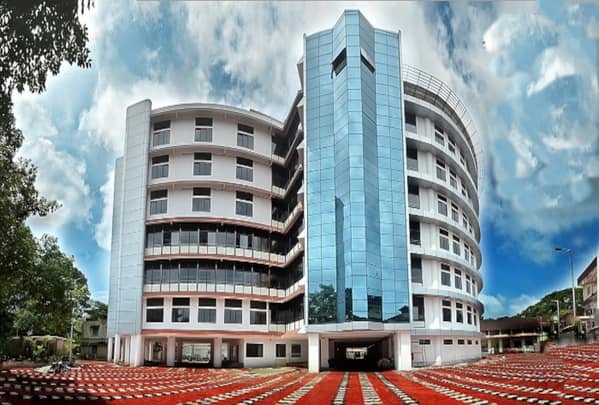
The District Court of Ranga Reddy — the apex trial court for Ranga Reddy district in the state of Telangana — is one of the most strategically important and commercially dynamic district courts in peninsular India. Established in 1982, the court serves a district that uniquely surrounds Hyderabad — the capital city of Telangana — on all sides, and encompasses some of the most rapidly developing urban corridors in South India, including HITEC City, Gachibowli, LB Nagar, Shamshabad, and Rajendranagar. Under the administrative supervision of the High Court for the State of Telangana, the Ranga Reddy District Court handles an enormous volume of property, commercial, criminal, and family disputes arising from one of India’s fastest-growing satellite districts — a territory that has transformed from rural agricultural land into a high-tech urban sprawl in less than three decades.
History
The District Court of Ranga Reddy came into existence in 1982, following the administrative creation of Ranga Reddy as a separate district — carved out to manage the explosive growth of the Hyderabad metropolitan area’s periphery. The district was named after Konda Venkata Ranga Reddy — a prominent politician known for his human touch and long association with the Telangana region — a distinction that gives the court’s name a specific cultural and political significance in the Telangana identity. On constitution of Ranga Reddy District, its District Court was formed, which commenced from January 20, 1982, having its place of functioning at Paigah Building, Begumpet, Hyderabad.
The court’s initial functioning from the Paigah Building at Begumpet reflects the practical reality that the new district’s judicial infrastructure was not yet purpose-built at its inception — and the court’s subsequent physical evolution mirrors the extraordinary geographic and demographic expansion of Ranga Reddy district itself. Today, the court headquarters at LB Nagar serves as the primary judicial campus for the district, with sub-courts distributed across the district’s extensive territory.
The bifurcation of Andhra Pradesh and the creation of Telangana in June 2014 placed the Ranga Reddy District Court under the jurisdiction of the High Court of Judicature at Hyderabad as the common court, and from January 1, 2019, under the newly constituted High Court for the State of Telangana — making the court now firmly part of Telangana’s independent judicial hierarchy.
Structure and Composition
| Dimension | Detail |
| Established | 1982 — commenced January 20, 1982 |
| Original functioning location | Paigah Building, Begumpet, Hyderabad |
| Current headquarters | LB Nagar, Ranga Reddy District, Telangana |
| High Court supervision | High Court for the State of Telangana |
| Total number of courts | 53 courts currently functioning |
| Court types | 21 District Courts; 10 Sub Courts; 22 MM Courts/Junior Civil Judge Courts |
| Special courts | Permanent Lok Adalat — 1; Special Sessions Court for atrocities against women — 3 |
| District Legal Services Authority | 1 — within the complex |
| District named after | Konda Venkata Ranga Reddy — prominent Telangana politician |
| Jurisdiction | Entire Ranga Reddy district — includes HITEC City, Gachibowli, Shamshabad |
| Digital infrastructure | e-Courts Mission Mode Project — Webex virtual hearings, e-filing |
| Bar Association | Bar Association of Ranga Reddy District Courts |
Architecture and Digital Facilities
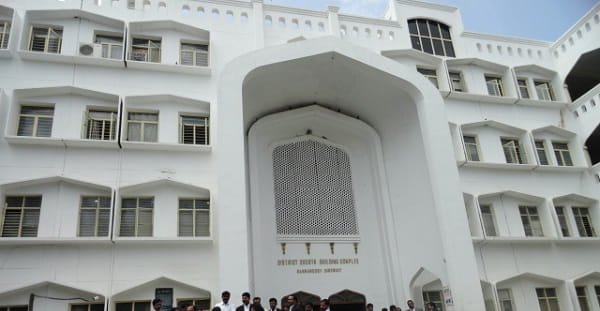
The Ranga Reddy District Court complex at LB Nagar has been developed to accommodate the full scale of district-level judicial infrastructure — housing 21 District Courts, 10 Sub Courts, 22 Metropolitan Magistrate and Junior Civil Judge Courts, a Permanent Lok Adalat, and the District Legal Services Authority under a single administrative umbrella that serves the court’s vast litigant population. The complex has progressively expanded its physical infrastructure to keep pace with the district’s extraordinary population growth and the corresponding increase in litigation volume. Dedicated Special Sessions Courts for atrocities against women reflect the court’s commitment to prioritising the most vulnerable litigants.
The court implemented virtual hearings through the Webex platform — an adoption formally reflected in Webex Meeting Numbers List notifications published for Ranga Reddy District at LB Nagar — demonstrating the court’s capacity for digital proceedings that continue to serve litigants even beyond the pandemic period that drove initial adoption.
Frequently Asked Questions
Q: When was the Ranga Reddy District Court established?
A: 1982 — commenced functioning on January 20, 1982 from Paigah Building, Begumpet, Hyderabad.
Q: After whom is the district named?
A: Konda Venkata Ranga Reddy — a prominent Telangana politician known for his human touch.
Q: Where is the court headquarters located?
A: LB Nagar, Ranga Reddy District, Telangana.
Q: How many courts function in the Ranga Reddy District?
A: 53 courts — 21 District Courts, 10 Sub Courts, 22 MM Courts/Junior Civil Judge Courts, plus a Permanent Lok Adalat and District Legal Services Authority.
Q: Which High Court supervises the Ranga Reddy District Court?
A: The High Court for the State of Telangana.
Q: What special courts exist for women?
A: Three Special Sessions Courts for atrocities against women function within the district judiciary.
Q: What digital facilities are available?
A: Virtual hearings via Webex, e-filing, and the eCourts Mission Mode Project for online case management and status updates.