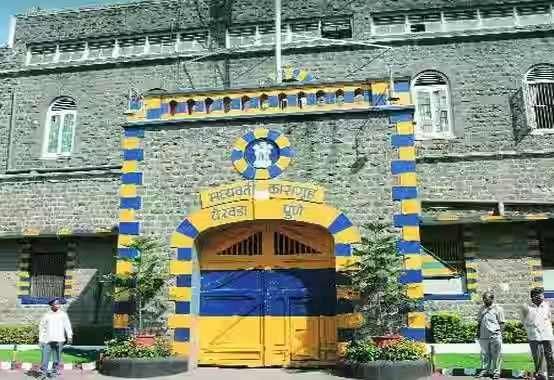
Yerawada Central Jail is Maharashtra’s largest prison and one of the oldest, most historically significant correctional facilities in India. Built by the British in 1871, this maximum-security jail in Pune has held everyone from Mahatma Gandhi and Jawaharlal Nehru during the freedom struggle to Ajmal Kasab, the 26/11 Mumbai attacks convict, in more recent years. Spread across roughly 500 acres in the Yerawada locality, it remains a fully functional central prison today, housing thousands of inmates while also standing as a living piece of India’s colonial and independence-era history.
| Quick Facts | Details |
| Full name | Yerawada Central Jail (also spelled Yerwada) |
| Location | Yerawada, Pune, Maharashtra |
| Built in | 1871 |
| Built by | British colonial administration |
| Area | Roughly 500–512 acres |
| Security class | Maximum |
| Population | Over 5,000 inmates (built for far fewer) |
| Status | Operational, functioning central prison |
| Managed by | Maharashtra Prisons Department |
Where Exactly Is It Located
Yerawada Central Jail sits on Pune’s north-eastern side, close to the Mula-Mutha river and just minutes from the city’s commercial hubs. Anyone coming from Koregaon Park or Kalyani Nagar will find it a short drive away.
- Address: Samrat Ashok Path, Sector No. 5, Mohanwadi, Yerawada, Pune, Maharashtra – 411006
- Nearby landmark: Opposite Commerzone, Yerawada
- Access: Well connected by Pune’s local bus network and easily reachable by auto or cab from central Pune
The neighbourhood around the jail has grown into a busy mix of offices and residential pockets over the decades, even as the prison compound itself has stayed largely unchanged — old colonial stone standing right next to new glass office towers.
The Origins: Built by the British in 1871
The jail’s story begins well before Independence. British authorities constructed it in 1871, back when Yerawada lay outside Pune’s city limits — prisons of that era were usually kept away from densely populated centers. Built primarily using local basalt stone and lime mortar, the structure reflects the same austere, functional architecture seen in other colonial-era prisons across India. Four high perimeter walls, watchtowers, and a single tightly controlled main gate defined its design from the start, and much of that original layout survives today.
Over time, it grew into the largest prison in Maharashtra and one of the biggest correctional facilities in South Asia, divided into distinct security zones, barracks, and specialized cells — including the infamous “Anda Cell” (egg-shaped cell) built for high-risk prisoners.
Gandhi, the Poona Pact, and a Mango Tree
No account of Yerawada is complete without its connection to Mahatma Gandhi, who was imprisoned here across several stretches during the freedom movement, most notably from 1932 to 1933. It was inside these walls that Gandhi began writing his autobiography and reportedly developed an interest in astronomy to pass the long hours.
The jail’s most historically significant moment came on 24 September 1932. Gandhi had gone on an indefinite fast protesting the Communal Award, which proposed separate electorates for the “depressed classes.” B.R. Ambedkar, who supported the Award, eventually negotiated a compromise with Gandhi under a mango tree inside the jail premises. That agreement, signed by Ambedkar and Madan Mohan Malaviya, became known as the Poona Pact, ending Gandhi’s fast and reshaping the course of India’s electoral politics for decades to come.
- Jawaharlal Nehru and several other Congress leaders were also detained here during different phases of the freedom movement.
- During the Quit India Movement of 1942, numerous freedom fighters from the Bombay Province were held within its walls.
From Freedom Fighters to Modern-Day Inmates
Yerawada’s role in Indian history didn’t end with Independence.
- The Emergency (1975–77): Political opponents of the government, including RSS chief Balasaheb Deoras and Atal Bihari Vajpayee, were detained here.
- 1998: Social activist Anna Hazare was briefly imprisoned following a defamation case.
- 2007: Bollywood actor Sanjay Dutt served part of his sentence in connection with the 1993 Mumbai blasts case.
- 21 November 2012: Ajmal Kasab, the sole surviving gunman from the 26/11 Mumbai terror attacks, was hanged here in a highly secretive early-morning operation and buried within the jail premises, since neither Pakistan nor his family claimed the body.
This mix of political prisoners, public figures, and high-profile convicts is part of what makes Yerawada unlike almost any other jail in the country.
Facilities and Present-Day Operations
Today, Yerawada functions as a full-scale central prison complex rather than just a single building.
- Communal barracks and individual high-security cells for different categories of inmates
- An onsite hospital block and administrative offices
- Vocational workshops where inmates produce garments and footwear as part of rehabilitation programs
- A large kitchen serving thousands of meals daily
- Exercise yards, a library, and spaces for religious and educational activities
The prison has also faced scrutiny over the years for overcrowding, given that it houses far more inmates than it was originally built to accommodate.
Can You Visit Yerawada Jail
Certain heritage and history-focused tours do allow limited access to specific areas of the jail, primarily for educational institutions and registered organizations, subject to prior approval. General public entry is not permitted, since it remains an active high-security prison.
FAQs
Q1. Is Yerawada Jail open for public visits?
A. Not for casual visitors. Access is generally limited to organized groups from schools, colleges, or registered institutions, and requires advance permission from jail authorities.
Q2. Why is Yerawada Jail so historically important?
A. It’s tied to major events like Gandhi’s imprisonment, the signing of the Poona Pact in 1932, and the detention of several freedom fighters and later political figures during the Emergency.
Q3. Is Ajmal Kasab still buried inside the jail?
A. Yes. He was buried within the jail premises shortly after his execution in November 2012, as no one came forward to claim his body.
Q4. How is Yerawada Jail different from a regular district jail?
A. As a central jail, Yerawada holds long-term prisoners, including those serving life sentences or facing serious charges, and operates under maximum-security protocols, unlike smaller district or sub-jails.