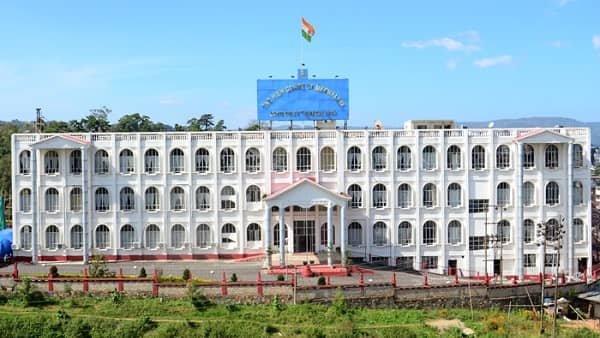
Deogarh district — also known by its alternate spelling Debagarh — is Odisha’s quietly atmospheric “waterfall town,” nestled in the rolling, mist-covered Deogarh hills of the state’s northwestern region. Created on 1 January 1994 after being bifurcated from Sambalpur district, Deogarh was historically the capital of Bamra (also spelled Bamanda), a princely state of British India ruled by a king belonging to the Ganga Vamsi dynasty — an extended branch of the royal family of the Gajapati emperors of Odisha. The capital’s journey through history moved progressively from Purunagarh to Suguda before finally settling at present-day Deogarh town.
What distinguishes Deogarh most strikingly is its concentration of waterfalls within remarkably close range of the district headquarters: Pradhanpat just 1 km away, Kurudkut approximately 2.5-3 km, Deojharan 16 km into the forest, and Koradkot — Odisha’s second waterfall and the site of the state’s first hydroelectric project, the earliest of its kind in Asia after just one other installation. Add to this the historic Jagannath Temple built by Raja Pratap Rudra Deb in 1705, the royal Kailash Palace retreat, and the district’s surviving reputation as a 19th-century centre of Odia literary and artistic culture, and Deogarh offers a genuinely complete small-district travel experience.
Deogarh District, Odisha — Quick Overview
| Feature | Details |
| State | Odisha |
| Also Known As | Debagarh |
| District Headquarters | Deogarh town |
| District Formed | 1 January 1994 (bifurcated from Sambalpur) |
| Historical Identity | Former capital of Bamra/Bamanda princely state |
| Royal Lineage | Ganga Vamsi dynasty (extended Gajapati royal family) |
| Famous For | Pradhanpat Waterfall, Kurudkut Waterfall, Sri Jagannath Temple, Gohira Dam, Kailash Palace |
| Distance from Sambalpur | ~91 km |
| Nearest Airports | Jharsuguda (~98 km); Bhubaneswar (~265 km); Raipur (~376 km) |
| Railway Station | Sambalpur City Station; Sarala Junction |
| Best Time to Visit | October to February (winter — peak picnic and trekking season) |
History of Deogarh District
Bamra Princely State and the Ganga Vamsi Lineage
Deogarh’s defining historical identity is as Debagarh, the former capital of Bamanda (Bamra) — a princely state of British India ruled by kings belonging to the Ganga Vamsi dynasty, an extended royal family connected to the Gajapati emperors of Odisha. The capital’s location shifted over time: from its earliest seat at Purunagarh, to Suguda, and finally to present-day Deogarh — a journey reflecting the evolving administrative and strategic priorities of the Bamra rulers across generations.
Mid-19th Century Cultural Flourishing
From the mid-nineteenth century, Bamanda emerged as a notable site of cultivated artistic and literary taste, with the gentry and intelligentsia of the kingdom providing genuine patronage to scholars and artists. This cultural movement coincided meaningfully with the broader revivalism of Odia language, literature, and culture, paralleling developments associated with the Bengal Renaissance. The capital town of Deogarh earned the poetic Odia eulogy “budha hamasa kelisara” — roughly translated as “the pristine lake where erudite swans frolicked,” a phrase capturing the intellectual and artistic refinement the kingdom achieved during this period.
District Formation
Deogarh district was formally created on 1 January 1994 through bifurcation from Sambalpur district, establishing it as one of Odisha’s smaller and more recently formed administrative units, situated in the state’s northwestern region.
Top Attractions in Deogarh District
Pradhanpat Waterfall
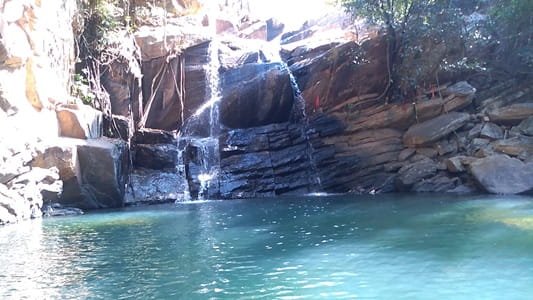
Located just 1 km from Deogarh town with a motorable road leading nearly to the site, Pradhanpat is the district’s most celebrated and accessible waterfall — described by visitors as “the heartbeat of Deogarh.” The water cascades gracefully over rocky slopes, creating a soft cooling mist, with the falls pitted against a backdrop of lofty cliffs and lush green forest. The site carries genuine religious significance through its association with the Shakti Peetha of Maa Pradhani and the temple of Lord Champakeswar (also spelled Champakaswar), with a small Maa Pradhani temple sitting directly beside the waterfall. Winter is the recommended season, when the surrounding area is at its most lush and pleasant, though the falls attract visitors and picnickers year-round.
Sri Jagannath Temple
Located at Purunagarh — the original capital of Bamra State — this is one of the oldest temples in the series found across Deogarh town, built by Raja Pratap Rudra Deb in 1705. As the first and foremost Jagannath temple in Bamanda State, it represents a historical monument of artistic glory connected to the Ganga dynasty’s heritage, with architecture replicating the Kalinga style of temple construction. The temple houses Lord Jagannath, Lord Balabhadra, and Goddess Subhadra as its main presiding deities, with the structure divided into four distinct parts: Garbhagriha, Natyashala, Jagnyala, and Bhoga Mandapa. Ratha Yatra is the temple’s principal annual festival, drawing thousands of visitors and pilgrims.
Kurudkut Waterfall
Located approximately 2.5-3 km from Deogarh town, Kurudkut is described as the district’s second waterfall, surrounded by dense forest and hills. During the reign of Raja Sachidananda Tribhuban Deb, this waterfall served as a source of hydroelectric power generation — making it the first of its kind in Odisha and the second in all of Asia, a remarkable engineering achievement for its era. Today, Kurudkut remains a popular winter picnic destination, drawing visitors with its scenic panorama, the chirping of forest birds, and opportunities for light trekking.
Deojharan Springs
Located inside dense forest in Reamal Block, approximately 16 km from Deogarh town, Deojharan is a popular picnic spot whose scenic surroundings and flowing stream present an inviting atmosphere, particularly during winter. According to local lore, this forested location once served as the camping ground for Bamanda’s forces during a historical conflict with neighbouring Rairakhol over trade and commercial passage rights — adding a layer of military history to the site’s natural appeal.
Gohira Dam
Situated approximately 25-28 km from Deogarh town in Reamal Block, Gohira Dam was constructed between 1977 and 1981 as a water resources and irrigation project that has, due to its scenic beauty, evolved into one of the district’s most popular picnic destinations. A Lord Shiva temple stands near the dam, and the reservoir itself — surrounded by hills — presents a genuinely breathtaking sight, attracting both tourists and local families, especially during winter months.
Kailash Palace
Located approximately 15 km from Deogarh town along NH-49, within a beautiful mountain-clad valley, Kailash Palace was built between 1916 and 1919 by Raja Dibya Shankar Deb as a royal retreat for the Bamra royal family. The palace’s serenity and architectural beauty reflect the imperishable value of Odisha’s princely heritage, and the site today functions as an ecotourism destination, ideal for honeymooners or visitors seeking quiet reflection amid royal-era architecture.
Katasar Ghat
Situated on the highway connecting Deogarh to Angul, approximately 40 km from Deogarh town within the Kankarkhol reserved forest area, Katasar Ghat is surrounded by dense forest. At the top of the ghat stand twin temples — one dedicated to Goddess Banadurga and another to Lord Shiva — with a natural stream flowing through the temple premises, creating a calm, spiritually atmospheric setting that draws visitors seeking peaceful retreat.
Daragadi Stream and Waterfall
Located in Tainsira village, approximately 70 km from Deogarh town at the meeting point of three districts — Deogarh, Sundargarh, and Angul — Daragadi is set amid deep forests, sky-touching blue mountains, and the murmuring sound of its namesake stream. The natural setting, with its dense thick forest and high hills, attracts thousands of visitors annually, particularly during the winter picnic season, and the stream’s path through multiple districts adds to its broader regional significance.
Olata Bata — The Inverted Leaf Tree
A giant ficus tree located in the Purunagada part of Deogarh town, the Olata Bata greets visitors entering from the Sambalpur side. Its uniquely inverted leaves carry religious sanctity locally and are considered a strange and notable botanical phenomenon, making it an unusual but meaningful stop on any Deogarh heritage circuit.
Temples of Deogarh District
| Temple | Location | Deity | Key Feature |
| Sri Jagannath Temple (Bamanda Jagannath Temple) | Purunagarh | Jagannath, Balabhadra, Subhadra | Built 1705 by Raja Pratap Rudra Deb; first Jagannath temple in Bamanda |
| Maa Pradhani Temple | Beside Pradhanpat Waterfall | Goddess Pradhani (Shakti Peetha) | Sacred site adjoining the district’s most popular waterfall |
| Lord Champakeswar Temple | Near Pradhanpat | Lord Shiva | Companion shrine to Maa Pradhani Shakti Peetha |
| Banadurga Temple | Katasar Ghat | Goddess Banadurga | Within Kankarkhol reserved forest; natural stream flowing through premises |
| Shiva Temple, Katasar Ghat | Katasar Ghat | Lord Shiva | Twin temple complex with Banadurga shrine |
| Gopinath Temple | Deogarh district | Lord Krishna (Gopinath) | Notable district pooja and festival site |
| Shiva Temple, Gohira Dam | Near Gohira Dam | Lord Shiva | Scenic temple beside the dam reservoir |
Weather in Deogarh District
October to February — Best Time: Winter is unanimously recommended across local and tourism sources as the optimal season — the surrounding forests and hills are lush and green, temperatures are pleasant, and this is when picnickers rush to Pradhanpat, Kurudkut, Gohira Dam, and Daragadi for the district’s most popular outdoor experiences.
March to June — Summer: Hotter conditions typical of western Odisha’s interior plateau region; waterfall visits remain possible but are less comfortable during peak heat.
July to September — Monsoon: Significant rainfall fills the district’s streams and waterfalls to their fullest, though access to remote forested sites like Daragadi and Deojharan can be more challenging during heavy rain.
Things to Do in Deogarh District (2026)
Sunrise or Sunset at Pradhanpat Waterfall — The district’s most accessible and atmospheric site, just 1 km from town, rewards an early morning or golden-hour visit with both natural beauty and spiritual significance.
Heritage Walk to Sri Jagannath Temple, Purunagarh — Explore the 1705-built temple and the surrounding former Bamra capital, especially memorable if timed for the annual Ratha Yatra festival.
Hydroelectric Heritage at Kurudkut — Visit Odisha’s first hydroelectric site, combining historical engineering significance with scenic winter picnic appeal.
Gohira Dam Family Picnic — A reliable winter day-trip combining the reservoir’s scenic hill-surrounded setting with the adjacent Shiva temple.
Kailash Palace Royal Retreat Visit — Explore the 1916-1919 royal mountain retreat for a quiet, architecturally rich glimpse into Bamra’s princely past.
Daragadi Stream Trekking and Birdwatching — For visitors willing to travel 70 km, this remote three-district meeting point offers genuine forest immersion and wildlife observation.
How to Reach Deogarh District
By Air: Jharsuguda Airport is the closest at approximately 98 km; Bhubaneswar Airport is approximately 265 km, and Raipur Airport approximately 376 km away.
By Train: Sambalpur City Station and Sarala Junction Station serve as the nearest major rail connections to Deogarh.
By Road: Deogarh town sits on the Kolkata-Mumbai highway, approximately 91 km from Sambalpur city, with NH-49 providing direct access to nearby attractions including Kailash Palace.
Conclusion
Deogarh district earns its informal title as Odisha’s “waterfall town” through genuine concentration — Pradhanpat, Kurudkut, Deojharan, Gohira, and Daragadi all within reasonable reach of a compact district headquarters, each carrying its own layer of religious, historical, or engineering significance. Combined with the 1705-built Jagannath Temple, the royal Kailash Palace, and the district’s surviving 19th-century reputation as an Odia literary and artistic centre, Deogarh offers an authentic, unhurried glimpse into one of Odisha’s smaller but genuinely rewarding princely-state heritage corridors.
FAQs About Deogarh District, Odisha
Q1. What is Deogarh district famous for?
A. Deogarh, also called Debagarh, is known as Odisha’s “waterfall town,” famous for Pradhanpat Waterfall (just 1 km from town), Kurudkut Waterfall (Odisha’s first hydroelectric power site), Gohira Dam, the historic Sri Jagannath Temple built in 1705, and Kailash Palace, the former royal mountain retreat of the Bamra princely state.
Q2. What was Deogarh’s role in the Bamra princely state?
A. Deogarh served as the final and most enduring capital of Bamra (Bamanda), a princely state of British India ruled by kings of the Ganga Vamsi dynasty, an extended branch of Odisha’s Gajapati royal family. The capital moved through Purunagarh and Suguda before finally settling permanently at present-day Deogarh town.
Q3. What makes Kurudkut Waterfall historically significant?
A. Kurudkut Waterfall, located approximately 2.5-3 km from Deogarh town, served as Odisha’s first hydroelectric power generation site during the reign of Raja Sachidananda Tribhuban Deb — and was the second such hydroelectric installation in all of Asia, making it an important piece of regional engineering history alongside its natural beauty.
Q4. When was the Sri Jagannath Temple in Deogarh built?
A. The Sri Jagannath Temple, located at Purunagarh (the original capital of Bamra State), was built by Raja Pratap Rudra Deb in 1705. It is the first and foremost Jagannath temple in Bamanda State, built in the Kalinga architectural style, and houses Lord Jagannath, Lord Balabhadra, and Goddess Subhadra as its presiding deities.
Q5. When is the best time to visit Deogarh district?
A. October to February (winter) is the recommended period across all sources, when the district’s lush forests and hills are at their most pleasant, and picnickers flock to Pradhanpat, Kurudkut, Gohira Dam, and Daragadi Stream for the year’s most comfortable outdoor experience.