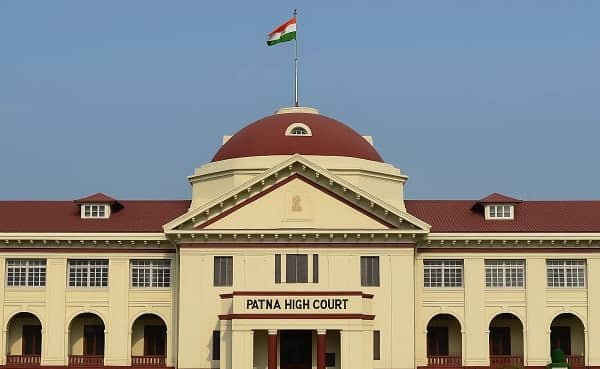
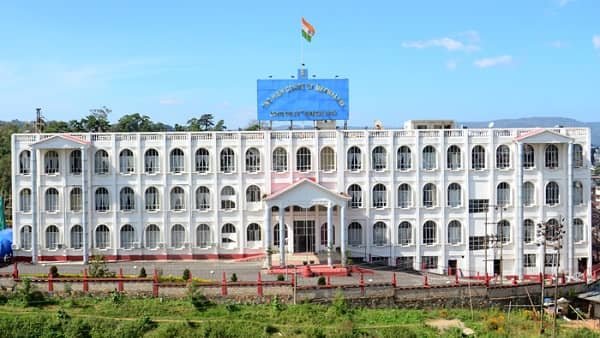
The High Court of Meghalaya — seated at Shillong, the capital of the Scotland of the East and one of India’s most beautiful and culturally distinctive hill cities — is one of the three newest independent High Courts in India, established on March 23, 2013, alongside the Manipur and Tripura High Courts when the North-Eastern Areas (Reorganisation) Act was amended to give separate judicial identity to these states. The court sits in Shillong — the city that was once the capital of undivided Assam and one of British India’s most important administrative centres — in a new building completed in 2012 at the historic Hermitage compound. Serving a state characterised by tribal-majority demographics, unique customary legal traditions, Sixth Schedule protections, and some of India’s most ecologically sensitive landscapes, the Meghalaya High Court occupies a uniquely complex constitutional position — adjudicating a jurisdiction where statutory frameworks and customary tribal law coexist and interact in ways that few other superior courts in India encounter with comparable depth.
History
Meghalaya’s judicial history is deeply intertwined with Assam and the broader northeastern reorganisation story. Shillong held the historic distinction of being the original seat of the Assam High Court — established on April 5, 1948 — before the court shifted to Guwahati on August 14, 1948. When Meghalaya attained statehood on January 21, 1972, under the North-Eastern Areas (Reorganisation) Act, 1971, the state came under the jurisdiction of the newly constituted Gauhati High Court — the common High Court for five northeastern states and two Union Territories.
On February 4, 1995, through the Gauhati High Court (Establishment of Permanent Bench at Shillong) Order, 1995, a Permanent Bench of the Gauhati High Court at Shillong was established and inaugurated by then Chief Justice of India Justice A.M. Ahmadi, in the presence of the Governor of Meghalaya, the Chief Minister, the Union Minister of Law, and the Chief Justice of the Gauhati High Court. This Permanent Bench — which functioned from Shillong — served Meghalaya’s judicial needs across nearly two decades before the drive for independent High Courts in the northeastern states gathered parliamentary momentum.
The foundation stone for the new High Court building at the Hermitage compound in Shillong was laid on March 8, 2002, by then Union Minister of Law and Justice Arun Jaitley. The new building was completed, and from March 2, 2010, the court started functioning from this new complex. On March 23, 2013, the High Court of Meghalaya was formally established under the North-Eastern Areas (Reorganisation) Act, 1971 and related laws Amendment Act, 2012. It was formally inaugurated on March 25, 2013, by then Chief Justice of India Justice Altamas Kabir, in the presence of the Chief Minister of Meghalaya and the Union Minister of Law and Justice.
Structure and Composition
| Dimension | Detail |
| Established | March 23, 2013 |
| Formally inaugurated | March 25, 2013 — by CJI Justice Altamas Kabir |
| Predecessor | Permanent Bench of Gauhati HC at Shillong — since 1995 |
| Permanent Bench inaugurated | February 4, 1995 — by CJI Justice A.M. Ahmadi |
| Foundation stone of new building | March 8, 2002 — by Arun Jaitley, Union Minister of Law |
| New building functional from | March 2, 2010 |
| Location | MG Road, Shillong — Meghalaya 793001 |
| Sanctioned judge strength | 4 judges (Chief Justice + 3 Permanent) |
| Working strength (2025) | 3 sitting judges + Chief Justice |
| Jurisdiction | Entire state of Meghalaya |
| Unique feature | Adjudicates customary tribal law under Sixth Schedule |
Architecture — The Hermitage Compound
The Meghalaya High Court building at Shillong occupies the Hermitage compound on MG Road — a location that carries historical and institutional significance in the hill city that was once the colonial and post-independence administrative capital of the northeastern region. The new building, completed in 2012, was purpose-designed as a modern judicial facility befitting an independent High Court — with courtrooms, judges’ chambers, administrative facilities, and advocate infrastructure that transformed the former Gauhati High Court’s Shillong Bench premises into the functioning seat of an independent superior court. Shillong’s cool climate, pine-forested slopes, and colonial-era built environment give the High Court campus an atmospheric character that is uniquely distinct from every other High Court setting in India.
The court has implemented e-filing rules for the High Court and district courts and adopted digital communication and audio-video electronic means rules in 2025 — building the digital court infrastructure that the Meghalaya High Court (Online Electronic eFiling) Rules, 2024 formally established as a cornerstone of access to justice for litigants in a state where geographic accessibility to the High Court at Shillong can present challenges.
Frequently Asked Questions
Q: When was the Meghalaya High Court established?
A: March 23, 2013, under the North-Eastern Areas (Reorganisation) Act, 1971 and related laws Amendment Act, 2012.
Q: Where is the court located?
A: MG Road, Shillong — Meghalaya 793001, at the Hermitage compound.
Q: What is the sanctioned judge strength?
A: 4 judges — the Chief Justice and 3 permanent judges.
Q: Who inaugurated the Meghalaya High Court?
A: Then Chief Justice of India Justice Altamas Kabir, on March 25, 2013.
Q: When did the Permanent Bench of the Gauhati High Court function at Shillong?
A: From February 4, 1995, inaugurated by then CJI Justice A.M. Ahmadi.
Q: When did the new court building begin functioning?
A: From March 2, 2010 — after the foundation stone was laid by Arun Jaitley on March 8, 2002.
Q: What makes Meghalaya’s legal context unique?
A: The court adjudicates customary tribal law alongside statutory frameworks — a jurisdiction shaped by Sixth Schedule protections for Meghalaya’s tribal communities.