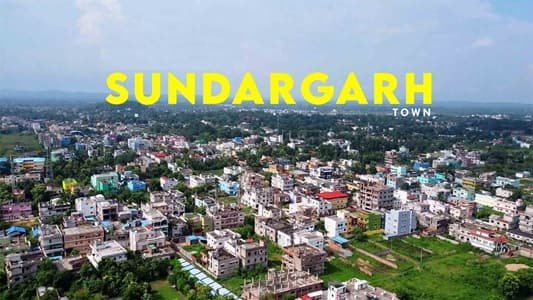
The name says it all — Sundargarh means “beautiful fort” in Hindi, and the district lives up to every word of it. The second largest district in Odisha by geographical area at 9,712 sq km, Sundargarh covers approximately 6.23 percent of the state’s total land area and holds around 43 percent of its territory under forest cover. Bounded by Jharkhand to the north and east, Chhattisgarh to the west, and the Odisha districts of Jharsuguda, Sambalpur, and Angul to the south, it is a district of undulating tablelands, rugged hill ranges, torrential rivers, dense tribal cultures, India’s oldest integrated steel plant, and the country’s second largest Hanuman statue.
Rourkela — the third largest city in Odisha and the district’s commercial and institutional hub — was built as a planned industrial township around the Rourkela Steel Plant, established with German collaboration in the 1950s and the first major integrated steel plant in independent India to use LD oxygen technology. The plant and the town that grew around it represent one chapter of Sundargarh’s identity. The district’s other identity — ancient pilgrimage sites, Vedavyas at the sacred river confluence, the highest waterfall in Odisha at Khandadhar, tribal community heritage, and the princely history of Gangpur — runs deeper and older.
Sundargarh District, Odisha — Quick Overview
| Feature | Details |
| State | Odisha |
| District Headquarters | Sundargarh town |
| Area | 9,712 sq km (2nd largest district in Odisha) |
| Forest Cover | ~43% (4,232.57 sq km) |
| Borders | Ranchi district, Jharkhand (N); Raigarh district, Chhattisgarh (W & NW); Singhbhum, Jharkhand & Keonjhar, Odisha (E); Jharsuguda, Sambalpur, Angul, Odisha (S & SE) |
| Key Rivers | Brahmani, Sankh, Koel, IB |
| Famous For | Vedavyas Temple (river confluence), Khandadhar Waterfall (highest in Odisha), Hanuman Vatika, Rourkela Steel Plant, Mandira Dam, Sarafgarh Dam |
| Historical Context | Former princely state of Gangpur; capital at Sundargarh till 1948 |
| Nearest Airport | Birsa Munda Airport, Ranchi (~140–150 km); Rourkela Airport (limited services) |
| Railway Station | Rourkela Junction (major station on Howrah-Mumbai mainline) |
| Best Time to Visit | September to March |
| Summer Temperature | 28°C – 45°C |
| Winter Temperature | 8°C – 25°C |
| Key Festivals | Nuakhai, Rath Yatra, Ramanavami, Nama Sankirtana |
History of Sundargarh District
Gangpur Princely State and Ancient Dynasties
Sundargarh district was constituted in 1948, when the princely state of Gangpur (of which Sundargarh town was the capital) merged with independent India. The Gangpur royal family belongs to the Parmar dynasty, and the town retains the royal palace, the Radhakrishna Temple in front of it, and the Samlei Temple — the presiding goddess shrine. In ancient times, the area came under successive dynasties including the Mauryas, who established administrative reach across eastern India; later the Guptas; and then regional kingdoms whose inscriptions and temple remains appear across the district.
The name Sundargarh is believed to derive from a historical fort or fortified settlement. The region’s position on the plateau between the Deccan and the Gangetic plains, at the intersection of major river systems, made it a significant territory for successive kingdoms.
The Vedavyas Tradition
The sacred site of Vedavyas — at the confluence of the Sankh and Koel rivers, where they join to form the Brahmani — carries one of the oldest traditions in the district. Local and scriptural tradition holds that the great sage Vedavyas (Veda Vyasa), author of the Mahabharata, lived at this spot and wrote the epic in the cave here. The tradition predates any dynastic history in the region and gives Vedavyas its status as one of Odisha’s most significant pilgrimage tirthas.
Industrial History — Rourkela Steel Plant
In the post-independence period, the Rourkela Steel Plant — established in 1954–1959 with German collaboration — became one of the most significant industrial projects in independent India. It was the first integrated steel plant in India to use LD oxygen technology and was a centrepiece of Nehru’s vision for industrial development. The planned township of Rourkela grew around it, bringing educational institutions (National Institute of Technology Rourkela), hospitals, and modern infrastructure to what had been primarily tribal forest territory.
Top Attractions in Sundargarh District
Vedavyas — Sacred River Confluence
Located 5 km from Panposh and 12–15 km from Rourkela, Vedavyas is the most spiritually significant site in Sundargarh district. The exact confluence of the Sankh and Koel rivers — where they join to form the Brahmani — is one of Odisha’s most revered tirthas. Ancient tradition holds that Vyasa composed the Mahabharata in the cave at this site. Two Shiva temples and a Ram temple stand at the confluence. The atmosphere of Vedavyas — river sounds, forest backdrop, and the visible meeting of two rivers — is genuinely contemplative. It is one of the best picnic and pilgrimage spots in the district combined.
Khandadhar Waterfall and Nature Camp
At 244 metres, Khandadhar is the highest waterfall in Odisha and ranks 12th among the highest in India. Located 104 km from Rourkela and 40 km from Bonaigarh, the waterfall is created by a perennial rivulet called Korapani Nala within a few kilometres of its origin. Dense forest surrounds the falls, and wildlife including leopards, deer, and various bird species inhabit the area. Two access routes exist — a trekking trail and approximately 650 steps. The Nature Camp at Nandapani near the falls provides accommodation, making it possible to visit at dawn when the light on the waterfall is most spectacular.
Hanuman Vatika — Rourkela
Inaugurated in 1994 by then-Odisha Chief Minister Biju Patnaik, Hanuman Vatika is a garden complex named after its centrepiece — a 75-foot statue of Lord Hanuman (some sources cite 82 feet), believed to be among the tallest Hanuman statues in India. The complex houses multiple temples including Bata Mangala, Binayak, Vaishnodevi, Sarala, Dwadash Linga, Siva, Santoshi Maa, and Maa Laxmi. Located 5 km from the Rourkela bus stand, it serves as both a devotional site and a family attraction. Wedding ceremonies and cultural events are held here regularly.
Vaishnodevi Temple, Rourkela
Situated on Durgapur Hill overlooking the Rourkela Steel Plant, the Vaishnodevi Temple is a replica of the original Vaishno Devi shrine on the Trikuta Hills near Jammu. The Bhairavnath Temple stands near it on the same hill. The view of Rourkela city and the steel plant from the hilltop is panoramic and striking — the temple visit combines pilgrimage with one of the better viewpoints in the district.
Mandira Dam
Built across the Sankh River near Kansbahal, 16 km upstream from Mandira, the dam was constructed primarily to supply water to the Rourkela Steel Plant. It also provides a large reservoir surrounded by hills and trees that serves as a popular picnic destination. There is a 75-foot Hanuman statue at the dam site and several temples including Bata Mangala, Binayak, and Santoshi Maa.
Sarafgarh Dam and Nature Camp
Located 38 km from Sundargarh town near the village of Saraphgarh, Sarafgarh Dam is an irrigation reservoir project surrounded by forested hills. The Nature Camp here includes a park, water fountain, viewpoint, and a Shiva temple. Winter is the ideal season for a picnic here, and the natural setting is among the more complete dam-environment packages in the district.
Sundargarh Town — Royal Palace and Temples
The district headquarters itself is a manageable historical town with the royal palace of the former Gangpur princely state, the Radhakrishna Temple directly in front of it, the Samlei Temple, and the Jagannath Temple. The town stands on one bank of the Ib River on the Sambalpur–Rourkela highway and retains a quiet historical character that contrasts with Rourkela’s industrial-urban energy.
Indira Gandhi Park — Rourkela
A 42-acre park in Rourkela, 3 km from the bus stand, with a musical fountain, small zoo, boating facility, and a toy train for families. The musical fountain show in the evenings is the park’s most popular attraction. Spread over a large area with well-maintained gardens, it is the city’s primary green recreational space.
Temples of Sundargarh District
| Temple | Location | Deity | Key Feature |
| Vedavyas Temples | Vedavyas, Panposh | Lord Shiva (2 temples); Lord Rama | Sacred confluence tirtha; Mahabharata connection |
| Vaishnodevi Temple | Durgapur Hill, Rourkela | Goddess Vaishnodevi | Replica of Jammu shrine; panoramic hill viewpoint |
| Jagannath Temple | Rourkela (Ahirabandh) | Lord Jagannath | 90-metre height; Rath Yatra and 13 other festivals |
| Hanuman Vatika Temple Complex | 5 km from Rourkela bus stand | Lord Hanuman + multiple deities | 75+ foot Hanuman statue; inaugurated by Biju Patnaik |
| Samlei Temple | Sundargarh town | Goddess Samlei | Presiding deity of Gangpur kingdom; royal palace adjacent |
| Radhakrishna Temple | Sundargarh town | Lord Krishna | In front of the royal palace |
| Ghoghar Dham | Near Rajgangpur | Lord Shiva (Ubha Linga) | Self-manifested Shivalinga; Shaiva Peetha |
Weather in Sundargarh District
The district has a hot and moist sub-humid climate with clear seasonal variation.
September to March — Best Time: October through February offers cool, pleasant weather between 8°C and 25°C. Post-monsoon greenery makes the forests and waterfalls at their most beautiful in September and October. The best time for Khandadhar trekking is October to December.
April to June — Summer: The hottest period, reaching 42–45°C. Forest visits should be planned for early morning. Rourkela’s institutional infrastructure (NIT Rourkela, hospitals, shopping) remains operational.
June to September — Monsoon: Average annual rainfall of approximately 1,230 mm, mostly June to September. The waterfalls are at their most dramatic; road access to Khandadhar may be challenging.
Things to Do in Sundargarh District (2026)
Sunrise at Vedavyas — Arrive at the river confluence before 6 AM. The morning light on the meeting Sankh and Koel, with the forest and temple sounds, is the district’s finest dawn experience.
Trek to Khandadhar Waterfall — Allow a full day. Carry water, good footwear, and a guide from Bonaigarh or Nandapani. The 650-step route is manageable; the trekking trail requires more preparation.
Vaishnodevi Temple and City View — Combine the temple on Durgapur Hill with the view over Rourkela Steel Plant. A morning visit before 9 AM avoids the midday heat.
Sarafgarh Dam Picnic — A winter afternoon at the dam, Nature Camp park, and Shiva temple is a quintessential local leisure experience.
Nuakhai Festival — Odisha’s harvest festival of Nuakhai is celebrated with particular authenticity in Sundargarh district, being a region with deep Sambalpuri cultural roots. The festival involves offering new rice (nua = new, khai = rice) at family and community shrines.
How to Reach Sundargarh District
By Air: Birsa Munda Airport, Ranchi, is approximately 140–150 km from Rourkela. Rourkela Airport has limited scheduled services — confirm availability before planning air travel.
By Train: Rourkela Junction is a major railway station on the Howrah–Mumbai mainline with excellent connectivity to Kolkata, Mumbai, Bhubaneswar, and major cities.
By Road: Regular OSRTC and private buses connect Rourkela to Bhubaneswar (approximately 380 km), Sambalpur, and Ranchi.
Conclusion
Sundargarh is Odisha at its most geographically expansive and culturally layered. The steel plant that put it on India’s industrial map and the sacred river confluence that put it on the pilgrimage map occupy the same district without contradiction. Khandadhar remains one of eastern India’s genuinely undervisited waterfalls despite being the highest in Odisha. And the Gangpur princely heritage at the district headquarters sits quietly alongside the NIT Rourkela campus — old and new coexisting in the forest-covered plateau characteristic of this distinctive corner of the state.
FAQs About Sundargarh District, Odisha
Q1. What is Sundargarh district famous for?
A. Sundargarh is famous for the Rourkela Steel Plant (India’s first integrated steel plant with LD oxygen technology), Vedavyas sacred river confluence (associated with sage Veda Vyasa and the Mahabharata), Khandadhar Waterfall (highest in Odisha at 244 metres), Hanuman Vatika in Rourkela, the Vaishnodevi Temple, and its rich tribal cultural heritage.
Q2. What is the significance of Vedavyas in Sundargarh?
A. Vedavyas is a sacred tirtha at the confluence of the Sankh and Koel rivers, which together form the Brahmani. Local and scriptural tradition holds that sage Veda Vyasa lived and composed the Mahabharata at this site. It is one of the most revered pilgrimage spots in western Odisha, combining natural beauty with deep spiritual significance.
Q3. How tall is Khandadhar Waterfall?
A. Khandadhar Waterfall is 244 metres tall — the highest waterfall in Odisha and the 12th highest in India. It is created by the Korapani Nala rivulet and is surrounded by dense forest in Sundargarh district, approximately 104 km from Rourkela.
Q4. What is the best time to visit Sundargarh?
A. September to March is the best period. October to February offers the most pleasant weather for visiting Vedavyas, Hanuman Vatika, Vaishnodevi Temple, and trekking to Khandadhar. The waterfalls are most dramatic during and just after the monsoon (August–October).
Q5. What is the Rourkela Steel Plant’s historical significance?
A. The Rourkela Steel Plant, established in 1954–1959 with German technical collaboration, was the first integrated steel plant in India built in the government sector. It was also the first in India to use LD (Linz–Donawitz) oxygen technology for steel production. The planned township of Rourkela was developed alongside it and now hosts NIT Rourkela, one of India’s premier engineering institutions.