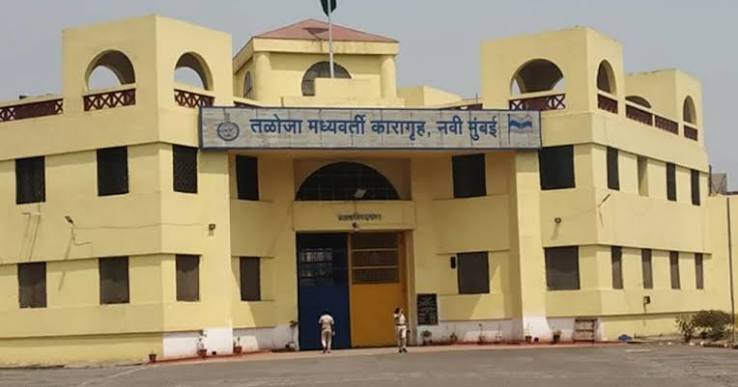
Taloja Central Jail is one of Maharashtra’s newest and largest correctional facilities, built specifically to ease the chronic overcrowding at Mumbai’s century-old Arthur Road Jail. Located in Navi Mumbai, this maximum-security prison opened in 2008 and has since become closely associated with the Bhima Koregaon-Elgar Parishad case, most notably the custodial death of tribal rights activist Father Stan Swamy in 2021. Unlike the older colonial-era jails found across India, Taloja represents a newer generation of prisons built purely to address modern capacity pressures in a fast-growing metropolitan region.
| Quick Facts | Details |
|---|---|
| Full name | Taloja Central Jail |
| Location | Taloja, Navi Mumbai, Maharashtra |
| Opened | 2008 |
| Built to decongest | Arthur Road Jail (Mumbai Central Prison) |
| Rated capacity | Around 2,400–3,000 inmates |
| Structure | Five main buildings, each with roughly 465 capacity |
| Security class | Maximum |
| Status | Operational |
| Managed by | Maharashtra Prisons Department |
Where Exactly Is It Located
Taloja Central Jail sits in the Taloja node of Navi Mumbai, close to Taloja Panchnand railway station and not far from Kharghar. It occupies a semi-urban stretch that has grown considerably since the jail was first built, as Navi Mumbai’s residential and industrial belts expanded around it.
- Address: Central Jail Taloja, Sector 35, near Owe Gaon, behind CISF, Kharghar–Taloja, Navi Mumbai, Maharashtra – 410208/410210
- Nearby landmark: Close to Taloja Panchnand railway station and Taloja MIDC industrial area
- Access: Reachable via Navi Mumbai’s suburban rail network and NMMT buses; well connected by road from Kharghar and Panvel
Its location gives it a practical advantage that older city jails lack — enough open land for a large, modern complex, while still staying close enough to Mumbai’s courts and legal infrastructure to remain functional for daily hearings and transfers.
Why Taloja Was Built
By the early 2000s, Mumbai’s Arthur Road Jail — built back in 1926 for around 800 inmates — was holding close to 3,000 prisoners, far beyond anything it was designed for. The state needed a new facility that could actually absorb this pressure.
- Taloja was conceived as part of a broader effort to decongest older Maharashtra prisons, particularly Arthur Road Jail
- It opened in 2008, built with contemporary security standards in mind rather than retrofitted colonial architecture
- The complex consists of five separate buildings, each holding roughly 465 inmates, along with staff quarters, a small hospital, a canteen, and video-conferencing facilities for court proceedings
This design gave Mumbai’s overstretched prison system some much-needed breathing room, even as Taloja itself would later face its own capacity and administrative challenges.
Facilities Inside the Complex
Taloja was built with several features aimed at modernising how undertrials and convicts are processed and held.
- Five separate housing blocks for different categories of inmates
- A dedicated courtroom on the premises, reducing the need to transport prisoners for every hearing
- A small in-house hospital for basic medical treatment
- Security camera coverage across the complex
- Roughly 400 staff quarters for prison personnel
On paper, this made Taloja one of the more well-equipped prisons in Maharashtra. In practice, however, it has repeatedly faced criticism for inadequate medical infrastructure relative to its inmate population.
The Bhima Koregaon-Elgar Parishad Case
Taloja’s name became widely known nationally through its connection to the Bhima Koregaon-Elgar Parishad case, one of India’s most closely watched legal proceedings of recent years.
- Several activists and academics arrested under the Unlawful Activities (Prevention) Act in connection with the case were lodged here as undertrials, following an event held in Pune on 31 December 2017 that police linked to subsequent violence near Bhima Koregaon.
- Father Stan Swamy, an 84-year-old Jesuit priest and tribal rights activist, was arrested in October 2020 and held at Taloja despite suffering from Parkinson’s disease and other serious ailments.
- Swamy repeatedly sought medical bail, citing declining health and inadequate treatment inside the prison.
- He was eventually shifted to a private hospital in Mumbai after contracting COVID-19, and died there on 5 July 2021, before his bail plea could be heard.
His death drew international attention and sharp criticism from human rights organisations, with several groups alleging systemic neglect of medical needs for undertrials held at Taloja.
- Other co-accused in the same case, including activist Vernon Gonsalves, also reported serious health complications while in custody, further fuelling scrutiny of the jail’s medical facilities.
Present-Day Challenges
Beyond the Elgar Parishad case, Taloja continues to face structural and administrative pressures common to many Indian prisons.
- Persistent overcrowding relative to its rated capacity
- Repeated calls from civil rights groups for improved healthcare access and staffing
- Ongoing scrutiny from courts and human rights bodies regarding conditions for undertrial prisoners
These issues have kept Taloja in the news well beyond the cases that first made it prominent, as advocacy groups continue pushing for reforms in how undertrials are treated at the facility.
Can You Visit Taloja Jail
Taloja Central Jail is not open to the general public, since it functions as an active maximum-security prison. Access is limited to legal representatives, approved family members, and officials, all subject to standard jail visitation procedures.
FAQs
Q1: Why was Taloja Central Jail built?
A. It was constructed in 2008 specifically to reduce overcrowding at Mumbai’s Arthur Road Jail, which was holding far more inmates than its original 1926-era capacity allowed.
Q2: What happened to Stan Swamy at Taloja Jail?
A. The 84-year-old activist, held as an undertrial in the Elgar Parishad case, suffered from Parkinson’s disease and other ailments while in custody, and died in July 2021 after contracting COVID-19, following widespread criticism of inadequate medical care.
Q3: How many inmates can Taloja Jail hold?
A. The complex has five buildings with a combined capacity of around 2,400 inmates, though actual numbers have often run higher due to overcrowding across Maharashtra’s prison system.
Q4: Is Taloja Jail connected to Mumbai by public transport?
A. Yes, it’s accessible via Taloja Panchnand railway station on the Mumbai Suburban Railway network, along with NMMT bus services connecting it to other parts of Navi Mumbai.