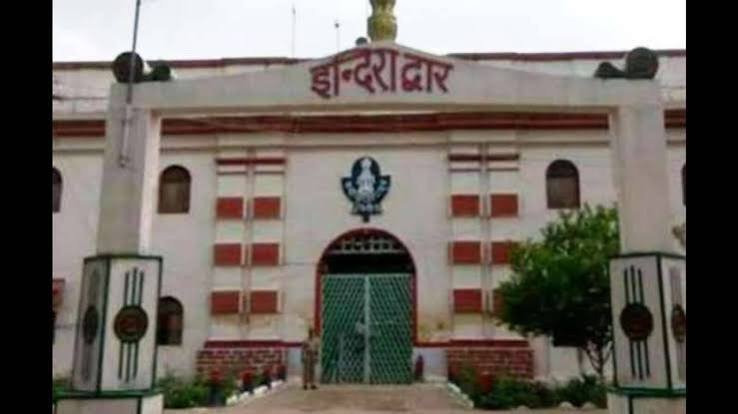
Naini Central Jail is one of Uttar Pradesh’s most historically important prisons, sitting on the banks of the Yamuna river in Prayagraj. Built by the British, this high-security facility is best known for holding Jawaharlal Nehru, India’s first Prime Minister, who wrote his famous letters to daughter Indira from inside its walls. Decades later, Indira Gandhi herself was imprisoned here during the freedom struggle. Today, Naini Jail continues to operate as a functioning high-security prison with a capacity of around 3,000 inmates, standing as one of the few Indian jails with such a direct, generational link to the country’s independence movement.
| Quick Facts | Details |
|---|---|
| Full name | Naini Central Prison (also called Naini Jail) |
| Location | Naini, Prayagraj, Uttar Pradesh |
| Built | During the British Raj, widely cited as around 1864 |
| Distance from Allahabad Railway Station | About 7 km |
| Capacity | Around 3,000 inmates |
| Security class | High security |
| Status | Operational |
| Managed by | Uttar Pradesh Police / UP Prisons Department |
Where Exactly Is It Located
Naini Central Jail sits in the Naini industrial township, on the southern bank of the Yamuna river, directly across from Prayagraj’s main city area. Naini itself grew into a major industrial hub through the 20th century, with the jail predating most of that development by decades.
- Address: Central Jail, Naini, Prayagraj, Uttar Pradesh – 211008
- Nearby landmark: Near Naini Railway Station and Kendriya Karagaar locality
- Access: Connected to central Prayagraj via the Old Naini Bridge (built 1927) and the New Yamuna Bridge, roughly 7 km from Allahabad Railway Station
Naini’s location across the river gave the jail a certain physical separation from the main city, a common feature of colonial-era prisons that were often built outside the immediate urban core.
The Origins: A British-Era Prison
Naini Central Jail was built during the British Raj, with most sources placing its establishment around 1864, as part of the colonial administration’s broader push to build large central prisons across northern India for long-term convicts. Sources differ somewhat on the exact founding details, and some accounts describe earlier structures on the site before it was formally converted into a prison, though this earlier history isn’t consistently documented.
- Spread across a large campus, with some estimates putting the total area near 196 acres
- Built with the same austere, functional design typical of colonial-era Indian prisons
- Located deliberately away from the dense city core, similar to other British-built central jails of the period
Nehru’s Imprisonment and “Glimpses of World History”
Naini’s most defining historical chapter belongs to Jawaharlal Nehru, who was imprisoned here during India’s freedom struggle, including a stretch in 1930. It was from inside this jail that Nehru began writing a remarkable series of letters to his young daughter, Indira, starting on her thirteenth birthday and continuing until 9 August 1933. These letters were later compiled and published as Glimpses of World History, a book that remains widely read even today.
- Nehru’s father, Motilal Nehru, was also imprisoned here in 1930, making Naini a site tied to two generations of the same family’s role in the independence movement.
- Other prominent freedom fighters held here included Govind Ballabh Pant, Narendra Dev, Rafi Ahmed Kidwai, and Hasrat Mohani.
- On 1 March 1941, Mahatma Gandhi personally visited the prison to meet imprisoned freedom fighters Vijayalakshmi Pandit and Abul Kalam Azad.
Indira Gandhi’s Imprisonment
The jail’s connection to the Nehru family didn’t end with Jawaharlal. His daughter, Indira Gandhi, was imprisoned at Naini along with her husband Firoze Gandhi starting 11 September 1942, during the Quit India Movement, and was released in May 1943. This makes Naini one of the rare Indian prisons to have held both a future Prime Minister and his daughter, who would later become Prime Minister herself.
From Freedom Struggle to Modern High-Security Prison
In the decades since independence, Naini has evolved into a high-security facility holding a very different profile of inmates.
- Convicted members of proscribed organisations, including individuals linked to Jaish-e-Mohammad and Lashkar-e-Taiba, have been lodged here at various points.
- The prison has also housed high-profile criminal accused, including individuals connected to major shooting and gang-related cases.
- Inmates at Naini produce wooden furniture through vocational programs, some of which has reportedly been used in the Allahabad High Court and local district courts.
This shift reflects how many of India’s colonial-era central jails have had to adapt, holding both routine convicts and high-security cases within the same historic walls.
Can You Visit Naini Jail
Naini Central Jail is not open to the general public or tourists, since it remains a functioning high-security prison. Visits are restricted to legal representatives, approved family members, and officials under standard jail procedures.
FAQs
Q1: Why is Naini Jail historically significant?
A. It’s tied to Jawaharlal Nehru’s imprisonment during the freedom movement, where he wrote Glimpses of World History, and later held his daughter Indira Gandhi as well.
Q2: Is Naini Central Jail open for public visits?
A. No, it functions as an active high-security prison and isn’t open for tourism or casual public visits.
Q3: How far is Naini Jail from Prayagraj city centre?
A. It’s located roughly 7 km from Allahabad Railway Station, across the Yamuna river, connected via the Old Naini Bridge and New Yamuna Bridge.
Q4: What kind of prisoners does Naini Jail hold today?
A. Beyond its historical role, it now functions as a high-security facility holding convicts across various categories, including some linked to serious criminal and terror-related cases.