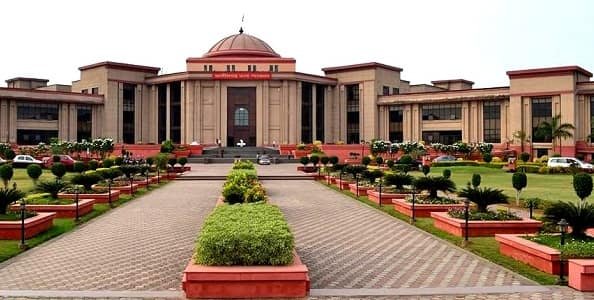
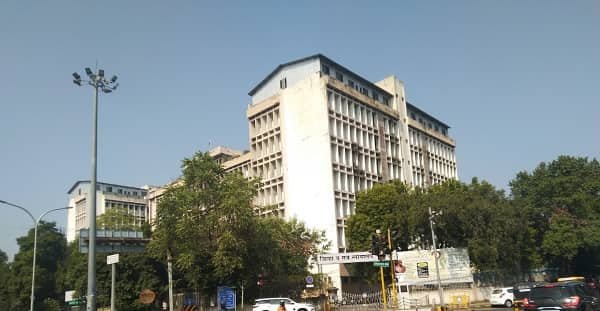
The District Court Kozhikode — the apex trial court for Kozhikode district in the state of Kerala — serves one of India’s most historically significant and globally connected cities. Kozhikode district found a place in the world history long before its formation on January 1, 1957, with five talukas — Vadakara, Koyilandy, Kozhikode, Eranad, and Tirur — when Vasco da Gama, the famous Portuguese Navigator, landed at Kappad seashore with three vessels in the year 1498. Kozhikode — also known as Calicut and famously described as the City of Spices — was for centuries one of the world’s most important maritime trade ports, where Arab, Chinese, and European merchants converged for the spice trade that literally changed the economic history of the world. Under the supervision of the Kerala High Court at Ernakulam, the District Court Kozhikode serves a culturally rich district that is home to some of Kerala’s most celebrated literary, musical, and cultural personalities.
History
When the states of the Indian Union were reorganised on a linguistic basis, the state of Kerala was formed on November 1, 1956, with undivided Malabar as one of its provinces. Later, as per Government order, Malabar province was divided into three districts with some changes in the boundaries of some taluks. Kozhikode district came into existence as an administrative unit on January 1, 1957.
The political history of Kozhikode traces to the founding of the Zamorin dynasty — the tradition regarding the founding of the Zamorins dynasty tells of the last of the Perumals gifting to the Eranad Utayavar his sword and the patch of marshy land on the coast of what is today Calicut. The Zamorins of Calicut became one of the most powerful coastal dynasties in South India, controlling the lucrative spice trade routes and engaging with successive waves of Arab, Portuguese, Dutch, and British maritime powers through negotiation, alliances, and conflict. This extraordinary international commercial history gave Kozhikode a legal culture shaped by cross-cultural commercial dealing long before British institutional judicial administration arrived.
Kozhikode is well known for its cultural entity having renowned literary legends like S.K. Pottekkad, M.T. Vasudevan Nair, Vaikom Muhammed Basheer, U.A. Khader, P. Valsala, and M.G.S. Narayanan, among others. Moreover, many eminent musicians like M.S. Baburaj, singers, poets, cine actors, actresses, screenplay writers, and cine directors have added glory to the district of Calicut.
Structure and Composition
| Dimension | Detail |
| Kozhikode district formed | January 1, 1957 |
| Kerala state formed | November 1, 1956 |
| Vasco da Gama landing | 1498 — at Kappad seashore, Kozhikode |
| Historical dynasty | Zamorins of Calicut — coastal maritime power |
| Court complex area | Approximately 2 acres |
| Heritage buildings | Two buildings dating to pre-independence era — classified as heritage |
| Notable tree | Over 150 years old — stands at the centre of the campus |
| New building | Approximately 5 years old — modern infrastructure |
| High Court supervision | Kerala High Court, Ernakulam |
| Talukas in district | 5 — Vadakara, Koyilandy, Kozhikode, Eranad, Tirur |
| Court types | Principal District Court, Additional District Courts, Magistrate Courts, Munsiff Courts, Family Court, JFCM Courts, Fast Track POCSO Courts |
| Digital services | Kerala District Judiciary e-filing portal, eCourts Mission Mode, video conferencing |
| Legal Aid | DLSA Kozhikode — within the complex |
Architecture — Heritage Buildings at the Heart of Calicut
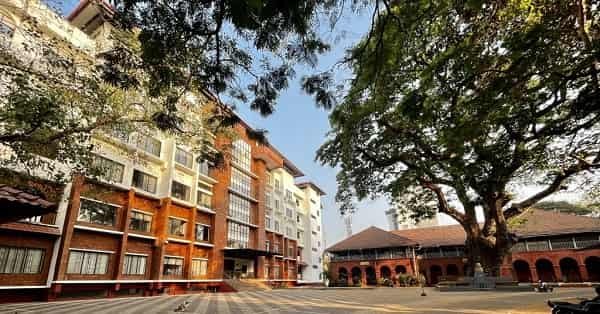
The District Court Kozhikode campus spans approximately 2 acres in the heart of Kozhikode city and carries a distinctive architectural character rooted in its pre-independence heritage. Two of the buildings in the campus were built before India’s independence and are considered heritage buildings now. The big tree that stands at the centre of the campus has aged more than 150 years. A building around 40 years and a new building around 5 years also belong to the campus.
This four-generation architectural composition — pre-independence heritage buildings, a 40-year-old structure, and a contemporary new building all occupying the same 2-acre campus — creates a uniquely layered physical environment that mirrors Kozhikode’s own identity as a city where centuries of civilisational heritage coexist with modern growth. The campus houses courts from JFCM and Munsiff level through District and Sessions Court, alongside the Bar Association, canteen, traffic petty payment facility, and the District Legal Services Authority — creating a comprehensive judicial services campus. Fast Track Special POCSO Courts at Koyilandy and Nadapuram extend the district’s child protection judicial infrastructure beyond the headquarters.
Frequently Asked Questions
Q: When was Kozhikode district formed?
A: January 1, 1957 — following Kerala’s formation on November 1, 1956.
Q: What is the historic global significance of Kozhikode?
A: Vasco da Gama landed at Kappad seashore in 1498 — making Kozhikode the arrival point of the first direct European sea route to India.
Q: What is the area of the Kozhikode District Court campus?
A: Approximately 2 acres.
Q: How many pre-independence heritage buildings are in the campus?
A: Two buildings dating to the pre-independence era are classified as heritage buildings.
Q: What is unique about the court campus?
A: A tree over 150 years old stands at the centre of the campus — older than Indian independence and likely as old as the early judicial premises.
Q: Which High Court supervises the Kozhikode District Court?
A: The Kerala High Court, Ernakulam.
Q: What types of courts function at Kozhikode?
A: From JFCM and Munsiff Courts to Principal District and Sessions Court — including Family Courts, Fast Track POCSO Courts, and the District Legal Services Authority.