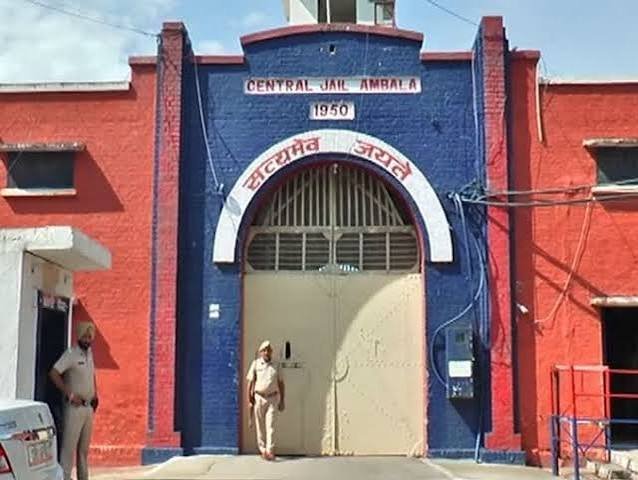
Ambala Central Jail is one of the most historically layered prisons in North India, with a story that stretches from British colonial executions to Nathuram Godse’s hanging after Mahatma Gandhi’s assassination. Located in the Civil Lines area of Ambala City, this 150-plus-year-old facility has held everyone from revolutionary freedom fighters to Sucheta Kriplani, independent India’s first woman Chief Minister. Still operational today, it functions as Haryana’s most high-profile central prison, even as long-standing proposals to relocate it to a new site remain under discussion.
| Quick Facts | Details |
|---|---|
| Full name | Central Jail Ambala |
| Location | Civil Lines, Ambala City, Haryana |
| Built | 1872 (as a sub-jail) |
| Upgraded | District Jail in 1930; Central Jail status in 1947 |
| Area | Over 50 acres |
| Authorised capacity | 1,228 prisoners |
| Status | Operational |
| Managed by | Haryana Prisons Department |
Where Exactly Is It Located
Ambala Central Jail sits in the Civil Lines area of Ambala City, one of the oldest and most historically significant parts of the city, close to Manav Chowk and Model Town.
- Address: Central Jail Ambala, Civil Lines, Ambala City, Haryana
- Nearby landmark: Close to Manav Chowk and Model Town, Ambala City
- Access: Well connected via Ambala City’s local transport network; easily reachable by auto or cab from Ambala Cantonment and the railway station
Its location right in the old civil administrative heart of the city, rather than on the outskirts, reflects just how old this facility actually is — most prisons of this vintage were later moved out of dense city centres, but Ambala’s jail has largely stayed put.
From Sub-Jail to Central Prison: The Origins
Ambala Central Jail’s story begins in 1872, when the British government built it as a modest sub-jail. Over the following decades, its role expanded considerably as Ambala grew into an important administrative and military centre in colonial Punjab.
- Upgraded to a full District Jail in 1930
- Elevated to Central Jail status in 1947, the year of India’s independence
- Referenced in Rudyard Kipling’s novel Kim, underscoring how well-known the jail was even in colonial-era literature
By the time India gained independence, the jail had already witnessed more than seven decades of use, making it one of the older functioning prisons in the region.
Freedom Fighters and Colonial-Era Executions
Ambala Jail carries a heavy weight of pre-independence history, having held and executed numerous figures connected to India’s freedom struggle.
- On 3 September 1915, the British hanged 12 people here for rebelling against colonial rule, including revolutionary Basant Kumar Vishwas
- Sucheta Kriplani, who later became independent India’s first woman Chief Minister (of Uttar Pradesh), was imprisoned here
- Rajkumari Amrit Kaur, who went on to become independent India’s first Health Minister, was also lodged in this jail
- Other freedom fighters held here included Maulana Sabri and Amar Kaur, sister of Shaheed Bhagat Singh
- The jail’s connection to the movement is so deep that Mahatma Gandhi himself is remembered in association with it
The Execution of Nathuram Godse
The jail’s most widely known modern historical event came in 1949, when Nathuram Godse, the assassin of Mahatma Gandhi, was executed here by hanging along with his co-conspirator Narayan Apte. This single event cemented Ambala Central Jail’s place in India’s post-independence history, making it one of the few Indian prisons directly tied to the aftermath of Gandhi’s assassination.
- 1949: Nathuram Godse and Narayan Apte hanged
- Post-independence, the jail continued to be used for capital punishment, with a total of 29 executions recorded here, the last one carried out in 1989
Present-Day Function and Challenges
Today, Ambala Central Jail operates as a functioning high-security prison holding a mix of convicts and undertrials, including individuals connected to serious criminal cases.
- Runs a radio station pilot program launched in 2021, allowing select inmates to work as RJs as part of a rehabilitation initiative
- Has faced repeated security challenges over the years, including recovered mobile phones, contraband smuggling, and past incidents of violence among inmates
- Local authorities and civic groups have flagged the jail’s ageing infrastructure and its vulnerability to smuggled contraband as key operational concerns
Proposal to Relocate the Jail
In recent years, the Haryana government has floated proposals to shift Ambala Central Jail to a new site, largely due to security concerns and the deteriorating condition of the old structure.
- Land has reportedly been identified for a new jail facility in Ambala
- Local heritage advocates, including members of the Ambala Bar Association, have petitioned for the existing 150-year-old structure to be preserved as a national monument rather than demolished, given its direct links to the freedom movement and Godse’s execution
- As of the latest available information, the jail continues to function at its original Civil Lines location, and the relocation has not been confirmed as completed
Given how significant this decision could be for the historic structure, anyone tracking this closely should check for the latest updates from the Haryana Prisons Department before assuming any change in status.
Can You Visit Ambala Central Jail
Ambala Central Jail is not open to the general public, since it remains an active correctional facility holding convicts and undertrials. Visits are restricted to legal representatives and approved family members under standard jail procedures.
FAQs
Q1: Why is Ambala Central Jail historically significant?
A. It held numerous freedom fighters during the independence movement and was the site where Nathuram Godse, Mahatma Gandhi’s assassin, was hanged in 1949.
Q2: Is Ambala Central Jail being shifted to a new location?
A. There have been government proposals to relocate the jail due to security and infrastructure concerns, but as of the latest reports, it continues operating at its original Civil Lines site.
Q3: Who else was imprisoned at Ambala Jail besides Godse?
A. Notable figures include Sucheta Kriplani, India’s first woman Chief Minister, and Rajkumari Amrit Kaur, independent India’s first Health Minister, both held here during the freedom struggle.
Q4: When did Ambala Jail become a central jail?
A. It started as a sub-jail in 1872, became a District Jail in 1930, and was upgraded to Central Jail status in 1947.