The market reacts to news even before the trading begins. A change in the US stocks or crude oil price or a company’s important announcement affects the Indian market.
What should an investor track before the market opens? Well, there are some key indicators that you should observe to understand the trend and be ready for the trading session.
Let us know the crucial indicators to keep an eye on ahead of the market opens.
1. Begin With Gift Nifty
One of the first indicators that a trader observes in the morning is Gift Nifty. It indicates the opening value of the Nifty 50 based on the movement in the Nifty futures market outside Indian market hours.
When the Gift Nifty rises, it suggests a positive opening. On the contrary, a decline means a negative opening.
However, the actual opening value may differ as there can be new developments in the market. Domestic news can also impact the value of stocks once the market opens.
Therefore, it is advisable to consider Gift Nifty as a pointer to the potential direction of the market.
2. Observe the Trend in Other Markets
The movement in the global market also impacts the Indian market. News from the US and other major economies influences the purchasing power of Indians and therefore the share prices.
For example, if the US stocks witness a significant drop, it can affect the confidence of Indian investors. A positive trend in global markets can boost the mood of the market, although the impact varies from day to day.
It is important to understand the reason for the fluctuation in other markets. Apart from tracking the movement, you should also keep a watch on interest rates, inflation, and other crucial indicators that determine the trend.
By observing the global market and Gift Nifty, you can get an idea of the likely direction of the market.
3. Keep a Watch on Crude Oil Price
Crude oil is one of the most crucial commodities for the Indian market as India depends on it for almost 75% of its oil needs.
A significant increase in the price of crude oil increases the cost of living as well as the cost of production for many industries. It can impact the share prices of companies and the overall stock market.
A drop in crude oil prices reduces the production cost and eases the burden on the companies. However, the effect depends on the economic situation as well.
Investors can also track the value of the Rupee against the US Dollar as it impacts the importers and exporters and companies’ overseas business.
Therefore, by observing these indicators, investors can understand the impact on the Indian market.
4. Track the Performance of the Banking Sector
Nifty 50 includes the top 50 stocks from different sectors, whereas Bank Nifty reflects the value of banking stocks on the National Stock Exchange.
By observing the performance of Bank Nifty, one can predict the trend in the banking sector. It is influenced by the growth in the economy, interest rates, and the stock of money.
For example, if the Nifty 50 increases in value after the opening bell while the Bank Nifty decreases, it suggests a negative sign for the banking sector.
On the contrary, if the value of both the indices increases, it indicates a positive trend. However, it is important to observe the movement in other sectors as well before taking any decision on investment.
It should be noted that Bank Nifty only reflects the value of selected banking stocks.
5. Remember That Market Breadth Matters
A rise in the value of an index does not necessarily indicate a positive trend as many stocks may witness a downfall in their price.
Therefore, it is important to observe the market breadth or the ratio of rising stocks to the number of stocks that have witnessed a decline in the value.
In the same way, volume is also an important indicator of the market trend.
If a stock price increases with a surge in volume, it indicates a positive trend. On the contrary, if the value of a stock rises on a low volume, it can be misleading.
These are not reliable indicators on their own, but together they can give you an accurate assessment of the stock market.
6. Get an App to Track Market Trends
It can be exhausting to observe the various websites that provide the relevant information on the market trends.
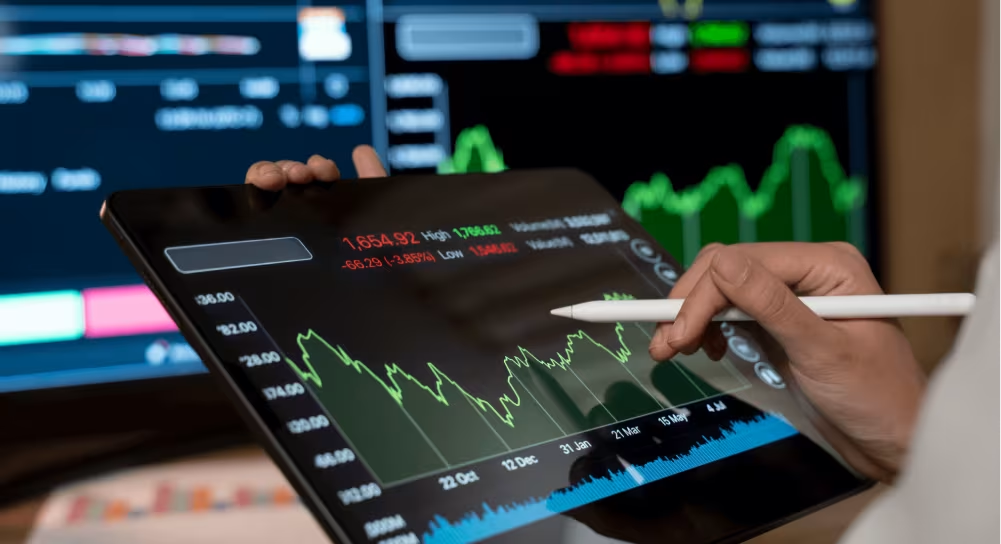
Investors can download trading apps to track the market movement and watchlist. The app provides relevant updates on the market and stock price.
For instance, there are various apps that allow investors to customize their watchlists and set up alerts to track the market developments.
Begin with a simple watchlist and track the indicators described in the article. It allows you to keep a close watch on the market without getting overwhelmed by the vast amount of information.
Additionally, you should avoid getting too many alerts. It is important to minimize the distractions so that you do not miss out on important developments in the market.
Before using any of the apps, it is essential to understand its features, commission, and risks involved in trading. Having the relevant information at a click is not a guarantee against losing money.
Have a Ready-Made Pre-Market Routine
There is no need to develop a complex system to track the movement in the market. Observe the Gift Nifty and major indices such as Nifty 50, Bank Nifty, and keep track of news from the global market.
After the opening bell, observe the performance of the Bank Nifty, breadth of the market, and volume to determine the strength of the trend that was predicted ahead of the opening.
Always remember that one or two indicators cannot predict the movement of the entire market.
Market changes rapidly, and there can be multiple factors influencing it. Therefore, having a routine that allows you to observe relevant indicators is essential.
It helps you to be prepared for the day ahead. It can help you to observe the indicators without rushing. You can take the time to understand the information and make the necessary decisions before the beginning of the session.
The purpose of having a pre-market routine is not to predict what will happen in the market.
Rather, it is to help an investor understand the information, assess potential risks, and prepare themselves for the trading session.