A bathroom can look surprisingly different after replacing only four things: the basin, faucet, shower and toilet. But if water collects near the drain, tiles are loose, pipes repeatedly leak or damp patches appear on the adjoining wall, shiny new fixtures will not solve the problems that actually make the bathroom difficult to use.
This is the key difference between replacing bathroom fixtures and carrying out a complete remodel.
Fixture replacement updates individual visible components while preserving most of the existing bathroom. Remodelling goes deeper and can address tiles, waterproofing, plumbing, drainage, electrical work, storage and layout.
Replacing fixtures is generally more cost-effective when the bathroom is structurally and functionally sound but looks dated. A full remodel is better when hidden systems are failing, the layout is poor, or several major components need replacement at the same time.
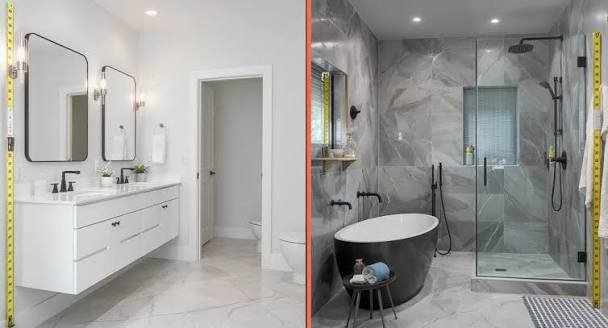
Bathroom Remodelling vs Fixture Replacement: Quick Comparison
| Factor | Full Bathroom Remodel | Fixtures Only |
|---|---|---|
| Initial cost | Higher | Lower |
| Renovation time | Longer | Shorter |
| Demolition | Significant | Minimal |
| Waterproofing upgrade | Possible | Usually unchanged |
| Plumbing changes | Extensive changes possible | Usually limited |
| Layout changes | Yes | Generally no |
| New tiles | Usually possible | Existing tiles retained |
| Appearance improvement | Complete transformation | Moderate to significant |
| Disruption | Higher | Lower |
| Best for | Old/problematic bathrooms | Functional but dated bathrooms |
What Does Replacing Bathroom Fixtures Mean?
Fixture replacement involves changing selected bathroom components without rebuilding the entire space.
Depending on the bathroom, this could include replacing:
- Toilet
- Wash basin
- Faucets
- Shower
- Health faucet
- Mirror
- Accessories
- Vanity
- Selected lighting
Existing wall tiles, floor tiles, plumbing routes and waterproofing generally remain untouched.
This approach can refresh a bathroom relatively quickly when its underlying construction is still in good condition.
What Is a Complete Bathroom Remodel?
A complete remodel involves substantially rebuilding the bathroom.
The work may include:
- Removing old fixtures
- Removing tiles
- Plumbing alterations
- Electrical changes
- Waterproofing
- Floor-slope correction
- New wall and floor tiles
- New sanitaryware
- New faucets
- Storage
- Lighting
- Ventilation improvements
A remodel therefore provides an opportunity to correct functional problems rather than simply changing the bathroom’s appearance.
1. Upfront Cost
Winner: Replacing fixtures
Replacing a few fixtures is almost always less expensive initially than demolishing and rebuilding an entire bathroom.
You avoid many costs associated with:
- Demolition
- Debris removal
- Waterproofing
- Tiling
- Extensive labour
- Plumbing alterations
If the bathroom works properly and you simply dislike its old basin or faucets, there may be little reason to rebuild everything.
However, low initial cost should not be confused with long-term value.
2. Waterproofing Problems
Winner: Full remodel
Waterproofing is largely hidden once a bathroom is finished.
If the waterproofing system has failed, replacing a toilet or showerhead will not restore it.
Warning signs can include:
- Dampness on adjoining walls
- Leakage to the floor below
- Repeated moisture problems
- Deteriorating finishes
The source still needs proper diagnosis because bathroom dampness can also originate from plumbing leaks.
When failed waterproofing requires access beneath the finishes, substantial demolition may be unavoidable.
That is when a remodel becomes much easier to justify.
3. Plumbing Condition
Winner: Full remodel for major plumbing problems
Old or problematic plumbing can be difficult to access after new fixtures have been installed.
If concealed pipes require significant replacement, opening walls or floors may damage existing finishes.
A full renovation provides an opportunity to coordinate plumbing work before new tiles and fixtures are installed.
Fixture-only replacement works better when existing:
- Supply lines
- Drainage
- Fixture locations
- Connections
are already functioning correctly.
4. Bathroom Layout
Winner: Full remodel
Replacing fixtures does not fundamentally change the floor plan.
If the toilet is awkwardly positioned or the shower area is too cramped, installing newer versions in the same locations may leave the bathroom just as inconvenient.
A remodel can reconsider:
- Toilet position
- Basin location
- Shower area
- Door movement
- Storage
- Circulation
However, moving plumbing points can increase costs considerably.
Change the layout only when the functional improvement justifies the additional work.
5. Appearance
Winner: Full remodel for complete transformation; fixtures for budget refresh
Fixtures strongly influence how a bathroom looks.
Changing an old basin, faucets, mirror and accessories can create a noticeable improvement without touching the tiles.
This makes fixture replacement attractive for bathrooms with neutral, serviceable finishes.
A full remodel provides much greater design freedom.
You can coordinate:
- Floor tiles
- Wall tiles
- Sanitaryware
- Faucets
- Lighting
- Storage
- Shower enclosure
If the existing tiles dominate the outdated appearance, replacing fixtures alone may not deliver the transformation you expect.
6. Renovation Time
Winner: Fixtures only
Replacing compatible fixtures can be much faster than completing an entire bathroom renovation.
A full remodel can involve several sequential trades and stages.
For example:
Demolition → plumbing → electrical → waterproofing → testing/curing as required → tiling → fixtures → finishing
Rushing these stages—particularly waterproofing-related work—can create expensive problems later.
The exact project duration depends on the bathroom and selected construction systems.
7. Disruption
Winner: Fixtures only
A bathroom renovation can be inconvenient, especially in a flat with only one bathroom.
A complete remodel may make the bathroom unavailable for a meaningful period.
Fixture replacement creates much less disruption when connections remain unchanged.
Households with multiple bathrooms can manage a complete renovation more easily by renovating one at a time.
For a single-bathroom home, project planning becomes particularly important.
8. Floor Drainage and Slope
Winner: Full remodel
A bathroom floor should direct water appropriately toward its drainage points.
If water consistently pools in the wrong areas because the floor slope is poor, changing the shower or faucet will not correct the floor.
Tile and screed work may be required.
Persistent drainage problems are therefore a strong reason to investigate deeper renovation rather than spending only on decorative upgrades.
9. Tiles
Winner: Depends on their condition
Old does not necessarily mean defective.
If tiles are:
- Securely fixed
- Easy to maintain
- Free from serious damage
- Compatible with your desired design
keeping them can save substantial money and waste.
But tiles that are loose, badly damaged or part of a bathroom requiring underlying waterproofing work may need to be removed.
Do not demolish perfectly serviceable tiles solely because renovation trends have changed.
10. Ventilation
Winner: Full remodel when improvement is needed
Bathrooms need effective moisture removal.
If an existing bathroom has poor ventilation, a renovation is a good opportunity to improve it.
This could involve an appropriately designed exhaust system where feasible.
Simply replacing sanitaryware does not solve a persistent humidity problem.
Ventilation becomes particularly important in bathrooms without useful windows.
11. Electrical Safety and Lighting
Winner: Full remodel for significant upgrades
A renovation provides an opportunity to review bathroom lighting and electrical installations.
Bathrooms are wet environments, so electrical work requires appropriate safety measures and professional installation.
A full remodel may be useful when:
- Wiring is old.
- Lighting is inadequate.
- Switch or outlet arrangements need correction.
- New electrical equipment is planned.
If the existing electrical system is already appropriate, fixture replacement does not necessarily require major electrical work.
12. Storage
Winner: Full remodel, although smaller upgrades are possible
Small Indian bathrooms often struggle with storage.
A remodel can integrate:
- Vanity drawers
- Mirror cabinets
- Niches
- Shelves
- Towel storage
But storage improvement does not always require complete demolition.
Replacing a pedestal basin with a suitable vanity arrangement, for example, may increase storage while keeping much of the bathroom intact.
Targeted improvements can sometimes deliver most of the desired benefit.
13. Hidden Damage
Winner: Full remodel when confirmed
Bathroom finishes can conceal problems.
Possible issues include:
- Damaged substrate
- Pipe leakage
- Waterproofing deterioration
- Moisture damage
- Corroded components
This does not mean every old bathroom should be demolished “just in case.”
Investigate symptoms first.
A professional inspection can help determine whether the problem is localised or whether broader renovation is justified.
14. Long-Term Cost
Winner: Depends on existing condition
Consider two bathrooms.
Bathroom A: Everything works, tiles are sound, drainage is good, but the sanitaryware looks old.
Replacing fixtures is likely to provide better value.
Bathroom B: The adjoining wall is damp, floor water pools away from the drain, pipes require repair and several tiles are loose.
Spending heavily on premium fixtures without addressing those problems may mean paying for renovation twice.
The more underlying work that is required, the stronger the financial case for coordinating it as one remodel.
When Should You Replace Fixtures Only?
Choose fixture replacement when:
- Waterproofing appears sound.
- There is no unexplained leakage or dampness.
- Plumbing works properly.
- Floor drainage is satisfactory.
- Tiles are in good condition.
- You are happy with the layout.
- The main problem is appearance.
- You want a faster, lower-cost update.
Possible upgrades can include a new toilet, basin, faucets, shower fittings, mirror, vanity and accessories.
Compatibility with existing plumbing points should be checked before purchasing.
When Is Complete Bathroom Remodelling Better?
Consider a full remodel when:
- Waterproofing has failed.
- There are repeated plumbing problems.
- The floor slope is poor.
- Tiles need extensive replacement.
- The layout is inconvenient.
- Electrical work requires major updating.
- Ventilation is inadequate.
- Several systems need work simultaneously.
Combining related repairs can avoid damaging newly completed finishes later.
A Partial Bathroom Renovation Can Be the Better Compromise
There is a useful middle option between changing two faucets and demolishing the entire bathroom.
A partial renovation might include:
- Retaining sound wall tiles
- Replacing the vanity
- Changing sanitaryware
- Upgrading faucets
- Replacing selected damaged tiles
- Improving the shower area
- Adding storage
Alternatively, if only the wet area has a confirmed problem, the scope may sometimes be concentrated there depending on construction and waterproofing requirements.
The repair scope should follow the problem rather than an arbitrary “full renovation” package.
How to Decide Before Renovating
Start by separating cosmetic problems from functional problems.
Cosmetic issues include:
- Old-fashioned fixtures
- Outdated mirror
- Worn accessories
- Unattractive colours
Functional issues include:
- Leakage
- Dampness
- Poor drainage
- Failed waterproofing
- Plumbing problems
- Inadequate ventilation
- Unsafe or outdated electrical work
- Poor layout
If your list is mostly cosmetic, replacing fixtures may be enough.
If several functional issues appear on the list, a comprehensive renovation deserves serious consideration.
Which Is Better?
For a functional bathroom with sound tiles, waterproofing, plumbing and drainage, replacing fixtures is usually the more cost-effective approach. You can achieve a substantial visual upgrade without paying for unnecessary demolition.
For a bathroom with multiple underlying problems, full remodelling can provide better long-term value because those systems can be repaired together before new finishes are installed.
Do not decide based only on how old the bathroom looks.
If the bathroom works well but looks tired, update it. If the bathroom itself is failing, remodel it.
That distinction can prevent a modest refresh from turning into an expensive renovation—or an expensive renovation from being undertaken when it was never necessary.
FAQs
Q1. Is replacing bathroom fixtures cheaper than remodelling?
A. Generally, yes. Fixture replacement retains most existing tiles, waterproofing and plumbing routes, reducing demolition, material and labour costs. It is most suitable when those existing systems are still in good condition.
Q2. When should I completely remodel an old bathroom?
A. A full remodel becomes more appropriate when there are significant waterproofing, plumbing, drainage, tile, ventilation or layout problems, especially when several need to be addressed together.
Q3. Can I replace a toilet or basin without changing the tiles?
A. Often yes, provided the new fixture is compatible with the existing plumbing arrangement and installation does not require significant changes to the wall or floor. Measurements and connection locations should be checked before purchase.
Q4. Should I replace bathroom tiles just because they are old?
A. Not necessarily. Sound, securely fixed and functional tiles can often remain if you are satisfied with their appearance. Replacement becomes more justified when tiles are damaged, loose or need removal to access underlying repairs.
Q5. Can I renovate only part of a bathroom?
A. Yes. A partial renovation can be cost-effective when problems or desired upgrades are limited to specific areas. The scope should account for waterproofing continuity, plumbing connections and compatibility between retained and new finishes.