A cholesterol report can look confusing because it rarely gives you just one number. You may see total cholesterol, LDL, HDL, triglycerides, non-HDL cholesterol and sometimes ratios. More importantly, a result marked “high” or “low” does not tell the entire story by itself.
A lipid profile helps healthcare professionals assess fats and fat-carrying particles in your blood and consider them alongside other factors that influence cardiovascular health. LDL is generally the number most associated with cholesterol-related plaque buildup, HDL provides different information, and triglycerides are another type of blood fat.
Understanding what each number represents makes the report easier to discuss with your doctor without trying to diagnose yourself from a single laboratory value.
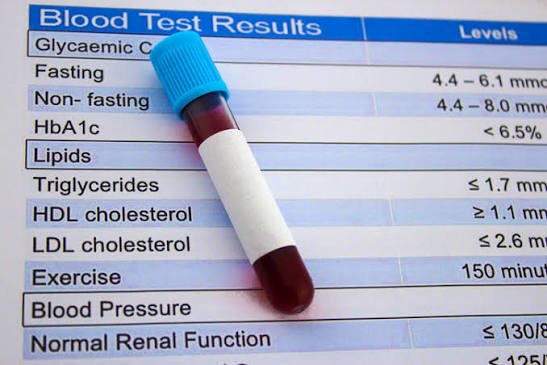
Cholesterol Test: Quick Overview
| Test | What It Generally Tells You |
|---|---|
| Total cholesterol | Overall amount of cholesterol measured in the blood |
| LDL cholesterol | Cholesterol carried in LDL particles; higher levels can contribute to artery plaque |
| HDL cholesterol | Cholesterol carried in HDL particles; generally associated with lower cardiovascular risk at typical levels |
| Triglycerides | A major form of fat circulating in the blood |
| Non-HDL cholesterol | Total cholesterol minus HDL; represents cholesterol carried in several potentially atherogenic particles |
Laboratories may use mg/dL or mmol/L, depending on the country and reporting system.
What Is Cholesterol?
Cholesterol is a waxy substance that the body needs for normal functions.
It contributes to processes including the production of:
- Cell membranes
- Certain hormones
- Bile acids
- Vitamin D
Because cholesterol does not dissolve freely in blood, it travels in particles called lipoproteins.
LDL and HDL are two important types of these particles.
The health concern is therefore not that cholesterol exists. The issue is how much cholesterol is carried in particular particles and what that means in the context of someone’s overall health.
What Is LDL Cholesterol?
LDL stands for low-density lipoprotein.
It transports cholesterol through the bloodstream. When levels of LDL-related cholesterol are too high, cholesterol can contribute to deposits within artery walls.
Over time, this process is involved in atherosclerosis, which can increase the risk of cardiovascular problems.
This is why LDL is often casually called “bad cholesterol.”
That nickname is convenient but oversimplified. LDL particles perform normal biological functions; the concern is having an amount that is inappropriate for a person’s cardiovascular risk.
What LDL Number Is Considered Healthy?
You may see general reference categories on laboratory reports or health websites.
However, there is no single LDL target that is ideal for every person.
A healthcare professional may interpret LDL differently depending on factors such as:
- Age
- Blood pressure
- Diabetes
- Kidney disease
- Smoking
- Family history
- Existing cardiovascular disease
- Previous heart attack or stroke
- Other lipid results
Someone at higher cardiovascular risk may be advised to achieve a substantially lower LDL level than someone at lower risk.
Therefore, avoid treating the laboratory’s reference range as a personalised treatment target.
What Is HDL Cholesterol?
HDL stands for high-density lipoprotein.
HDL particles are involved in transporting cholesterol from tissues toward the liver and participate in cholesterol metabolism.
Higher HDL levels have traditionally been associated with lower cardiovascular risk, leading to the nickname “good cholesterol.”
But this also needs context.
A high HDL result does not automatically cancel out a high LDL result.
For example, it would be misleading to think:
“My LDL is high, but my HDL is also high, so I don’t need to worry about LDL.”
Doctors evaluate the lipid profile and overall cardiovascular risk rather than using HDL as a simple protective credit against other risk factors.
Is Higher HDL Always Better?
Not necessarily in a simple “the higher, the better” way.
HDL is useful in cardiovascular risk assessment, but extremely high values should not automatically be interpreted as providing unlimited protection.
Modern cardiovascular assessment focuses strongly on reducing harmful atherogenic particles when appropriate rather than trying to raise HDL simply to reach a particular number.
This is another reason to interpret the complete report rather than concentrating on a single value.
What Are Triglycerides?
Triglycerides are a form of fat used by the body for energy storage.
After eating, excess energy can be converted into triglycerides and stored in fat tissue for later use.
Triglyceride levels can be influenced by many factors, including:
- Recent food intake
- Overall dietary pattern
- Physical activity
- Body metabolism
- Diabetes
- Some medical conditions
- Certain medicines
- Genetics
Persistently elevated triglycerides can be relevant to cardiovascular and metabolic health.
Very high levels can also create additional health concerns, which is why markedly abnormal results need medical assessment.
Why Does Fasting Matter for Triglycerides?
Triglycerides can change after eating.
Historically, lipid tests were commonly performed after fasting. Today, non-fasting lipid testing is also used in many situations.
Whether fasting is required depends on why the test is being performed and the clinician’s or laboratory’s instructions.
If your doctor specifically requests a fasting lipid profile, follow the instructions provided rather than applying a generic fasting rule yourself.
What Is Total Cholesterol?
Total cholesterol represents cholesterol measured across several lipoprotein particles in the blood.
It is useful, but it should not normally be interpreted alone.
Two people could have similar total cholesterol values while having different combinations of:
- LDL
- HDL
- Other cholesterol-containing particles
Their cardiovascular risk profiles could therefore be different.
When reading your report, look beyond the total number.
What Is Non-HDL Cholesterol?
Some lipid reports include non-HDL cholesterol.
The calculation is straightforward:
Non-HDL cholesterol = Total cholesterol − HDL cholesterol
For example, if total cholesterol were 190 mg/dL and HDL were 50 mg/dL:
Non-HDL = 190 − 50 = 140 mg/dL
Non-HDL cholesterol represents cholesterol carried by LDL and other particles that can contribute to atherosclerosis.
It can provide useful additional information, particularly in certain metabolic situations.
Your doctor can determine how much importance to place on it in your individual case.
Why Are Cholesterol Ratios Sometimes Shown?
Some reports or health assessments calculate ratios such as total cholesterol divided by HDL.
Ratios can provide additional context, but they should not distract from clinically important individual measurements.
A favourable-looking ratio does not necessarily make a substantially elevated LDL irrelevant.
The usefulness of a particular ratio depends on the clinical context and the risk-assessment method being used.
LDL vs HDL vs Triglycerides: What’s the Difference?
The easiest way to remember the three is:
LDL: Think about cholesterol carried in particles associated with plaque formation when excessive.
HDL: Think about particles involved in transporting cholesterol and a marker used in cardiovascular risk assessment.
Triglycerides: Think about a major form of circulating and stored fat related to energy metabolism.
They measure different things, so they should not be treated as interchangeable numbers.
Why Can Cholesterol Be High Even If You Feel Healthy?
High cholesterol often causes no obvious symptoms.
Someone can feel completely well while having an unfavourable lipid profile.
That is why cholesterol is assessed through blood testing rather than symptoms alone.
Likewise, being physically active or appearing healthy does not guarantee that every cholesterol value will be within an appropriate range.
Genetics can play an important role.
Does Eating Cholesterol Directly Determine Your Blood Cholesterol?
The relationship is more complicated than simply:
More cholesterol in food = the same increase in blood cholesterol.
The body also produces cholesterol, and blood lipid levels are influenced by the overall dietary pattern, genetics, metabolism, health conditions and other factors.
Dietary saturated and trans fats can be important considerations in cardiovascular nutrition, while foods also differ in fibre and overall nutrient composition.
Rather than focusing on one nutrient in isolation, dietary advice generally considers the overall eating pattern.
What Lifestyle Factors Affect a Lipid Profile?
Depending on the individual, cardiovascular health may be supported by habits such as:
- Eating a varied diet with vegetables, fruits, pulses and whole grains
- Including suitable sources of unsaturated fats
- Being physically active
- Avoiding tobacco exposure
- Getting appropriate medical care for conditions such as diabetes or high blood pressure
For teenagers and growing children, cholesterol concerns should not lead to restrictive dieting or attempts to lose weight without appropriate medical guidance.
Nutrition needs to continue supporting growth and development.
Can Genetics Cause High LDL?
Yes.
Some people inherit genetic conditions that cause very high LDL cholesterol.
One example is familial hypercholesterolemia (FH).
A family history of unusually high cholesterol or cardiovascular disease at relatively young ages can therefore be important information to share with a doctor.
Lifestyle habits remain relevant, but genetic lipid disorders may require specific medical management rather than dietary changes alone.
What If Only Triglycerides Are High?
An elevated triglyceride result can have several possible explanations.
The doctor may consider factors such as:
- Whether the test was fasting or non-fasting
- Recent diet
- Diabetes or blood-glucose control
- Medicines
- Other medical conditions
- Family history
One abnormal result should be interpreted in context.
Depending on the level and circumstances, a clinician may recommend repeat testing or additional evaluation.
What If LDL Is High but HDL Is Also High?
Do not assume they cancel each other out.
LDL and HDL provide different information.
A high HDL level does not necessarily remove the cardiovascular significance of elevated LDL.
A clinician will consider both values along with triglycerides, non-HDL cholesterol where relevant, and the person’s broader risk profile.
Why Your Doctor May Look Beyond the Lipid Profile
Cholesterol is only one part of cardiovascular health.
Depending on age and circumstances, assessment may also consider:
- Blood pressure
- Blood glucose
- Family history
- Kidney function
- Smoking exposure
- Medical history
- Other laboratory tests
This explains why two people with the same LDL number may receive different advice.
Treatment decisions are based on the person—not simply a highlighted number on a laboratory report.
How to Read Your Cholesterol Report Step by Step
When you receive a lipid profile, use this sequence:
Step 1: Check the units.
Confirm whether results are reported in mg/dL or mmol/L.
Step 2: Find LDL.
This is an important value in cardiovascular risk management.
Step 3: Find HDL.
Consider it as part of the overall risk profile rather than a number that cancels LDL.
Step 4: Check triglycerides.
Note whether the test was performed under the conditions requested by your doctor.
Step 5: Look for non-HDL cholesterol.
If reported, it provides additional information about atherogenic cholesterol-containing particles.
Step 6: Compare with previous tests.
Trends over time can sometimes be more informative than focusing entirely on one measurement.
Step 7: Discuss abnormal or unexpected results with a healthcare professional.
Personal targets depend on individual circumstances.
Don’t Treat the Red Flag on a Lab Report as a Diagnosis
Laboratories often highlight values outside their reference ranges.
That flag is useful, but it does not replace clinical interpretation.
A doctor may decide that a particular result:
- Needs monitoring
- Needs repeat testing
- Requires lifestyle changes
- Requires additional investigation
- Requires treatment
or is less concerning when considered in the full clinical context.
Similarly, a report showing every value inside the laboratory range does not automatically mean cardiovascular risk is zero.
Understanding the Bigger Picture
The most useful way to understand a cholesterol test is not to divide the report into “good numbers” and “bad numbers.”
Think of it as several pieces of information:
LDL tells you about an important atherogenic cholesterol measure.
HDL contributes additional information about cardiovascular risk.
Triglycerides tell you about another major type of blood fat.
Total and non-HDL cholesterol help provide broader context.
What those numbers mean for one particular person depends on health history, age, family history and other risk factors. If your report contains unexpectedly high or low values, particularly markedly abnormal results, a healthcare professional can interpret them in context and determine whether any follow-up is needed.
FAQs
Q1. What is LDL cholesterol?
A. LDL stands for low-density lipoprotein. LDL particles carry cholesterol in the blood, and excessive LDL-related cholesterol can contribute to plaque formation in arteries. Appropriate LDL targets vary according to individual cardiovascular risk.
Q2. Is HDL the good cholesterol?
A. HDL is commonly called “good cholesterol” because higher levels have traditionally been associated with lower cardiovascular risk. However, HDL should be interpreted alongside LDL, triglycerides and other health factors rather than considered protective on its own.
Q3. What are triglycerides in a cholesterol test?
A. Triglycerides are a major form of fat in the blood and body. Their levels can be influenced by food intake, metabolism, genetics, medical conditions and certain medicines.
Q4. Can you have high cholesterol without symptoms?
A. Yes. Unfavourable cholesterol levels often cause no noticeable symptoms, which is why blood testing is used to identify them.
Q5. What should I do if my cholesterol report is abnormal?
A. Discuss unexpected or abnormal results with a qualified healthcare professional rather than interpreting one number in isolation. The appropriate next step depends on the specific values, age, medical history, family history and overall cardiovascular risk.