The High Court at Calcutta — the oldest High Court in India and one of only three Charter High Courts established by Queen Victoria’s Letters Patent — stands as a magnificent fusion of legal heritage, architectural grandeur, and constitutional authority that no other superior court in India can fully replicate. Established as the High Court of Judicature at Fort William on July 1, 1862, under the High Courts Act 1861, the court was brought into existence by Letters Patent dated May 14, 1862, granted by Her Majesty Queen Victoria. It succeeded the Supreme Court of Judicature at Fort William — which itself had stood as British India’s highest court since 1774 — creating a judicial institution that has served the eastern region of India without interruption for over 160 years.
History
The High Court of Judicature at Fort William was formally opened on July 1, 1862, with Sir Barnes Peacock as its first Chief Justice. Appointed on February 2, 1863, Justice Sumboo Nath Pandit was the first Indian to assume office as a Judge of the Calcutta High Court, followed by legal luminaries including Justice Dwarka Nath Mitter, Justice Ramesh Chandra Mitter, Sir Gooroodas Banerji, Sir Ashutosh Mookerjee, and Justice P.B. Chakravartti — who was the first Indian to become a permanent Chief Justice of the court.
Despite the name of the city having officially changed from Calcutta to Kolkata in 2001, the court as an institution retained the old name. A bill to rename it as Kolkata High Court was approved by the Cabinet on July 5, 2016, alongside renaming of its counterparts in Chennai and Mumbai, but the court continues to be known by its historic name.
The court’s jurisdiction was extended to cover Chandernagore — now called Chandannagar — and the Andaman and Nicobar Islands as of May 2, 1950. The Calcutta High Court has extended circuit benches in Port Blair and in Jalpaiguri, serving the North Bengal districts of Darjeeling, Kalimpong, Jalpaiguri, Alipurduar, and Cooch Behar.
Structure and Composition
| Dimension | Detail |
| Established | July 1, 1862 — Letters Patent dated May 14, 1862 |
| First Chief Justice | Sir Barnes Peacock |
| First Indian Judge | Justice Sumboo Nath Pandit — February 2, 1863 |
| First Indian Permanent CJ | Justice P.B. Chakravartti |
| Principal Seat | Kolkata, West Bengal |
| Circuit Benches | Port Blair (Andaman and Nicobar Islands) + Jalpaiguri |
| Sanctioned judge strength | 72 judges (54 Permanent + 18 Additional) |
| Jurisdiction | State of West Bengal + UT of Andaman and Nicobar Islands |
| Centenary | 1962 — over 160 years of service in 2026 |
Architecture
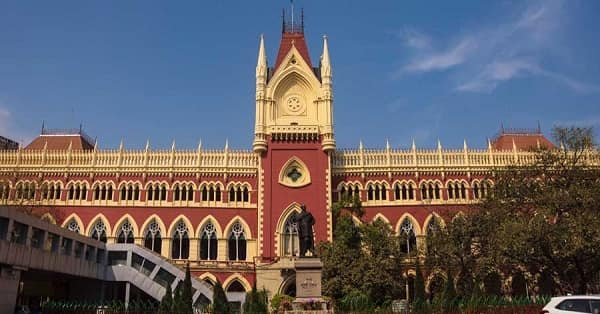
The High Court building’s design is based on the Cloth Hall at Ypres in Belgium — specifically an exact replica of the 13th-century StadtHaus, designed by then Government Architect Walter Granville. It is recorded that when the original Stadt-Haus burnt down during World War I, a blueprint of Granville’s Calcutta High Court had to be consulted before rebuilding it.
The gorgeous building has a grand colonnade in the lower storey of the south front. The foliated capitals of the pillars, which are of original Caen stone, are exquisitely sculptured with different allegorical figures symbolising Justice, Truth, Benevolence, and Charity. The court has a 180-feet centre tower in the south front, capped by four turrets and a spire. The main entrance of the enormous building is through the tower, where rests the main staircase. A new High Court Centenary Building was built as an extension, retaining somewhat the architectural symmetry of the main building.
Frequently Asked Questions
Q: Which is the oldest High Court in India?
A: The Calcutta High Court, established July 1, 1862, is the oldest High Court in India.
Q: Who was the first Chief Justice?
A: Sir Barnes Peacock was the first Chief Justice, assuming charge on July 1, 1862.
Q: Who designed the building?
A: Government Architect Walter Granville designed it as a replica of the Cloth Hall at Ypres, Belgium.
Q: What is the sanctioned judge strength?
A: 72 judges — 54 permanent and 18 additional.
Q: Which territories fall under its jurisdiction?
A: West Bengal and the Union Territory of Andaman and Nicobar Islands.
Q: Does the court have circuit benches?
A: Yes — at Port Blair and Jalpaiguri.
Q: Why is it still called Calcutta and not Kolkata?
A: Despite the city’s 2001 renaming, the court retained its historic name. A renaming bill remains pending before Parliament.