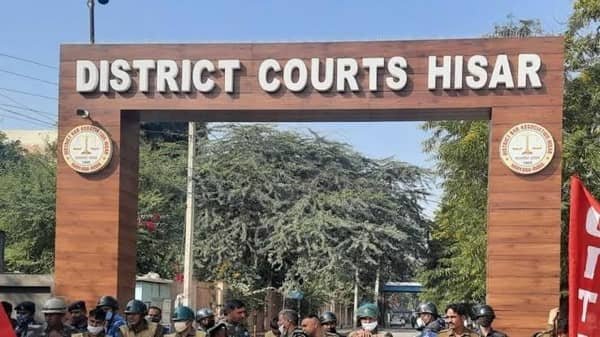
The District Court Hisar — the apex trial court for the Hisar Sessions Division in the state of Haryana — serves a city whose history stretches back to the 14th century founding by Sultan Firoz Shah Tughlaq, and whose court history began during the East India Company era around 1832. Located in western Haryana on National Highway 10, approximately 164 kilometres west of Delhi, Hisar is the divisional headquarters of the Divisional Commissioner and the headquarters of the Police Range — a status that gives its district court a significance extending across multiple districts of western Haryana. Under the supervision of the Punjab and Haryana High Court at Chandigarh, the Hisar District Court is housed in what is described as the largest administrative and judiciary complex in Haryana — a distinction that reflects both the court’s institutional importance and the comprehensive planning that placed it at the heart of Hisar’s civic administrative infrastructure.
History of District Court Hisar
The city of Hisar was founded in 1354 AD by Sultan Firoz Shah Tughlaq — the Sultan of Delhi from 1351 to 1388 — who named it Hisar-e-Firoza, meaning Fort of Firoz. The word Hisar is a Persian term meaning fort or quilla. For nearly two centuries the city was called Hisar-e-Firoza, but during the reign of Emperor Akbar (1556-1605) it came to be simply known as Hisar. The city was ruled by the Mauryas in the third century BC, the Tughlaqs in the 14th century, the Mughals in the 16th century, and the British in the 19th century. The first Collector of Hisar was Mr. William Brown. After independence, the city became part of Punjab and subsequently Haryana on November 1, 1966.
The Court at Hisar came into being around 1832 during the reign of the East India Company, when it was affiliated to the Allahabad High Court. Initially, the Hisar District Court was part of the Ferozepur Sessions Division, and the Divisional and Sessions Judge from Ferozepur came to monitor trials and oversee the functioning of civil and criminal courts. An important milestone was the permanent establishment of the District and Sessions Judge’s Court at Hisar and the elevation of the Hisar Court to a Sessions Division in 1915 — making justice more accessible to the local population and expediting court proceedings. The earlier jurisdiction of the Hisar Sessions Division was far wider, encompassing Fatehabad, Sirsa, and Bhiwani districts, but separate Sessions Divisions were set up in each of these districts over time.
After the separation of the judiciary from the executive on October 2, 1964, Additional District Magistrates were redesignated as Chief Judicial Magistrates. Shri R.R. Dhir was the first Chief Judicial Magistrate at Hisar as per available records. The Family Court, Hisar came into existence on November 8, 2007 under Haryana Government Notification No. S.O. 92/CA/1984/S.3/2007.
Structure and Composition
| Dimension | Detail |
| City founded | 1354 AD — Sultan Firoz Shah Tughlaq |
| City name meaning | Hisar-e-Firoza — Fort of Firoz (Persian: fort = quilla) |
| Court history origin | Around 1832 — East India Company era |
| Original affiliation | Allahabad High Court |
| Elevated to Sessions Division | 1915 |
| First Collector of Hisar | Mr. William Brown |
| Haryana formation | November 1, 1966 |
| Judiciary-executive separation | October 2, 1964 — first CJM Shri R.R. Dhir |
| Family Court established | November 8, 2007 |
| Complex distinction | Largest administrative and judiciary complex in Haryana |
| Location | Hisar, Haryana — 164 km west of Delhi on NH-10 |
| High Court supervision | Punjab and Haryana High Court, Chandigarh |
| Special facility | Kiosk Machine installed for litigants and advocates |
| Digital services | eCourts Mission Mode Project — e-filing, CIS, SMS alerts |
Architecture — Haryana’s Largest Judicial Complex
In 1980, the District Administrative Complex at Hisar — a five-storeyed building — was constructed and offices shifted into it, bringing all administrative offices under one roof for public convenience. The complex adjoins the new Judiciary Complex, Bar Rooms, and the functional buildings of the Divisional Commissioner and IG Hisar Range offices. The official description is unambiguous — this administrative and judiciary complex is the largest in Haryana and as a district headquarters may be one of the largest in the country. The integration of judicial and administrative infrastructure within one unified campus at Hisar represents a comprehensive civic planning achievement that serves millions of litigants from Hisar and surrounding districts. A Kiosk Machine Facility has been installed in the court complex to provide digital services to litigants and advocates — reflecting the court’s investment in technology-driven public service.
Frequently Asked Questions
- When did the Court at Hisar come into existence?
Around 1832 — during the East India Company era. - Who founded the city of Hisar and when?
Sultan Firoz Shah Tughlaq founded it in 1354 AD as Hisar-e-Firoza, meaning Fort of Firoz. - When was Hisar elevated to a Sessions Division?
1915 — permanently establishing the District and Sessions Judge’s Court at Hisar. - What is the architectural distinction of the Hisar judicial complex?
It is described as the largest administrative and judiciary complex in Haryana. - When was the Family Court at Hisar established?
November 8, 2007 — under Haryana Government notification. - Which High Court supervises the Hisar District Court?
The Punjab and Haryana High Court, Chandigarh. - What digital facility is available at the complex?
A Kiosk Machine Facility for litigants and advocates alongside e-filing and eCourts services.