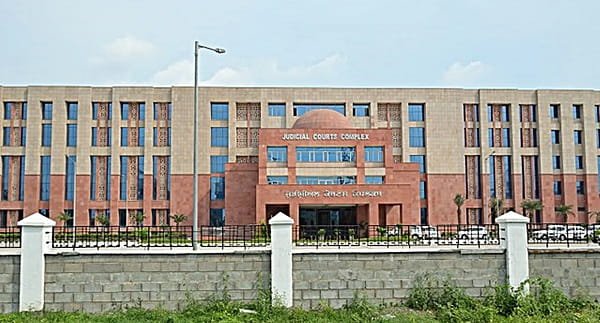
The District Court Patiala — the apex trial court for the Patiala Sessions Division in the state of Punjab — is one of India’s most historically remarkable district courts, carrying a judicial legacy that predates British India entirely and traces to the royal courts of the Patiala Princely State under the Sikh rulers of the Phulkian dynasty. Unlike most district courts in India whose histories begin with the British consolidation of civil and criminal court structures in the mid-nineteenth century, Patiala’s judicial history begins in the pre-Karm Singh era — when there were no written laws, no treasury, no formal courts, and all disputes were resolved by thanadars through verbal inquiry and oral orders. The District Court Patiala today serves one of Punjab’s most historically significant cities — the former capital of the Patiala Princely State — under the supervision of the Punjab and Haryana High Court at Chandigarh.

History
Before the time of His Highness Maharaja Karm Singh, the administrative and judicial work of the Patiala State was in the hands of thanadars — faujdars of the Ain-i-Akbari — with the collectors of revenue under them. There was no treasury and no court. In each pargana there was a thanadar, and in Sunam and Patiala proper there were kotwals. Their decisions in civil and criminal cases were final. Claims and offences of whatever nature were disposed of after verbal inquiry. No record of evidence was made and no judgment prepared. Final orders were given by word of mouth. No regular law was in force — the customs and usages of the country were followed in deciding cases. The panchayat system was generally in vogue, and boundary disputes were referred to arbitration.
Maharaja Karm Singh began judicial reform by appointing an Adalti — a Judicial Minister — though initially no clear demarcation was drawn between the Adalti’s powers and those of the thanadars. During the reign of Maharaja Mohinder Singh, Tahsildars were deprived of judicial and criminal powers and two Naib-Nazims were appointed in each nizamat for civil and criminal cases. A Code of Civil Procedure compiled from British Indian Acts of 1859 and 1861 with suitable modifications was introduced — one of the early legislative enactments that brought formal procedural law to Patiala State.
The Indian Penal Code was subsequently enforced without modifications. The Chief Court of Patiala State had the power to pass any sentence authorised by law, though capital punishment and life imprisonment required confirmation of the Ijlas-i-Khas — the Court of the Maharaja. This distinctive dual-confirmation architecture for the most serious sentences reflects the sovereignty that the Patiala Princely State retained over its judicial apex until accession to the Indian Union.
Notably, the CBI Courts that previously functioned at Patiala were shifted to the Judicial Court Complex, SAS Nagar (Mohali) with effect from July 1, 2017 — reflecting a rationalisation of special court locations across Punjab under the Punjab and Haryana High Court’s administrative direction.
Structure and Composition
| Dimension | Detail |
| Judicial history origin | Pre-Karm Singh era — no written laws or formal courts |
| First judicial reform | Maharaja Karm Singh — appointed Adalti (Judicial Minister) |
| Code of Civil Procedure introduced | Reign of Maharaja Mohinder Singh — based on British Indian Acts |
| Apex court under Maharaja | Ijlas-i-Khas — confirmed capital sentences and life imprisonment |
| Location | Patiala, Punjab |
| High Court supervision | Punjab and Haryana High Court, Chandigarh |
| CBI Courts status | Shifted to SAS Nagar (Mohali) from July 1, 2017 |
| Court types | Civil, Criminal, Family Court, Special Courts |
| Bar Association | District Bar Association, Patiala |
| Digital infrastructure | eCourts Mission Mode Project — e-filing, CIS, SMS alerts, video conferencing |
| Legal Aid | District Legal Services Authority, Patiala |
Architecture and Heritage Identity
Patiala’s court complex embodies the city’s extraordinary heritage character — a former royal capital whose architectural landscape carries the imprint of Sikh princely grandeur across its civic, administrative, and judicial buildings. The District Court Patiala complex serves a city synonymous with the Patiala House — the royal Delhi residence — demonstrating how deeply the Patiala princely identity has shaped institutions far beyond the state’s own geographic boundaries. The separation of the judiciary from the executive in Punjab on October 2, 1964 established the District and Sessions Judge as the exclusive administrative and judicial authority in the district, closing the chapter on the Princely State’s unique judicial structure.
Frequently Asked Questions
Q: What is unique about Patiala District Court’s judicial history?
A: It predates British India — originating in the Patiala Princely State’s royal court system where thanadars decided cases verbally without written laws.
Q: Who introduced the first judicial reforms in Patiala State?
A: Maharaja Karm Singh — who appointed an Adalti (Judicial Minister) as the first step toward formalised judicial administration.
Q: Which court confirmed capital sentences in Patiala State?
A: The Ijlas-i-Khas — the Court of the Maharaja — which had to confirm capital punishment and life imprisonment.
Q: When were the CBI Courts shifted out of Patiala?
A: From July 1, 2017 — CBI Courts were shifted to the Judicial Court Complex, SAS Nagar (Mohali).
Q: Which High Court supervises the Patiala District Court?
A: The Punjab and Haryana High Court, Chandigarh.
Q: When was the judiciary separated from the executive in Punjab?
A: October 2, 1964.
Q: What digital services are available at the court?
A: e-Filing, SMS case alerts, Case Information System, video conferencing, and eCourts Mission Mode Project integration.