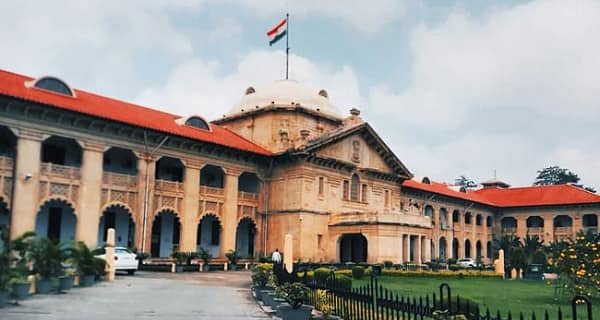
The High Court of Judicature at Allahabad — commonly known as the Allahabad High Court and seated in the historic city of Prayagraj, formerly and colloquially known as Allahabad — is the largest High Court in India and one of the most venerable judicial institutions in the entire country. Established on March 17, 1866, it is one of the oldest High Courts in India and holds the remarkable distinction of having the highest sanctioned judge strength of any High Court in the world’s largest democracy — 160 judges, including the Chief Justice. Exercising jurisdiction over Uttar Pradesh — India’s most populous state with over 240 million citizens and 75 districts — the Allahabad High Court bears an unparalleled constitutional responsibility, serving more people than any other High Court in the country. Its grand building at Prayagraj, constructed between 1914 and 1916 and housing 91 courtrooms and 96 chambers, is a magnificent blend of Indo-European architectural styles that stands as one of India’s most iconic judicial landmarks. The court also maintains a permanent bench at Lucknow — the administrative capital of Uttar Pradesh — in a modern building at Gomti Nagar spread across 40 acres with 57 courtrooms equipped with every contemporary facility.
History and Establishment
The Allahabad High Court’s story begins with the Indian High Courts Act of 1861 — the transformative British legislation that empowered the Crown to establish High Courts across India by replacing the dual system of King’s Courts and Company’s Courts with unified institutions of the highest judicial authority. By Letters Patent dated March 17, 1866, the High Court of Judicature for the North-Western Provinces was constituted — one of the earliest non-presidency High Courts in India — and began functioning at Agra on June 18, 1866, replacing the old Sadr Diwani Adalat. Sir Walter Morgan, Barrister-at-Law, was appointed the first Chief Justice of the court, beginning a distinguished line of Chief Justices that has continued to the present.
The court shifted from Agra to Allahabad in 1869, where it functioned from the building that now houses the Board of Revenue. On November 27, 1916, it moved to its present magnificent building at Prayagraj — the building whose foundation stone had been laid in 1911 by Sir John Stanley, then Chief Justice, and whose construction between 1914 and 1916 produced one of India’s most architecturally distinguished judicial premises. By supplementary Letters Patent dated March 11, 1919, the court’s name was formally changed to the High Court of Judicature at Allahabad.
A defining institutional milestone arrived on February 25, 1948, when the Chief Court of Oudh at Lucknow — which had been functioning separately since 1925 — was amalgamated with the Allahabad High Court under the United Provinces High Courts Amalgamation Order 1948, creating the unified court that serves Uttar Pradesh to this day. The court celebrated its centenary in 1966 with national recognition. Until November 9, 2000, the court also exercised jurisdiction over what is now Uttarakhand before the new state received its own High Court — demonstrating how the Allahabad High Court has been instrumental in building judicial infrastructure across the entire northern India region.
Jurisdiction and Powers
The Allahabad High Court exercises the full constitutional range of superior court powers over the entirety of Uttar Pradesh — India’s most populous state spanning 75 districts and 18 administrative divisions. Under Articles 226 and 227 of the Constitution, the court issues all five constitutional writs — habeas corpus, mandamus, certiorari, prohibition, and quo warranto — as the primary guardian of fundamental rights for over 240 million citizens. Its appellate jurisdiction extends over every civil and sessions court across Uttar Pradesh’s 75 districts and 75 outlying courts — making it the supervisory authority for one of India’s largest and most complex subordinate court systems.
The court’s jurisdiction encompasses civil matters including property disputes, contract disputes, family matters and education cases; criminal appeals and bail matters from every sessions court across Uttar Pradesh; taxation matters including income tax, sales tax, and other fiscal disputes; service matters of Uttar Pradesh government employees and local body employees; writ petitions for enforcement of fundamental rights; and public interest litigation covering governance, environment, and civic administration across the country’s most populous state. The Lucknow Bench — established in 1948 — handles matters arising from the Oudh region and the western and central districts of the state, providing geographically accessible justice to litigants who would otherwise face the considerable logistical challenge of travelling to Prayagraj.
Structure, Composition, and Key Facts
| Dimension | Detail |
| Established | March 17, 1866 — Letters Patent of the Crown |
| First Chief Justice | Sir Walter Morgan — Barrister-at-Law |
| Present building occupied | November 27, 1916 |
| Foundation stone of present building | Laid 1911 by Sir John Stanley, Chief Justice |
| Principal Seat | Prayagraj (formerly Allahabad) |
| Permanent Bench | Lucknow — established 1948 |
| Sanctioned judge strength | 160 judges (119 Permanent + 41 Additional) |
| Working strength (2025) | 110 judges (as of September 2025) |
| Courtrooms — Prayagraj | 91 courtrooms and 96 chambers |
| Courtrooms — Lucknow bench | 57 courtrooms — 40 acres campus at Gomti Nagar |
| Subordinate courts supervised | 75 district and outlying courts across UP |
| Jurisdiction | Entire state of Uttar Pradesh — 75 districts |
| Centenary celebrated | 1966 — 100 years of judicial service |
The court operates through Division Benches for constitutional matters, first appeals, and significant criminal appeals, and Single Benches for writ petitions, bail applications, revisions, and first instance matters across both Prayagraj and Lucknow simultaneously. In September 2025, 10 lawyers and 14 judicial officers took oath as judges of the Allahabad High Court, raising the working strength to 110 — the single largest batch appointment in the court’s recent history, reflecting both the government’s recognition of the court’s workload and its commitment to strengthening UP’s apex judicial infrastructure.
The Court Building — An Architectural and Historical Treasure
| Building Feature | Detail |
| Construction period | 1914–1916 |
| Foundation stone laid | 1911 by Sir John Stanley, Chief Justice |
| Architectural style | Blend of Indo-European styles |
| Courtrooms — main building | 91 courtrooms |
| Chambers | 96 chambers |
| New building addition | 30 courtroom building — made functional January 2019 |
| Museum | Houses original Royal Charter of Queen Victoria dated March 17, 1866 |
| Museum collection | Judgments, deeds, photographs, dress, furniture, original Charter |
| Centre for Information Technology | Inaugurated March 2016 — one of India’s finest IT buildings |
| Lucknow Bench building | Gomti Nagar — 40 acres — 57 courtrooms — all modern facilities |
The museum within the Allahabad High Court premises holds one of India’s most historically precious judicial artifacts — the original charter of Her Majesty Queen Victoria dated March 17, 1866, by which the High Court was created and established. This single document, preserved across more than 158 years, represents the founding instrument of one of the world’s busiest superior courts and connects the present institution directly to its Victorian-era origins in the most tangible possible form. The museum’s broader collection of judgments, deeds, historical photographs, judicial dress, and antique furniture creates a living archive of Indian legal history that is genuinely unmatched by any other High Court in the country.
Digital Transformation and Access to Justice
The Allahabad High Court has made significant and nationally recognised investments in digital justice infrastructure. The Centre for Information Technology — inaugurated in March 2016 as a dedicated building for the digitisation of court records — was described at the time as one of the most impressive and modern state-of-the-art IT buildings in India, demonstrating the court’s ambition to lead India’s judicial digitisation effort from the country’s largest High Court. One crore decided case files containing approximately 50 crore pages have been digitised under this initiative — an extraordinary archival achievement for a court with over 158 years of decided cases to preserve and make accessible.
The Allahabad High Court maintains both physical and virtual court facilities alongside e-filing systems and live streaming of proceedings — providing litigants, advocates, and citizens across Uttar Pradesh’s vast geography with access to justice through digital means that complement the physical infrastructure at Prayagraj and Lucknow. The Interoperable Criminal Justice System is fully functional in all district courts of Uttar Pradesh — enabling seamless digital coordination between police, courts, prisons, and forensic services across the state’s 75 districts. A web-based e-services module ensures efficient, effective, and user-friendly integrated access to case information and court services for the millions of litigants the court serves annually.
Frequently Asked Questions
Q: When was the Allahabad High Court established?
A: The Allahabad High Court was established on March 17, 1866, by Letters Patent issued under the Indian High Courts Act of 1861.
Q: Where is the Allahabad High Court located?
A: The principal seat is in Prayagraj, formerly known as Allahabad. The court also maintains a permanent bench at Lucknow — the administrative capital of Uttar Pradesh.
Q: Who was the first Chief Justice of the Allahabad High Court?
A: Sir Walter Morgan, Barrister-at-Law, was appointed the first Chief Justice of the High Court of North-Western Provinces, which later became the Allahabad High Court.
Q: What is the sanctioned judge strength of the Allahabad High Court?
A: The sanctioned strength is 160 judges — comprising 119 permanent judges and 41 additional judges including the Chief Justice — making it the largest High Court in India by sanctioned strength.
Q: How many courtrooms does the Allahabad High Court have?
A: The principal seat at Prayagraj has 91 courtrooms and 96 chambers. The Lucknow Bench has 57 courtrooms in its modern 40-acre campus at Gomti Nagar.
Q: When was the Lucknow Bench of the Allahabad High Court established?
A: The permanent Lucknow Bench was established on February 25, 1948, following the amalgamation of the Chief Court of Oudh with the Allahabad High Court under the United Provinces High Courts Amalgamation Order 1948.
Q: What is the most historically significant artifact in the Allahabad High Court museum?
A: The museum preserves the original charter of Her Majesty Queen Victoria dated March 17, 1866 — the founding document by which the court was created and established — alongside historical judgments, photographs, and judicial dress spanning over 158 years.
Q: What types of cases does the Allahabad High Court hear?
A: The court hears writ petitions under Articles 226 and 227, civil and criminal appeals, bail applications, taxation disputes, service matters, education cases, public interest litigation, and constitutional matters across Uttar Pradesh’s 75 districts.
Q: Can judgments of the Allahabad High Court be appealed?
A: Yes. Judgments can be appealed to the Supreme Court of India through statutory appeal or through a Special Leave Petition under Article 136 of the Constitution.
Q: What makes the Allahabad High Court unique among India’s High Courts?
A: It is India’s largest High Court by sanctioned judge strength at 160 judges, one of the oldest established in 1866, exercises jurisdiction over India’s most populous state with over 240 million citizens, and preserves the original Queen Victoria charter of 1866 — the founding document of the court — in its historic museum.