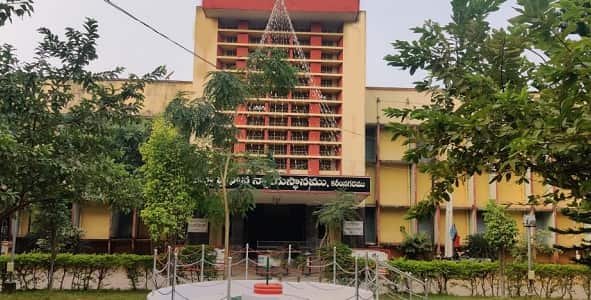
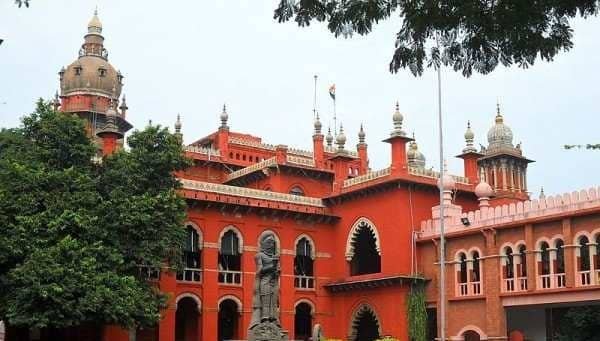
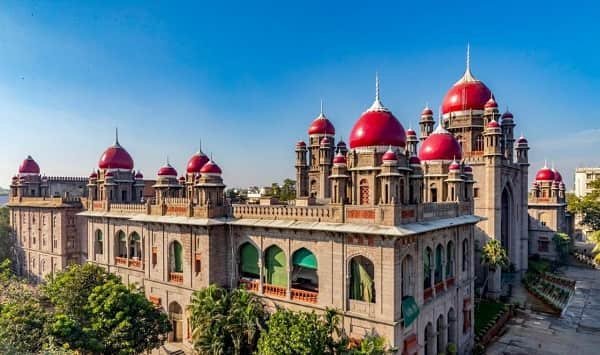
The High Court of Andhra Pradesh — seated at Amaravati, the emerging capital city of India’s 29th state — is a unique institution in India’s judicial history for a compelling reason: it is the country’s most recently established independent High Court, having commenced functioning in its present form on January 1, 2019, following the Presidential Order of December 26, 2018 that bifurcated the common High Court at Hyderabad into two separate courts for Telangana and Andhra Pradesh. Yet the judicial heritage behind this court is far older and considerably richer — tracing through the High Court of Andhra that began at Guntur in 1954, through the unified Andhra Pradesh High Court at Hyderabad that served the combined state from 1956 to 2014, through the common High Court that served both Telangana and Andhra Pradesh from bifurcation to 2018. Today, the Andhra Pradesh High Court serves a population of over 50 million citizens across 26 districts of residual Andhra Pradesh from its modern Amaravati premises — a court whose relative youth as an independent institution is matched by the depth and richness of the judicial tradition it inherits and upholds.
History and Establishment
The judicial history of Andhra Pradesh begins with the formation of the State of Andhra itself — carved out of the Madras Presidency in 1953 on linguistic grounds, following the historic fast unto death by Potti Sriramulu that led to the creation of India’s first state formed on linguistic lines. The High Court of Andhra was established in 1954 with its initial principal seat at Guntur, serving the Telugu-speaking population of the new state that had been separated from the Madras Presidency.
The institutional landscape transformed fundamentally on November 1, 1956, when the States Reorganisation Act merged the Hyderabad State and the Andhra State to form the unified State of Andhra Pradesh on linguistic grounds. The merged state’s High Court was established with its principal seat at Hyderabad with 11 judges, and Justice Koka Subba Rao served as the first Chief Justice of this unified High Court. Over the following decades, the court grew in size and national significance — with the number of judges rising from 12 in 1956 to 61 by 2014 as Andhra Pradesh developed into one of India’s most economically significant states.
The Andhra Pradesh Reorganisation Act of 2014 bifurcated the state into Telangana and residual Andhra Pradesh from June 2, 2014 — and the High Court at Hyderabad was designated as the Common High Court for both new states under Section 30 of the Act. This common High Court arrangement continued until December 26, 2018, when the President of India issued orders bifurcating the common court into two separate institutions — the High Court for the State of Telangana with its seat at Hyderabad, and the High Court of Andhra Pradesh with its principal seat at Amaravati. The bifurcation came into effect on January 1, 2019.
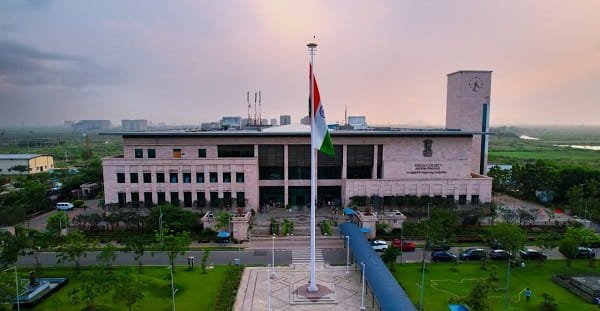
The new Andhra Pradesh High Court began operations at Amaravati on January 1, 2019, with 14 judges. Justice C. Praveen Kumar served as the Acting Chief Justice at inception. The Interim Judicial Complex at Amaravati was inaugurated on February 3, 2019, by then Chief Justice of India Justice Ranjan Gogoi — in the presence of Justice N.V. Ramana, former Chief Minister N. Chandrababu Naidu, and dignitaries of the legal fraternity. Justice J.K. Maheshwari, who assumed office on October 7, 2019, became the first formally appointed Chief Justice of the newly established Andhra Pradesh High Court. He was subsequently elevated to the Supreme Court of India on August 31, 2021.
Jurisdiction and Powers
The Andhra Pradesh High Court exercises the complete constitutional jurisdiction granted to High Courts under Articles 214 to 231 of the Constitution across the entire state of Andhra Pradesh — covering all 26 districts and a population exceeding 50 million. Under Articles 226 and 227, the court issues all constitutional writs — habeas corpus, mandamus, certiorari, prohibition, and quo warranto — as the guardian of fundamental rights for every citizen of Andhra Pradesh.
The court exercises appellate jurisdiction over decisions of all subordinate civil and sessions courts, supervisory jurisdiction over every district court, tribunal, and subordinate judicial institution in the state, original jurisdiction in high-value civil matters and writ petitions, and criminal jurisdiction over appeals, revisions, and bail matters from across the state. It also exercises admiralty jurisdiction — reflected in the Andhra Pradesh High Court Admiralty Rules, 2024 — a significant jurisdiction for a state with one of India’s longest coastlines along the Bay of Bengal, encompassing the ports of Visakhapatnam, Krishnapatnam, and Kakinada.
Structure, Composition, and Key Facts
| Dimension | Detail |
| Established as independent HC | January 1, 2019 — Presidential Order dated December 26, 2018 |
| Inaugural operations | January 1, 2019 — with 14 judges |
| Inaugural Acting Chief Justice | Justice C. Praveen Kumar |
| First formally appointed Chief Justice | Justice J.K. Maheshwari — assumed office October 7, 2019 |
| Inauguration of Interim Complex | February 3, 2019 — by CJI Justice Ranjan Gogoi |
| Location | Amaravati, Andhra Pradesh |
| Building | G+2 structure — 23 halls — 220,000 sq ft area |
| Building area | 4 acres — built by Larsen and Toubro Limited |
| Building cost | Rs 157.3 crore |
| Sanctioned judge strength | 37 judges (28 permanent + 9 additional) |
| Current judges (2025) | 29 judges |
| Jurisdiction | All 26 districts of Andhra Pradesh |
| Heritage | 25th High Court of India — most recently established |
The court operates through Division Benches for constitutional matters, letters patent appeals, and significant criminal appeals, and Single Benches for writ petitions, bail applications, revisions, and first instance matters. The court has adopted digital infrastructure including virtual hearings, e-filing, online case status access, online cause lists, and live streaming of select proceedings — providing litigants across Andhra Pradesh’s 26 districts with digital access to the court’s proceedings and records.
The Amaravati Building — A Modern Judicial Complex
| Building Feature | Detail |
| Structure | G+2 — Ground plus two upper floors |
| Total halls | 23 halls |
| Total area | 220,000 square feet |
| Site area | 4 acres |
| Construction cost | Rs 157.3 crore |
| Built by | Larsen and Toubro Limited |
| Location | Amaravati — AP’s developing capital city |
| Inauguration | February 3, 2019 — CJI Justice Ranjan Gogoi |
| Digital infrastructure | Virtual hearings, e-filing, live streaming |
The High Court building at Amaravati — constructed by Larsen and Toubro at a cost of Rs 157.3 crore — represents a purposefully designed modern judicial complex built to the specifications of a contemporary superior court. With 23 halls spread across 220,000 square feet on a 4-acre campus, the building provides the Andhra Pradesh High Court with a functional, technologically equipped home from which to build its institutional identity as the newest independent High Court in India while serving the state’s growing judicial needs.
Frequently Asked Questions
Q: When was the Andhra Pradesh High Court established in its present form?
A: The Andhra Pradesh High Court commenced functioning as an independent court on January 1, 2019, following the Presidential Order of December 26, 2018 bifurcating the common High Court at Hyderabad.
Q: Where is the Andhra Pradesh High Court located?
A: The court is located at Amaravati — the capital city of Andhra Pradesh.
Q: Who was the first Chief Justice of the newly established Andhra Pradesh High Court?
A: Justice J.K. Maheshwari was the first formally appointed Chief Justice of the new Andhra Pradesh High Court at Amaravati, assuming office on October 7, 2019. He was subsequently elevated to the Supreme Court of India.
Q: What is the sanctioned judge strength?
A: The sanctioned strength is 37 judges — comprising 28 permanent judges and 9 additional judges including the Chief Justice. As of 2025, 29 judges are serving.
Q: What was the judicial history of AP before the current High Court?
A: The judicial history spans three phases — the High Court of Andhra at Guntur from 1954, the unified Andhra Pradesh High Court at Hyderabad from 1956 to 2014, and the common High Court serving both Telangana and Andhra Pradesh from 2014 to 2018.
Q: How many districts fall under the AP High Court’s jurisdiction?
A: The court exercises jurisdiction over all 26 districts of Andhra Pradesh.
Q: What is special about the AP High Court’s admiralty jurisdiction?
A: The court has adopted the Andhra Pradesh High Court Admiralty Rules, 2024, exercising admiralty jurisdiction relevant to Andhra Pradesh’s extensive Bay of Bengal coastline and major ports including Visakhapatnam, Krishnapatnam, and Kakinada.
Q: What types of cases does the AP High Court hear?
A: It hears writ petitions under Articles 226 and 227, civil and criminal appeals, bail applications, service matters, taxation disputes, admiralty matters, public interest litigation, and constitutional cases across Andhra Pradesh.
Q: Can judgments be appealed beyond the AP High Court?
A: Yes. Judgments can be appealed to the Supreme Court of India through statutory appeal or through a Special Leave Petition under Article 136 of the Constitution.
Q: What makes the AP High Court historically unique?
A: It is India’s 25th High Court and the most recently established independent High Court in the country, having begun its independent existence on January 1, 2019 — making it the newest chapter in India’s continuous tradition of superior court justice since 1862.