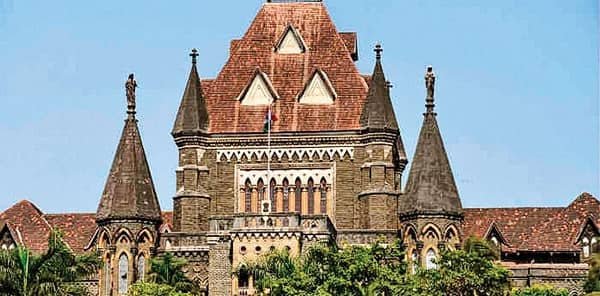
The High Court of Judicature at Bombay — universally known as the Bombay High Court and seated at Mumbai, India’s financial capital — is one of the oldest, most commercially significant, and constitutionally distinguished superior courts in the entire country. Established on August 14, 1862, under Letters Patent issued by Queen Victoria under the Indian High Courts Act of 1861, the Bombay High Court is one of only three Charter High Courts in India — institutions created by British royal charter rather than subsequent Indian legislation — alongside the Madras and Calcutta High Courts. Its jurisdiction encompasses the state of Maharashtra, the state of Goa, and the Union Territories of Dadra and Nagar Haveli and Daman and Diu — making it one of India’s most geographically and commercially diverse superior courts. The court’s building, commenced in April 1871 and completed in November 1878, is a magnificent specimen of early English-Gothic architecture that stands between the University Building and the Public Works Secretariat in Mumbai’s Fort area as one of the defining landmarks of India’s most globally recognisable city. With a sanctioned strength of 94 judges, four benches across its jurisdiction, and a record of producing the first Chief Justice, Attorney General, and Solicitor General of independent India, the Bombay High Court holds a position of extraordinary national pride and constitutional authority.
History and Establishment
The history of judicial administration in Bombay stretches back to 1672, when the First British Court of Justice was inaugurated in Bombay under the East India Company, with George Wilcox appointed as judge. An Admiralty Court was established in 1684 under the Charter of 1683, reflecting Bombay’s early identity as a maritime trading settlement. In 1798, the Mayor’s Court was replaced by the Recorder’s Court under the Charter of 1798, with Sir William Syer as the first recorder. In 1823, Parliament authorised the Crown to establish a Supreme Court in Bombay in place of the Recorder’s Court — laying the direct institutional foundation for the High Court that would follow.
Following the Indian High Courts Act of 1861 — passed in the aftermath of the 1857 war of independence — Letters Patent dated June 26, 1862 established the High Court of Judicature at Bombay, which was inaugurated on August 14, 1862. Sir Mathew Richard Sausse was appointed the first Chief Justice. The Letters Patent authorised 15 judges, though the court began with only seven — and remarkably, for approximately 60 years thereafter it managed to function with just seven judges, even as litigation grew steadily. It was only after World War I, when the number of suits filed on the Original Side in Bombay rose dramatically from about 500 during the war to approximately 7,000, that an additional judge was demanded and granted.
The court’s building was commenced in April 1871 and completed in November 1878 at a cost of Rs 16,44,528 — slightly below the sanctioned estimate. Colonel J.A. Fuller designed this early English-Gothic structure, 562 feet in length and 187 feet in breadth, with walls of rubble and chunam faced with blue basalt. The building’s famous stone statue of the Goddess of Justice — blindfolded, holding the Sword of Justice in one hand and evenly balanced Scales in the other — stands on the western battlement as a timeless symbol of the court’s constitutional mission. The building’s architectural quirks include sculptures in odd nooks and corners depicting wolves and foxes wearing counsel’s bands — said to be the work of a disgruntled Parsi sub-contractor who lost a dispute with the main contractor and avenged himself on law and lawyers in stone and plaster.
Jurisdiction and Powers
The Bombay High Court exercises original and appellate jurisdiction across one of India’s broadest and most commercially vital territorial extents — Maharashtra, Goa, and the Union Territories of Dadra and Nagar Haveli and Daman and Diu. Its original jurisdiction over Mumbai mirrors the pattern of the three Charter High Courts — allowing direct first-instance civil suits, testamentary matters, admiralty cases, and insolvency matters to be filed before the High Court itself without routing through subordinate courts. Its appellate jurisdiction covers all subordinate civil and criminal courts across Maharashtra and Goa. Writ jurisdiction under Articles 226 and 227 of the Constitution makes it the primary guardian of fundamental rights for the entire region’s population.
The Panaji Bench’s jurisdiction over Goa carries a distinctive history — Goa was a Portuguese colony until liberation in 1961, and its highest court was the Tribunal de Relacao at Panaji with a history tracing to 1544. The Bombay High Court’s jurisdiction was extended to Goa, Daman and Diu in 1982, and when Goa attained statehood in 1987, the court became the common High Court for both Maharashtra and Goa simultaneously.
Structure, Composition, and Key Facts
| Dimension | Detail |
| Established | August 14, 1862 — Letters Patent of Queen Victoria |
| First Chief Justice | Sir Mathew Richard Sausse |
| Building construction | April 1871 to November 1878 |
| Building architect | Colonel J.A. Fuller |
| Building cost | Rs 16,44,528 — below sanctioned estimate |
| Architecture | Early English-Gothic — blue basalt walls |
| Principal Seat | Fort area, Mumbai |
| Nagpur Bench | Functioning since November 1, 1956 |
| Aurangabad Bench | Notified 1981 — Permanent Bench established 1984 |
| Panaji Bench | Inaugurated October 30, 1982 |
| Kolhapur Bench | Commenced August 18, 2025 — fourth Maharashtra bench |
| Sanctioned judge strength | 94 judges (71 permanent + 23 additional) |
| Working strength (Sept 2025) | 82 judges |
| Jurisdiction | Maharashtra, Goa, UTs of Dadra and Nagar Haveli and Daman and Diu |
| 150th anniversary | Celebrated in 2010 |
Distinguished Legacy and National Firsts
| National First / Distinction | Detail |
| First Chief Justice of India | From Bombay High Court |
| First Attorney General of India | From Bombay High Court |
| First Solicitor General of India | From Bombay High Court |
| Supreme Court judges elevated | 22 judges since independence |
| Chief Justices of India produced | 8 judges from this court |
| Privy Council representation | Three Chief Justices; four eminent counsel |
| Kolhapur Bench — 2025 | Fourth bench — CJ Alok Aradhe — August 18, 2025 |
| New Principal Bench building | Foundation stone — Bandra, Mumbai — September 2024 |
The Bombay High Court’s record of national firsts is unmatched among India’s High Courts — the first Chief Justice, the first Attorney General, and the first Solicitor General of independent India all came from its ranks, making it the nursery of independent India’s foundational legal leadership. Since independence, 22 judges have been elevated to the Supreme Court and eight have become Chief Justice of India — a contribution to the apex judiciary that reflects the consistently exceptional quality of legal talent that has served on the Bombay High Court bench.
The court also has a significant connection to India’s colonial legal history at the Privy Council — the final court of appeal for British India — where three Bombay Chief Justices (Sir Richard Couch, Sir Lawrence Jenkins, and Sir John Beaumont) served on the Judicial Committee, alongside four distinguished Bombay counsel including Sir D.F. Mulla and Mr. M.R. Jayakar.
In August 2025, a landmark institutional development was formalised — Chief Justice Alok Aradhe established the Kolhapur Bench, the court’s fourth bench in Maharashtra, covering six districts including Satara, Sangli, Solapur, Kolhapur, Ratnagiri, and Sindhudurg. This expansion reflected the court’s growing commitment to bringing judicial access closer to litigants in western Maharashtra’s commercially active and geographically significant Konkan and Western Ghat regions.
Frequently Asked Questions
Q: When was the Bombay High Court established?
A: The Bombay High Court was established by Letters Patent and inaugurated on August 14, 1862, under the Indian High Courts Act, 1861.
Q: Who was the first Chief Justice of the Bombay High Court?
A: Sir Mathew Richard Sausse was the first Chief Justice of the Bombay High Court.
Q: Where is the Bombay High Court located?
A: The principal seat is in the Fort area of Mumbai. The court has benches at Nagpur, Aurangabad, Panaji (Goa), and Kolhapur (newest — established August 18, 2025).
Q: What is the sanctioned judge strength?
A: The sanctioned strength is 94 judges — 71 permanent and 23 additional. The working strength as of September 2025 was 82 judges.
Q: What makes the Bombay High Court nationally unique?
A: It produced the first Chief Justice, first Attorney General, and first Solicitor General of independent India. Since independence, 22 judges have been elevated to the Supreme Court and 8 have become Chief Justice of India.
Q: What jurisdiction does the court exercise?
A: The court has jurisdiction over Maharashtra, Goa, and the Union Territories of Dadra and Nagar Haveli and Daman and Diu — covering appellate, original, writ, admiralty, and testamentary jurisdiction.
Q: When was the Kolhapur Bench established?
A: The Kolhapur Bench commenced sittings on August 18, 2025, becoming the court’s fourth bench in Maharashtra, covering six districts including Satara, Sangli, Solapur, Kolhapur, Ratnagiri, and Sindhudurg.
Q: What is the architectural style of the Bombay High Court building?
A: The building, constructed between 1871 and 1878 and designed by Colonel J.A. Fuller, is built in early English-Gothic style with walls of blue basalt — one of Mumbai’s most iconic heritage landmarks.
Q: Does the city’s name change affect the court?
A: No. Although Mumbai replaced Bombay as the city’s official name in 1995, the court has retained its historic name — the Bombay High Court. A Union Cabinet-approved renaming bill remains pending before Parliament.
Q: Can judgments of the Bombay High Court be appealed?
A: Yes — only to the Supreme Court of India, through statutory appeal or through a Special Leave Petition under Article 136 of the Constitution.