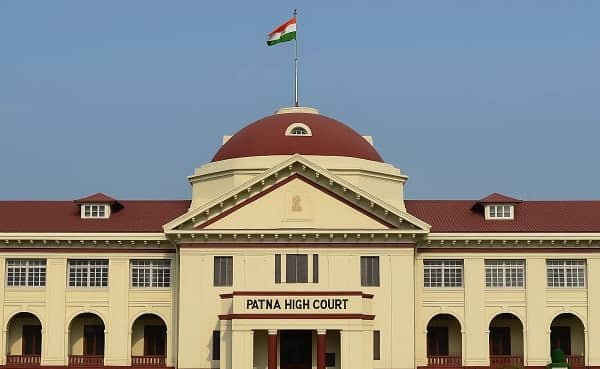
The High Court of Judicature at Patna — universally known as the Patna High Court — is one of India’s oldest, most historically significant, and constitutionally distinguished superior courts. Established on February 3, 1916, the court stands as the apex judicial institution for the state of Bihar, exercising jurisdiction over a population of approximately 130 million citizens — making Bihar one of India’s most populous states and its High Court one of the most consequential in terms of the human lives and civic rights it safeguards daily. Housed in a magnificent colonial-era building designed by architects J.F. Munnings and A.M. Millwood from Sydney and located in the heart of Patna near Gandhi Maidan, the court carries over a century of judicial history within its walls — walls that have heard cases argued by Dr. Rajendra Prasad, India’s first President, and where some of the post-independence republic’s most formative legal battles were argued and decided. With a legacy stretching back to the British Crown’s Letters Patent and continuing into Bihar’s present as one of India’s fastest-changing large states, the Patna High Court remains a pillar of constitutional governance, legal access, and the rule of law.
History and Establishment
The Patna High Court’s origin is inseparable from the administrative reorganisation of British India in 1912, when the province of Bihar and Orissa was carved out of the Bengal Presidency by a proclamation of the Governor-General of India on March 22, 1912. Before this separation, the entire region’s judicial administration was handled by the Calcutta High Court — a geographical and logistical impracticality for litigants across the vast Bihar and Orissa territories. The creation of a separate province necessitated a dedicated High Court, and the foundation stone of the Patna High Court building was laid on December 1, 1913 by Viceroy and Governor-General of India Sir Charles Hardinge of Penshurst in a ceremony of considerable ceremonial significance.
The court building was formally opened by the same Viceroy on February 3, 1916, and official judicial work commenced on March 1, 1916. The court began its functions with the Chief Justice and six puisne judges — a small but distinguished bench from which would grow one of India’s most important superior courts over the following century. Sir Edward Maynard Des Champs Chamier served as the court’s first Chief Justice, establishing the traditions of judicial independence and constitutional fidelity that have characterised the court across its entire history.
The Patna High Court exercised jurisdiction over both Bihar and Orissa until July 26, 1948, when a separate High Court was constituted for Orissa. From that point, the court became exclusive to Bihar. A circuit bench at Ranchi was constituted in 1972 to serve the eastern and Jharkhand region; on November 15, 2000, when the state of Jharkhand was created under the Bihar Reorganisation Act, this circuit bench became the foundation of the new Jharkhand High Court. The Patna High Court celebrated its centenary — 100 years of judicial service — with national recognition in 2016.
Jurisdiction and Powers
The Patna High Court exercises the complete range of superior court powers granted under Articles 214 to 231 of the Constitution of India over the entirety of Bihar’s 38 districts. Its writ jurisdiction under Articles 226 and 227 empowers the court to issue the full range of constitutional writs — habeas corpus for personal liberty, mandamus for compelling government action, certiorari for correcting jurisdictional errors, prohibition for preventing excess of jurisdiction, and quo warranto for examining the legality of public office — making it the primary constitutional guardian of every fundamental right of Bihar’s 130 million citizens.
The court exercises original jurisdiction in cases involving fundamental rights violations and certain civil matters, appellate jurisdiction over the decisions of all subordinate civil and sessions courts across Bihar’s 37 judgeships, supervisory jurisdiction over every subordinate court and tribunal in the state under Article 227, and criminal jurisdiction encompassing appeals, revisions, and bail matters from every district and sessions court in Bihar. The court also administers legal aid through its Legal Aid Committee, constituted in 1991 to provide free legal assistance to every poor person in Bihar — ensuring that the constitutional promise of justice is not reserved for those who can afford to pursue it.
Structure, Composition, and Key Facts
| Dimension | Detail |
| Established | February 3, 1916 — formally opened |
| Official work commenced | March 1, 1916 |
| Foundation stone laid | December 1, 1913 — by Viceroy Lord Hardinge |
| First Chief Justice | Sir Edward Maynard Des Champs Chamier |
| Location | Near Gandhi Maidan, Patna, Bihar |
| Building architects | J.F. Munnings and A.M. Millwood — Sydney |
| Architectural style | Colonial — finest British architecture in India |
| Sanctioned judge strength | 53 judges (including Chief Justice) |
| Judgeships in Bihar | 37 judgeships across the state |
| Jurisdiction | Entire state of Bihar — 38 districts |
| Centenary celebrated | 2016 — 100 years of judicial service |
The court operates through Division Benches for constitutional matters, first appeals, and criminal appeals of significant magnitude, and Single Benches for writ petitions, bail applications, criminal revisions, and first instance matters. Bihar’s extensive district judiciary — 37 judgeships covering one of India’s most densely populated states — falls under the Patna High Court’s administrative and supervisory jurisdiction. Judges elevated from the Patna High Court have reached the highest offices in India’s judiciary — the court has produced two Chief Justices of India, Justice Bhuvneshwar Prasad Sinha as the sixth Chief Justice of India and Justice Lalit Mohan Sharma as the 24th Chief Justice of India.
Distinguished Legacy and National Contributions
| Distinction | Detail |
| Chief Justices of India produced | Justice B.P. Sinha — 6th CJI; Justice L.M. Sharma — 24th CJI |
| First Supreme Court woman judge from Bihar | Justice Gyan Sudha Misra — elevated from Patna HC |
| Association with Dr. Rajendra Prasad | India’s first President practised at the Patna Bar |
| Association with Sachchidananda Sinha | Constitutional figure — practised at Patna Bar |
| Legal Aid Committee | Constituted 1991 — free legal assistance to the poor |
| Juvenile Justice Committee | Constituted 2008 — child rights and JJ Act implementation |
| Centenary year | 2016 — 100 years of distinguished judicial service |
The Patna High Court’s bar has produced some of the finest legal minds in Indian judicial history — including Dr. Rajendra Prasad, who practised at Patna before becoming India’s first President, and Sachchidananda Sinha, a founding constitutional figure associated with the court’s early decades. The court’s elevation of Justice Gyan Sudha Misra to the Supreme Court as the first woman judge from Bihar marked a landmark moment in both the court’s history and the history of women’s representation in India’s apex judiciary.
Digital Transformation — A National Pioneer
The Patna High Court has earned a historic distinction in India’s judicial digital transformation — it was the first High Court in India to commence studio-based video conference hearings on March 19, 2020, and the first High Court in India to transition all its courts to full virtual hearings from May 12, 2020 onwards. These achievements — accomplished at the outset of the COVID-19 pandemic when physical court functioning became impossible — demonstrated institutional agility and technological readiness that set a model for every other High Court in the country.
E-filing was introduced at Patna High Court on May 29, 2020, with over 1.69 lakh cases eventually filed through the portal. Studio-based e-Courts were made functional on October 8, 2020, with the facility extended across Bihar’s district courts — two studio-based e-Courts in every district and one in every sub-division, bringing digital court access to Bihar’s most remote areas. Over 22,000 files containing more than 17 lakh pages of pending cases were digitised during the pandemic period to facilitate virtual hearings. The court’s e-Committee subsequently launched six new digital applications in 2024 — including the e-Indian Law Report (Patna Series) providing bilingual access to judgments in English and Hindi free of charge to users worldwide, and the e-PHCR (Patna High Court Law Reports) containing all reportable judgments of the court. The E-Seva Kendra established in March 2021 handles case status inquiries and facilitates online applications, eliminating the need for extensive travel for routine court information. Court proceedings are streamed live on YouTube daily — making Patna High Court one of India’s most transparent and publicly accessible superior courts.
Frequently Asked Questions
Q: When was the Patna High Court established?
A: The Patna High Court building was formally opened on February 3, 1916 by Viceroy Lord Hardinge, with official judicial work commencing on March 1, 1916.
Q: Who was the first Chief Justice of the Patna High Court?
A: Sir Edward Maynard Des Champs Chamier was the first Chief Justice of the Patna High Court.
Q: Where is the Patna High Court located?
A: The court is located near Gandhi Maidan, Patna, Bihar — in the heart of the state capital.
Q: What is the sanctioned judge strength of the Patna High Court?
A: The sanctioned strength is 53 judges, including the Chief Justice.
Q: Who designed the Patna High Court building?
A: The building was designed by architects J.F. Munnings and A.M. Millwood from Sydney, in the colonial architectural style that makes it one of the finest examples of British architecture in India.
Q: Has the Patna High Court produced Chief Justices of India?
A: Yes. The court has produced two Chief Justices of India — Justice Bhuvneshwar Prasad Sinha, the 6th Chief Justice of India, and Justice Lalit Mohan Sharma, the 24th Chief Justice of India.
Q: What types of cases does the Patna High Court hear?
A: The court hears fundamental rights writ petitions under Articles 226 and 227, civil and criminal appeals, bail applications, revisions, constitutional matters, service disputes, and public interest litigation covering all of Bihar’s 38 districts.
Q: Was the Patna High Court a pioneer in digital court proceedings?
A: Yes. Patna High Court was the first High Court in India to commence studio-based video conference hearings on March 19, 2020, and the first to transition all its courts to full virtual hearings on May 12, 2020.
Q: Can judgments of the Patna High Court be appealed?
A: Yes. Judgments can be appealed to the Supreme Court of India through statutory appeal or through a Special Leave Petition under Article 136 of the Constitution.
Q: What makes the Patna High Court historically significant?
A: As one of India’s oldest High Courts — established in 1916 and celebrating its centenary in 2016 — the Patna High Court has served Bihar’s people for over a century, produced two Chief Justices of India, been associated with India’s first President Dr. Rajendra Prasad, and pioneered India’s digital judicial transformation during the COVID-19 pandemic.