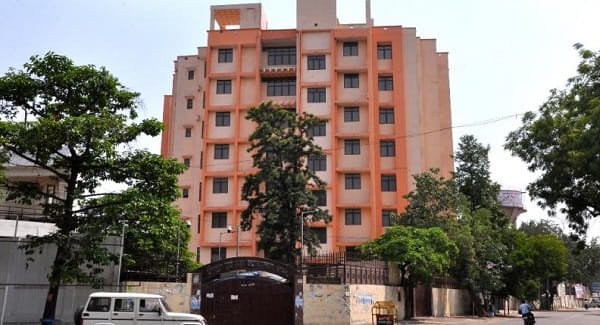
Sidhi district occupies the northeastern edge of Madhya Pradesh where the Son River carves through forested plateau country on its way toward its confluence with the Ganga at Prayagraj. It is Vindhyan terrain here — dry, ancient, and layered with a history that reaches from the Chedi dynasty through the Mughal court and into modern political India. The district is better known than most visitors realise. Birbal — the legendary Navratna of Emperor Akbar’s court, celebrated for his quick wit and administrative brilliance — was born in Sidhi. The Chandreh Shaiva Temple and Monastery from 972 CE is one of the most historically significant religious structures in eastern Madhya Pradesh. The Sanjay-Dubri Tiger Reserve, part of the Sanjay National Park formed in 1975, protects 152 bird species, 32 mammal species, and a significant tiger population across the Rewa Division forest landscape.
The Son River itself — broad, sandy, and seasonally dramatic — is both the geographical spine of the district and the setting for some of its most distinctive experiences, including the barefoot sand-bed trek at Parsili along the Banas River.
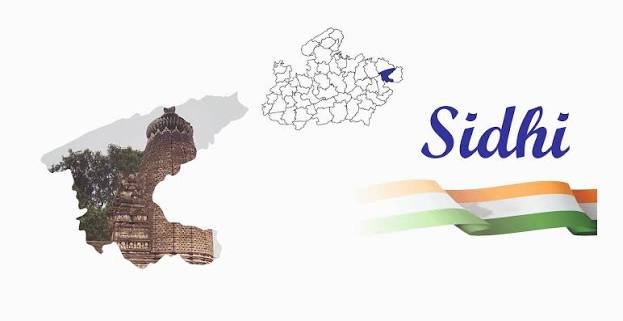
Sidhi District, Madhya Pradesh — Quick Overview
| Feature | Details |
| State | Madhya Pradesh |
| Division | Rewa Division |
| District Headquarters | Sidhi town |
| Borders | Singrauli (NE); Koriya district, Chhattisgarh (SE); Maihar (W); Rewa (NW) |
| Key River | Son (Sone); Banas; Gopad |
| Tehsils | Bahari, Churhat, Gopad Banas, Rampur Naikin, Majhauli, Kusmi, Sihawal, Madwas |
| Famous For | Sanjay-Dubri Tiger Reserve, Chandreh Shaiva Temple (972 CE), Birbal’s birthplace, Parsili MPT Resort, Son Gharial Sanctuary |
| Nearest Airport | Bamrauli Airport, Prayagraj (~200 km) |
| Nearest Railway Station | Singrauli; Rewa |
| Best Time to Visit | October to March; March is particularly good |
| Summer Temperature | 30°C – 46°C |
| Winter Temperature | 8°C – 24°C |
History of Sidhi District
Ancient Dynasties — Chedi Kingdom and the Chandela Rulers
Sidhi district’s historical record begins with the Chedi dynasty — a powerful ancient Indian kingdom that controlled the Son River valley and the surrounding Vindhyan plateau. The most tangible remaining evidence of the Chedi period’s spiritual life is the Chandreh Shaiva Temple and Monastery, dated to 972 CE in Chandreh village of Rampur Naikin tehsil. Built under the religious leadership of Prabodha Shiva — the Guru of the Chedi rulers, belonging to the Matta Mayura Shaiva sect — this temple complex represents the propagation of Shaiva Siddhanta across central India. The sect built similar temples at Kadwaha (Ashok Nagar) and Survaya (Shivpuri), making Chandreh part of a broader network of Matta Mayura Shaiva establishments across Madhya Pradesh.
In the 1800s, three separate rulers controlled different parts of Sidhi territory: the Chandela rulers from Bardi (Khatai), the Balendu (Chedi dynasty) state of Madwas, and the Baghel Rajput rulers from Kasauta (Shankargarh). As the Rewa princely state expanded, several cadet branches of the Baghela dynasty were granted land estates in Sidhi, including the prominent Churhat estate given to a younger branch of the family.
Birbal — The Wit of Akbar’s Court
The district’s most celebrated historical connection is also its most unexpected. Birbal — Raja Mahesh Das Bhat, one of the nine jewels (Navratna) of Emperor Akbar’s court, renowned through centuries of folk literature for his quick wit and common sense — was born in Sidhi. His extraordinary intellectual career began at the court of Maharaja Ramchandra Singh of Rewa, from where he entered Akbar’s service and rose to become the Emperor’s most beloved confidant. The folk tradition of “Akbar-Birbal” stories has made Birbal one of the most famous historical figures in Indian popular culture, and the fact that this legacy begins in the forested Son valley of Sidhi district is a point of significant local pride. The Ghoghra Devi Temple in the district is noted as being near Birbal’s birthplace.
Churhat — Political Legacy of the Baghela Clan
The most prominent modern figure from the Sidhi area was Arjun Singh — a dominant personality in Indian politics for four decades. His lineage descends from the Churhat estate’s Rao Sahib line. Arjun Singh served as Chief Minister of Madhya Pradesh multiple times, as Union Minister of Human Resource Development under the Congress government, and as Governor of Punjab during the critical mid-1980s period. The Churhat constituency has remained in family hands across generations, with Ajay Arjun Singh continuing the political legacy.
Top Attractions in Sidhi District
Sanjay-Dubri Tiger Reserve and Sanjay National Park
The most important tourist destination in Sidhi district, Sanjay National Park is part of the Sanjay-Dubri Tiger Reserve — formed in 1975 to protect the biodiversity-rich forest area of the Rewa Division. The reserve is a significant wildlife destination in eastern Madhya Pradesh, hosting an impressive range of species:
- Mammals (32 species): Tiger, Leopard, Sloth Bear, Chital, Nilgai, Chinkara, Sambar, Dhole (Wild Dog), Jungle Cat, Hyena, Porcupine, Jackal, Fox, Indian Wolf, Indian Python, Four-Horned Antelope, Barking Deer
- Birds (152 species): A rich avifauna including multiple raptors, waterbirds, and forest specialists
- Reptiles (11 species) and Amphibians (3 species)
- Freshwater fish (34 species) in the Son River and its tributaries
The park landscape includes mixed deciduous forest, bamboo stands, and the river systems of the Sone and its tributaries. The best time for wildlife viewing is October to March, with March highlighted as the finest month for Sidhi overall.
Chandreh Shaiva Temple and Monastery (972 CE)
Located in Chandreh village of Rampur Naikin tehsil — near the confluence of the Son and Banas rivers — the Chandreh Shaiva Temple and Monastery is the district’s most historically significant monument. Built in 972 CE by Prabodha Shiva (Guru of the Chedi rulers, belonging to the Matta Mayura Shaiva sect), the temple was established for spiritual practice and propagation of Shaiva Siddhanta doctrine. A monastery (mutt) adjoins the temple and contains two ancient Sanskrit stone inscriptions recording the temple’s construction.
The temple is approximately 60 km from Parsili Resort and sits in a setting enhanced by the Son-Banas confluence nearby — rivers of sacred and practical importance to the region’s history. The Matta Mayura Shaiva sect to which Prabodha Shiva belonged was responsible for some of the most significant temple-monastery complexes in central India; the Chandreh site is among the sect’s important foundations.
Parsili MPT Resort and Banas River
The Parsili MPT (Madhya Pradesh Tourism) Resort, located on the banks of the Banas River in Majhauli block — approximately 60 km from Sidhi headquarters — is one of the state’s more distinctive nature retreats. The resort is managed by Madhya Pradesh State Tourism Development Corporation (MPSTDC) and can be reserved online.
The primary experiential offering at Parsili is unusual: a 4 km barefoot trek along the sand bed of the Banas River. Walking barefoot on the soft, moist sand of the river bed — described by MPSTDC as “earthing” — is a nature immersion experience that few other places in Madhya Pradesh offer. The Banas River at Parsili is a perfect paradise for birdwatchers, with a rich diversity of avian life including numerous migratory species. The naturalist-led morning walk starting at 6 AM through the riverine forest with birdsong and river sounds is one of the most quietly memorable experiences in the Rewa Division.
Govindgarh Fort
Custom-built by Raghuraj Singh in 1857 and situated near a lake close to Parsili, Govindgarh Fort is a must-visit historical landmark in the Sidhi-Parsili circuit. The fort’s lakeside setting and the surrounding area add a heritage dimension to the Banas River nature experience. MPSTDC’s Parsili Resort specifically recommends the Govindgarh Fort as part of the local excursion circuit.
Son Gharial Sanctuary
The Son Gharial Sanctuary was established under Project Crocodile — India’s national program for Gharial (Gavialis gangeticus) conservation and population recovery. The sanctuary extends along approximately 210 km of the Son River, making it one of the longer river sanctuary stretches in India. Gharials — critically endangered, fish-eating crocodilians with long, narrow snouts — are among the most fascinating prehistoric reptiles surviving in India’s river systems, and the Son River is one of their most significant remaining habitats. The sanctuary also provides habitat for other Son River aquatic species.
Varchar Ashram — Meditation and Riverside View
Located at Rampur village in Block Kusmi, Varchar Ashram serves as a meditation and spiritual retreat within the district’s forest landscape. The ashram’s natural setting provides a contemplative atmosphere for visitors seeking a quieter engagement with Sidhi’s forested terrain.
Tikari Rest House
Located 40 km south from Sidhi town, Tikari Rest House is a base for viewing the surrounding landscape of the district’s southern forested hills and river valleys.
Temples and Religious Sites of Sidhi District
| Site | Location | Deity/Tradition | Key Feature |
| Chandreh Shaiva Temple and Monastery | Chandreh village, Rampur Naikin | Lord Shiva | 972 CE; Matta Mayura Shaiva sect; two Sanskrit stone inscriptions |
| Ghoghra Devi Temple | Sidhi district | Goddess Ghoghra Devi | Near Birbal’s birthplace; local goddess tradition |
| Son River Shiva Temples | Along Son riverbank | Lord Shiva | Multiple small temples on the sacred river’s banks |
Weather in Sidhi District
October to March — Best Time: October to December is post-monsoon pleasant weather, ideal for wildlife safaris and river-based experiences. January and February are cool and clear (8°C–20°C). March is highlighted by official tourism sources as “one of the best months to visit Sidhi” — the forest is still green, wildlife is active, and temperatures are rising pleasantly.
April to June — Summer: Peak heat from 40°C to 46°C. Wildlife safaris should be planned before 8 AM. The forest can still be productive for viewing animals at waterholes.
July to September — Monsoon: The Son and Banas swell significantly. The forest becomes intensely green. The Parsili barefoot sand-bed trek is not possible when the river is full.
Things to Do in Sidhi District (2026)
Tiger Safari in Sanjay-Dubri Tiger Reserve — Book in advance through MPSTDC or the reserve’s official channels. October–March safaris with experienced naturalists offer the best wildlife viewing probability.
Barefoot Sand-bed Trek at Parsili — The 4 km Banas River sand-bed walk at sunrise, guided by the Parsili Resort naturalist with a river breakfast en route. This is Sidhi’s single most distinctive experience.
Chandreh Shaiva Temple Heritage Visit — The 972 CE temple and monastery near the Son-Banas confluence, combining 10th-century Shaiva heritage with the dramatic river landscape.
Govindgarh Fort Circuit — The 1857 fort near Parsili’s lakeside setting, combined with river views and the fort’s historical character.
Son Gharial Sanctuary River Viewing — Contact the sanctuary administration for access to Gharial viewing points along the Son.
Birbal Birthplace Recognition — For those connected to Mughal history and folk tradition, identifying the area of Birbal’s birth (connected to the Ghoghra Devi Temple vicinity) is a meaningful historical pilgrimage.
How to Reach Sidhi District
By Air: Bamrauli Airport, Prayagraj (Allahabad), is approximately 200 km from Sidhi. Taxi services are available for the journey.
By Train: Singrauli (adjacent district) and Rewa are the nearest railway stations with connections to major cities. From both, road transport covers the final distance to Sidhi.
By Road: Sidhi is connected by state and national highways to Rewa (~80 km), Shahdol, and Singrauli. Beohari, Tala, and Umaria are also accessible by road.
Conclusion
Sidhi is eastern Madhya Pradesh’s under-known district — one that contains a 10th-century Shaiva monastery with Sanskrit stone inscriptions, the birthplace of Akbar’s greatest courtier, one of India’s significant gharial sanctuaries, and a tiger reserve where 152 bird species have been recorded. The Parsili barefoot river trek along the Banas sands may be the district’s finest individual experience — quiet, naturalistic, and genuinely unlike anything on offer in the better-trafficked parts of the region. Sidhi rewards the visitor who arrives with curiosity and patience.
FAQs About Sidhi District, Madhya Pradesh
Q1. What is Sidhi district famous for?
A. Sidhi is famous for the Sanjay-Dubri Tiger Reserve and Sanjay National Park (152 bird species, tigers, and leopards), the Chandreh Shaiva Temple and Monastery (972 CE), the Son Gharial Sanctuary, Parsili MPT Resort’s unique barefoot sand-bed trek on the Banas River, Govindgarh Fort, and as the birthplace of Birbal—the legendary Navratna of Emperor Akbar’s court.
Q2. Who was Birbal and what is his connection to Sidhi?
A. Birbal (Raja Mahesh Das Bhat) was one of the nine jewels (Navratna) of Emperor Akbar’s court, celebrated for his wit and wisdom in centuries of Indian folk literature. He was born in Sidhi district, where his career began at the court of Maharaja Ramchandra Singh of Rewa before he entered Akbar’s service. The Ghoghra Devi Temple area is associated with his birthplace.
Q3. What is the Chandreh Shaiva Temple?
A. The Chandreh Shaiva Temple and Monastery, located in Chandreh village of Rampur Naikin tehsil near the Son-Banas confluence, was built in 972 CE by Prabodha Shiva—the spiritual guru of the Chedi rulers, belonging to the Matta Mayura Shaiva sect. The monastery adjoining the temple contains two ancient Sanskrit stone inscriptions recording the temple’s construction. It is the most historically significant religious monument in the district.
Q4. What is special about Parsili in Sidhi?
A. Parsili MPT Resort, managed by MPSTDC on the banks of the Banas River in Majhauli block, offers a unique 4 km barefoot trek along the soft sand bed of the Banas River—described as “earthing”—guided by a resort naturalist. A river breakfast is provided during the walk. The site is also exceptional for birdwatching, with a rich diversity of resident and migratory species.
Q5. When is the best time to visit Sidhi?
A. October to March is the best period. March is particularly highlighted by tourism sources as an excellent time for wildlife and nature visits, while October to January is ideal for tiger safaris and river excursions.