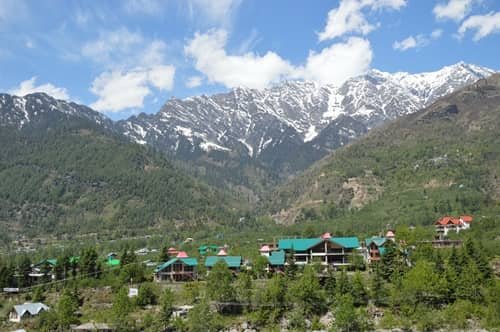
Kullu district is Himachal Pradesh’s most visited district — and with good reason. Within its 5,503 sq km of Himalayan terrain it contains Manali (the gateway to Lahaul-Spiti and Leh), Rohtang Pass and the Atal Tunnel, the Beas River valley, Solang Valley’s ski slopes, the sacred hot springs at Manikaran, the Great Himalayan National Park (a UNESCO World Heritage Site), ancient temples of the “Valley of Gods,” apple orchards that define the Kullu aesthetic, and adventure sports infrastructure that ranges from white-water rafting at Raison to paragliding above Dobhi. Kullu district is not merely a single destination — it is a complete geography of Himalayan experience.
The name Kullu comes from “Kulant Peeth” — the ending point of the habitable world, as ancient tradition understood the limits of human settlement. That sense of being at the edge of what humans could reach and beyond which the great mountain passes led to trans-Himalayan realms is still palpable today. Chinese traveller Xuanzang visited in 634–635 CE and described it as a region “completely surrounded by mountains.” The description holds.
Kullu District, Himachal Pradesh — Quick Overview
| Feature | Details |
| State | Himachal Pradesh |
| District Headquarters | Kullu town |
| Area | ~5,503 sq km |
| Altitude (Kullu town) | 1,230 metres |
| Altitude (Manali) | ~2,050 metres |
| Altitude (Rohtang Pass) | 3,979 metres |
| Altitude (Atal Tunnel South Portal) | ~3,060 metres |
| Key River | Beas (Vipasha) |
| Famous For | Manali hill station, Rohtang Pass, Atal Tunnel, Solang Valley, Hidimba Devi Temple, Manikaran hot springs, Kullu Dussehra, Great Himalayan National Park (UNESCO), Kullu shawls |
| Nearest Airport | Kullu-Manali Airport (Bhuntar), ~50 km from Manali |
| Nearest Railway Station | Jogindernagar (~125 km from Kullu town) |
| Best Time to Visit | March–June (summer); October–February (snow); October for Kullu Dussehra |
| Summer Temperature (Kullu) | 10°C – 25°C |
| Winter Temperature (Manali) | -10°C – 5°C |
| Language | Pahari (Kullu dialect), Hindi |
History of Kullu District
Mythological Origins — Kulant Peeth and Manu’s Flood
Kullu’s recorded mythology reaches to the cosmic. The name Kulant Peeth — the end of the habitable world — reflects the ancient understanding that beyond the Rohtang Pass, human settlement gave way to the great highland deserts of Lahaul, Spiti, and the trans-Himalayan plateaus. The valley of the Beas River was the last settled agricultural zone before the passes.
The name Manali — at the northern end of the Kullu Valley — derives from Manu-Alaya, “the abode of Manu.” Hindu cosmology identifies Manu as humanity’s progenitor who survived a great deluge and recreated human life. Manali is considered the place where Manu stepped off his ark after the flood and began this work of recreation. An ancient temple to Manu in Old Manali is the primary site associated with this tradition.
Xuanzang’s 7th-century CE description is the earliest detailed external account. He found a region of both Hindu temples and Buddhist monasteries coexisting — the valley was a place where “about 1,000 monasteries inhabited by about 20,000 monks, along with 15 Hindu temples” existed simultaneously in the cultural and spiritual landscape. This Buddhist-Hindu coexistence continued for centuries.
The Kullu Kingdom and Raja Jagat Singh
Kullu was an independent kingdom from antiquity. The kingdom reached its most significant historical moment under Raja Jagat Singh in the 17th century. According to tradition, Raja Jagat Singh was afflicted by leprosy as divine punishment for a transgression. Seeking redemption, he was directed to obtain the idol of Sri Raghunath (Lord Rama) from Ayodhya. A Brahmin named Damodar Das brought the idol, and Jagat Singh installed Raghunath as the presiding deity of the Kullu Valley. From that moment, the Raja of Kullu became merely the first servant of Raghunath — a concept that continues today, with the Kullu royal family carrying the Raghunath chariot during the annual Dussehra festival.
Naggar Castle and Medieval Architecture
Built in 1460 CE by Raja Sidh Singh of the Kullu Kingdom, Naggar Castle is the finest surviving example of the district’s medieval period. Located 21 km south of Manali on the Patlikuhal-Naggar Road, the castle sits on a hilltop with panoramic valley views. Its “Kath-Khuni” architecture — a distinctive Himalayan construction method using alternating layers of dry stone and timber — is characteristic of Kullu’s traditional building heritage. The HPTDC (Himachal Pradesh Tourism Development Corporation) now manages the castle as a heritage hotel.
Top Attractions in Kullu District
Manali — The Gateway Hill Station
Manali is the most visited destination in Himachal Pradesh and the commercial and tourism hub of Kullu district. Located at approximately 2,050 metres at the northern end of the Kullu Valley where the Beas River originates, Manali is the classic gateway town — the last significant settlement before the Rohtang Pass and the Atal Tunnel that lead to Lahaul, Spiti, and Leh.
Old Manali — the original village with its ancient Manu temple — sits above the modern town and retains a more relaxed, culturally distinctive atmosphere. The Beas River runs through and beside the town, offering camping on its banks and white-water experiences. Apple orchards, woollen handicraft shops, and the characteristic Kullu-Manali tourism infrastructure define the town experience.
Rohtang Pass and Atal Tunnel
Rohtang Pass at 3,979 metres, approximately 51 km from Manali on the Manali-Leh Highway, connects the Kullu Valley with the Lahaul and Spiti district. For decades it was the primary route and a major tourist attraction in its own right — offering snow experiences at high altitude for visitors who could not otherwise access glacial terrain. The Rohtang Pass road is seasonal and weather-dependent; a permit system operates to manage visitor and vehicle numbers.
The Atal Tunnel (formerly Rohtang Tunnel), completed in 2020, is the world’s longest high-altitude highway tunnel at approximately 9.2 km at an elevation of around 3,060 metres. It runs under the Rohtang Pass and provides year-round road connectivity between Manali and Sissu in Lahaul — a historic breakthrough for communities in Lahaul that were cut off from the Kullu Valley for months each winter. From a tourism perspective, the tunnel has extended the viable Manali season significantly.
Solang Valley
Located 14 km north of Manali, Solang Valley (also called Snow Point) is Kullu district’s premier adventure sports zone. In winter, the valley becomes Himachal’s most accessible ski destination. In summer and monsoon, it hosts paragliding, zorbing, ATV rides, and other adventure activities. The Solang Valley ski resort has basic ski infrastructure, and the flat open valley bottom provides ideal conditions for snow sports during the January–February peak season.
Hidimba Devi Temple, Manali
The Hidimba Devi Temple is Manali’s most photographed landmark and one of the most architecturally distinctive temples in Himachal Pradesh. Built in 1553 CE, the four-storey wooden pagoda temple is dedicated to Hidimba — the yaksha princess who married the Pandava Bhima and is considered the tutelary goddess of Manali’s royal family. The temple stands in a deodar cedar forest at the edge of Manali, giving it a forest setting that is immediately striking.
The temple’s architecture — layered wooden roofs diminishing in size from base to apex, decorated with carved wooden panels, animal and human figures, and horn deer trophies — represents the distinctive Himachali temple style. The goddess Hidimba is worshipped as Devi Ambika and is the object of genuine local devotion, not merely tourist photography.
Manikaran — Hot Springs and Sacred Confluence
Located in the Parvati Valley 42 km from Kullu and 80 km from Manali at 1,760 metres altitude, Manikaran is a revered pilgrimage site for both Hindus and Sikhs. The Parvati River flows alongside the town, and naturally heated hot springs emerge from the earth at near-boiling temperatures.
For Hindus, Manikaran is associated with the legend of Lord Shiva and Parvati losing Parvati’s precious stones (manikaran = mani + karan, “ear jewel”) in the stream, after which Shiva’s anger caused the earth to boil and return them. A Ramchandra Temple (Lord Rama) is the primary Hindu shrine.
For Sikhs, the Gurudwara Manikaran Sahib is associated with Guru Nanak’s visit to the valley. The gurudwara provides free langar (community meal) cooked using the geothermal hot spring water — a practical and devotional use of the springs that is unique in the world of religious institutions.
The hot springs themselves draw visitors for their reputed therapeutic properties — the naturally heated pools and baths near the gurudwara offer a genuine geothermal bathing experience.
Bijli Mahadev Temple
Located 26 km from Kullu town at Chansari village (a 6 km uphill trek from the road), Bijli Mahadev Temple is one of the most spiritually and architecturally distinctive temples in the Kullu Valley. The temple is dedicated to Lord Shiva and its 60-foot tall wooden staff (dhwaja stambha) is believed to attract lightning during storms — with the Shivalinga inside periodically shattered by lightning strikes. After each strike, the temple priests reassemble the Shivalinga using butter, sattoo (grain flour), and bhang (hemp). This cycle of lightning-shattering and butter-reconstruction is believed to protect the Kullu Valley from lightning damage. The temple’s panoramic view of the Kullu Valley from its hilltop is among the finest valley viewpoints in the district.
Raghunath Temple, Kullu Town
The Raghunath Temple is the most important temple in Kullu town, dedicated to Lord Raghunath (Rama) — the presiding deity of the entire valley since Raja Jagat Singh installed his idol from Ayodhya in the 17th century. The temple is considered one of the oldest in Himachal Pradesh. Its spiritual pre-eminence in Kullu is expressed most fully during the Kullu Dussehra festival, when Raghunath’s chariot is the centre of the celebration.
Great Himalayan National Park (UNESCO World Heritage Site)
The Great Himalayan National Park (GHNP) — established in 1984, declared a National Park in 1999, and granted UNESCO World Heritage Site status in June 2014 — is one of India’s most significant protected areas. Spread across 754 sq km at altitudes ranging from 1,500 to 6,000 metres, the park encompasses the Parvati, Tirthan, Sainj, and Jiwa Nal valleys of the Kullu region.
The park is a biodiversity hotspot with Snow Leopard, Himalayan Brown Bear, Bharal (Blue Sheep), Musk Deer, Western Tragopan, Himalayan Snowcock, and hundreds of bird species. The Tirthan and Sainj valleys on the park’s edge provide the most accessible entry points for ecotourism — trekking, wildlife spotting, and nature walks through pristine Himalayan forest.
Naggar Castle
Built in 1460 CE by Raja Sidh Singh, Naggar Castle is located 21 km from Manali at a hilltop in Naggar town. Its Kath-Khuni architecture blends stone and timber in a distinctive Himalayan construction style. The castle contains the Jagti Patt Temple (a flat stone believed to have been carried by mountain deities), a gallery of Nicholas Roerich’s paintings (the Russian artist who lived in Naggar), and the heritage hotel managed by HPTDC. The Roerich Art Gallery at Naggar displays works by Nicholas and his son Svetoslav, with the Naggar setting — the estate, the Beas valley views, the distant peaks — explaining why Roerich chose to spend his last years here.
Kullu Dussehra — The International Festival
Kullu Dussehra is a genuinely international-scale cultural event. Unlike most of India where Dussehra ends on Vijaya Dashami, Kullu Dussehra begins on that day and continues for seven days at the Dhalpur Maidan in Kullu town. The festival has been accorded International Festival status by the Himachal Pradesh government.
Approximately 300 local deities from temples across the Kullu and surrounding valleys are brought in procession to Dhalpur Maidan on decorated chariots (raths) carried by villagers, with Lord Raghunath’s chariot at the centre. The combination of traditional Pahari music, the extraordinary number of deity chariots arriving simultaneously, the folk performances, and the market atmosphere makes Kullu Dussehra unlike any other festival in India.
Temples of Kullu District
| Temple | Location | Deity | Key Feature |
| Raghunath Temple | Kullu town | Lord Rama (Raghunath) | Presiding deity of Kullu Valley; Raja Jagat Singh’s installation; Dussehra centre |
| Hidimba Devi Temple | Manali | Goddess Hidimba (Ambika) | 1553 CE four-storey wooden pagoda; deodar forest setting |
| Bijli Mahadev Temple | 26 km from Kullu, Chansari | Lord Shiva | Lightning-struck Shivalinga repaired with butter; valley viewpoint |
| Manu Temple | Old Manali | Sage Manu | Ancient temple; origin of Manali’s name (Manu-Alaya) |
| Manikaran Ramchandra Temple | Manikaran, Parvati Valley | Lord Rama | Near sacred hot springs; Hindu-Sikh pilgrimage convergence |
| Gauri Shankar Temple | Kullu district | Lord Shiva + Parvati | Ancient temple; intricate carvings |
| Hanogi Mata Temple | Beas riverbank, Kullu district | Goddess Hanogi | Hilltop goddess shrine; river views |
| Jagannath Devi Temple (Bekhli) | Kullu hills | Goddess Jagannath | Hill temple; panoramic valley views |
Adventure Sports in Kullu District
Kullu district is Himachal Pradesh’s undisputed adventure sports capital.
River Rafting: The Beas River between Kullu and Manali, particularly at Raison (~13 km from Kullu), offers white-water rafting from Grade II to Grade IV depending on the season. March to June (post-snowmelt) is the most exciting period.
Paragliding: Dobhi, Bijli Mahadev approach roads, and several other sites offer paragliding with Kullu Valley views. Tandem flights with certified instructors are available at multiple outfitters.
Skiing: Solang Valley and Rohtang approach routes offer skiing from December to March. Rohtang ski slopes are more advanced.
Trekking: Major treks originating from Kullu district include the Beas Kund trek, Hamta Pass (Kullu to Lahaul via Chandra Valley), Pin Parbati Pass, Friendship Peak, Deo Tibba, and the Great Himalayan National Park trails through Tirthan Valley.
Camping: Beas River banks between Kullu and Manali, Tirthan Valley, and multiple Himalayan meadow sites offer camping experiences ranging from basic to glamping.
Weather in Kullu District
March to June — Summer (Best Season for Most Visitors)
Pleasant temperatures of 10°C–25°C at Kullu town, 5°C–20°C at Manali. Apple orchards bloom in spring. River rafting at its best. All roads accessible. Rohtang Pass opens by late May–June (weather permitting, with permit requirements).
July to September — Monsoon
Heavy rainfall; landslides can disrupt NH-21 (Chandigarh–Manali highway). The 2025 monsoon season saw severe disruption with over 71 roads blocked in Kullu district alone. Travel during heavy rain requires flexibility and alternate timing. Valleys are intensely green; waterfalls appear everywhere.
October to February — Winter/Snow Season
Kullu Dussehra in October is the cultural highlight. November to February brings snow to Manali and heavy snowfall to Rohtang and Solang Valley. Winter is ideal for snow sports, Atal Tunnel transit to Lahaul, and experiencing Manali under snowfall. Temperatures at Manali can reach -10°C to -15°C in January–February. The Atal Tunnel means Lahaul is now accessible year-round.
Things to Do in Kullu District (2026)
Attend Kullu Dussehra — October. Seven days, 300+ deity chariots, Raghunath at the centre, folk music from across the Pahari valley communities. One of India’s most distinctive festivals.
Early Morning at Hidimba Devi Temple — Arrive before 7 AM to experience the deodar cedar forest setting before the tourist crowd arrives. The light through the trees at dawn is extraordinary.
Manikaran Hot Springs and Langar — A full morning: soak in the springs, visit the Ramchandra Temple, receive langar at the Gurudwara Manikaran Sahib. Combine with a walk in the Parvati Valley.
Tirthan Valley — Great Himalayan National Park Edge — Arrange a 2-day stay at Tirthan (3-4 hours from Kullu). Trout fishing in the Tirthan River, forest treks toward the GHNP buffer zone, and the quiet of a pre-tourist Himalayan valley.
Naggar Castle and Roerich Gallery — A morning at Naggar: the castle’s Kath-Khuni architecture, the Roerich paintings in their Himalayan context, and the valley views from the hilltop heritage hotel terrace.
Bijli Mahadev Temple Trek — A 6 km uphill hike to one of the valley’s finest viewpoints with the unique lightning-and-butter Shivalinga tradition.
Beas River Rafting at Raison — Half-day rafting on the Beas between Kullu and Manali.
How to Reach Kullu District
By Air: Kullu-Manali Airport (Bhuntar), 10 km from Kullu town and 50 km from Manali. Air India operates flights from Delhi. Pawan Hans helicopter services connect to Chandigarh, Shimla, and other Himachal points.
By Train: Jogindernagar Railway Station (~125 km from Kullu) on the narrow-gauge Pathankot-Jogindernagar line. Most visitors arrive by road from Chandigarh or Delhi.
By Road: Chandigarh to Manali ~282 km (8–10 hours via Bilaspur, Sundernagar, Mandi, Kullu on NH-21). Delhi to Manali ~540 km (12–14 hours). HRTC, HPTDC, and private volvo buses operate from Delhi and Chandigarh. Note: landslides during monsoon (July–August) can disrupt NH-21 significantly — check road conditions before travel.
Conclusion
Kullu district is Himachal Pradesh’s most complete experience. From the flat paddy fields and apple orchards of the lower Kullu Valley at 1,230 metres, through Manali’s adventure tourism and heritage temples at 2,050 metres, through the Atal Tunnel and Rohtang Pass at 3,000–4,000 metres, to the Great Himalayan National Park’s UNESCO-protected alpine wilderness above 5,000 metres — the vertical range within a single district is extraordinary. The Kullu Dussehra when 300 valley gods arrive at Dhalpur Maidan, the Hidimba Temple in its cedar forest, the lightning-struck Shivalinga at Bijli Mahadev, the hot springs at Manikaran — these are not interchangeable tourism assets. They are specific, irreplaceable experiences that make Kullu one of India’s genuinely essential districts.
FAQs About Kullu District, Himachal Pradesh
Q1. What is Kullu district famous for?
Kullu district is famous for Manali hill station, Rohtang Pass, the Atal Tunnel (world’s longest high-altitude highway tunnel), Solang Valley snow sports, the Hidimba Devi Temple, Manikaran hot springs, the Great Himalayan National Park (UNESCO World Heritage Site), Kullu Dussehra (an International Festival), white-water rafting on the Beas, Naggar Castle, and Kullu shawls.
Q2. What is the Atal Tunnel and why is it significant?
The Atal Tunnel (formerly Rohtang Tunnel) is the world’s longest high-altitude highway tunnel at approximately 9.2 km, located at an elevation of around 3,060 metres. It runs under the Rohtang Pass on the Manali-Leh Highway and connects Manali (Kullu Valley) with Sissu in Lahaul. Completed in 2020, it provides year-round road connectivity to Lahaul, previously cut off for 4–6 months every winter by snow. It has significantly extended Manali’s accessible tourist season into winter.
Q3. When is the best time to visit Kullu district?
Kullu district has two distinct best times: March to June for summer sightseeing and adventure sports in pleasant weather (10°C–25°C at Kullu); and October to February for snow experiences at Manali, Solang Valley skiing, and — crucially — Kullu Dussehra in October (one of India’s most distinctive cultural festivals). Avoid July–August (peak monsoon) due to frequent landslides on NH-21.
Q4. What is Kullu Dussehra and how is it different from other Dussehra celebrations?
Kullu Dussehra begins on Vijaya Dashami (when the rest of India’s Dussehra typically ends) and continues for seven days at the Dhalpur Maidan in Kullu town. The festival has been accorded International Festival status by the Himachal Pradesh government. Approximately 300 local deities from temples across the Kullu Valley arrive in procession on decorated chariots (raths), with Lord Raghunath’s chariot at the centre. The gathering of deity chariots with traditional Pahari music and folk performances is unique in India.
Q5. What is the Great Himalayan National Park and why is it a UNESCO site?
The Great Himalayan National Park (GHNP), covering 754 sq km in the Kullu region, was designated a UNESCO World Heritage Site in June 2014 for its outstanding biodiversity and natural values. The park encompasses the upper reaches of the Parvati, Tirthan, Sainj, and Jiwa Nal valleys at altitudes from 1,500 to 6,000 metres. It is home to the Snow Leopard, Himalayan Brown Bear, Musk Deer, Western Tragopan, and hundreds of bird species in pristine alpine and subalpine habitat. The Tirthan Valley provides the most accessible ecotourism entry point.