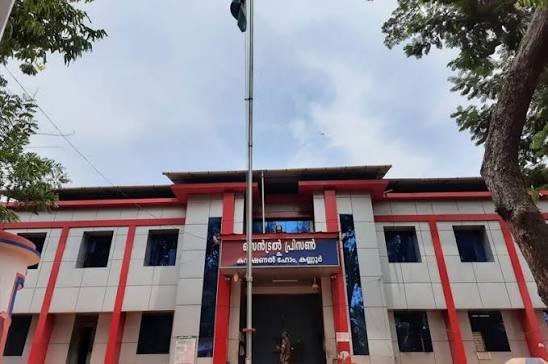
Kannur Central Prison holds a distinctive place in Kerala’s prison history — it was the very first central jail established in the state, founded in 1869. Located in Pallikkunnu, a small township along the Kannur-Kasaragod Highway, this facility has witnessed some of the darkest moments of the freedom struggle in the Malabar region, with numerous leaders of India’s independence movement and local peasant revolts imprisoned or executed here. In more recent years, it has also carved out a distinctive modern reputation as the first prison in India to host a literature festival screening.
| Quick Facts | Details |
|---|---|
| Full name | Central Prison & Correctional Home, Kannur |
| Location | Pallikkunnu, Kannur, Kerala |
| Opened | 1869 |
| Distinction | Kerala’s first central jail |
| Authorised capacity | 1,062 prisoners |
| Security class | Central Prison |
| Status | Operational |
| Managed by | Kerala Prisons and Correctional Services |
Where Exactly Is It Located
Kannur Central Prison is situated in Pallikkunnu, a small township within Kannur city, along the Kannur-Kasaragod Highway (National Highway 66), roughly 3 km from Kannur’s main city area.
- Address: Central Prison & Correctional Home, Pallikkunnu, Kannur, Kerala – 670004/670001
- Nearby landmark: Close to the Mookambika Temple and Krishna Menon Memorial Government Women’s College
- Access: Well connected via National Highway 66, with easy access by bus, auto, or cab from Kannur city and Kannur railway station
Pallikkunnu itself carries a distinct colonial-era identity — the Superintendent’s bungalow associated with the prison during British rule was later converted into the Krishna Menon Memorial Government Women’s College, and the area also houses Doordarshan and Akashvani (All India Radio) broadcasting stations, reflecting its historical significance as an administrative hub under British administration.
The Origins: Kerala’s First Central Jail
Kannur Central Prison was established in 1869, making it the earliest of Kerala’s four central prisons, predating both Poojappura in Thiruvananthapuram (1886) and Viyyur in Thrissur (1914).
- Located specifically to serve the Malabar region, which was under direct British administration as part of the Madras Presidency, unlike Travancore and Kochi, which were princely states with their own separate prison systems
- Authorised to accommodate 1,062 prisoners
This earlier establishment date reflects Kannur’s status as an important administrative centre within British Malabar, distinct from the princely-state-era origins of Kerala’s other central prisons.
A Site of Brutal Repression During the Freedom Struggle
Kannur Central Prison carries a particularly heavy historical legacy tied to the Indian independence movement and local uprisings in the Malabar region.
- Many leaders of the Indian freedom struggle were imprisoned here during the colonial period
- The jail was also the site of imprisonment and execution for participants in various local peasant revolts that erupted in the Malabar region against both British rule and local landlord systems
- This dual role — holding both nationalist freedom fighters and local agrarian rebels — makes Kannur’s prison history somewhat distinct from other central jails primarily associated with the mainstream independence movement alone
The severity of this history is reflected in Pallikkunnu’s broader reputation as “a well-known place during the British empire,” a locality where colonial administrative power was exercised with particular force.
Structure Within Kerala’s Prison System
Kannur Central Prison functions as one of Kerala’s four Central Prisons & Correctional Homes, designed to hold a specific category of prisoners under state prison rules.
- Central Prisons in Kerala are meant for confining persons sentenced to more than 6 months’ imprisonment, detenues, prisoners convicted by Court Martial, and civil prisoners
- Remand and undertrial prisoners are also accommodated here when overcrowding occurs at nearby district jails, special sub-jails, or sub-jails
- The other three Kerala central prisons are located at Poojappura (Thiruvananthapuram), Viyyur (Thrissur), and a newer facility in Malappuram
A Modern First: Literature Festival Screening
In a notable departure from its historically grim associations, Kannur Central Prison became the first prison in India to host a literature festival screening, as an initiative of the Wayanad Literature Festival in 2024. This event marked a significant step in bringing cultural and educational programming directly into Kerala’s prison system, extending literary engagement to inmates who would otherwise have no access to such festivals.
Can You Visit Kannur Central Jail
Kannur Central Prison is not open to the general public, since it functions as an active correctional facility. Visits are restricted to legal representatives and approved family members under standard Kerala Prisons and Correctional Services procedures.
FAQs
Q1: Why is Kannur Central Prison historically significant?
A. It was Kerala’s first central jail, established in 1869, and served as a site where numerous freedom fighters and participants in Malabar’s peasant revolts were imprisoned or executed during British colonial rule.
Q2: How does Kannur Central Prison compare in age to Kerala’s other central jails?
A. It’s the oldest of Kerala’s four central prisons, established in 1869, well before Poojappura (1886) and Viyyur (1914).
Q3: What was the literature festival screening at Kannur Central Prison?
A. In 2024, it became the first prison in India to host a literature festival screening, an initiative by the Wayanad Literature Festival bringing cultural programming to inmates.
Q4: What other notable institutions are located near Kannur Central Prison?
A. Pallikkunnu, where the jail is situated, also houses Doordarshan and Akashvani (All India Radio) broadcasting stations, along with the Krishna Menon Memorial Government Women’s College, which was originally the British-era Superintendent’s bungalow.