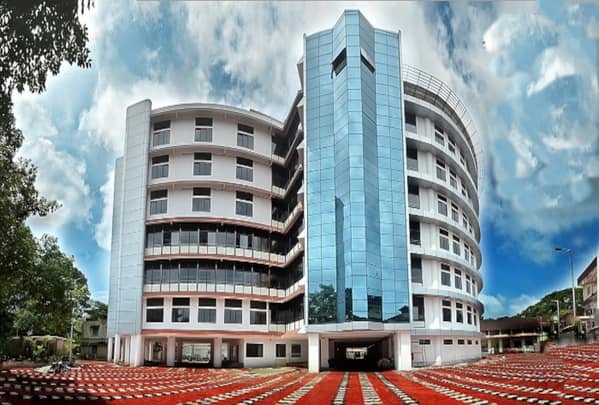
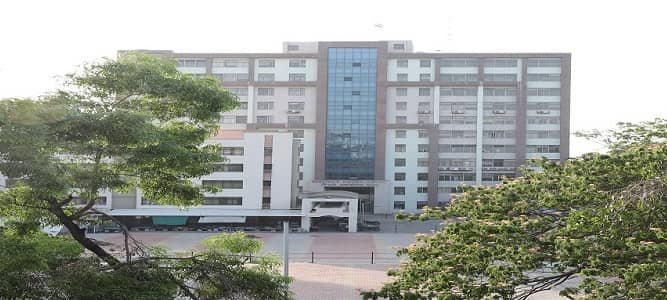
The District Court of Patna — the apex trial court for the Patna Judgeship in the state of Bihar, located in the capital city of Patna on the southern bank of the mighty Ganges — is one of India’s oldest, most historically significant, and institutionally distinguished district courts. According to L.S.S. O’Malley’s Bihar and Orissa District Gazetteers (revised edition 1924), the new district of Patna came into creation in the year 1825 with concurrent boundaries for revenue and police purposes, and the first Magistrate of Patna was Charles Francis Grand. The Patna Judgeship appears to have come into existence between 1757 and 1783, which is evident from the fact that a judgment of the year 1783 is available in the District Judge’s Record Room of Patna Judgeship. This extraordinary antiquity — a district court whose record room contains judgments from 1783 — places the Patna District Court among the oldest continuously functioning judicial institutions in India.
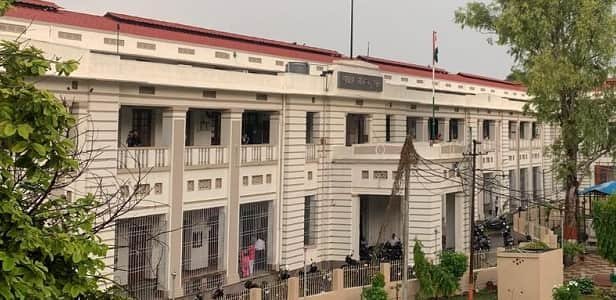
History
According to L.S.S. O’Malley’s Bihar and Orissa District Gazetteers (revised edition 1924), the new district of Patna came into creation in the year 1825 with concurrent boundaries for revenue and police purposes, consisting of the district to Patna until 1865. It also reveals that the first Magistrate of Patna was Charles Francis Grand.
The Patna Judgeship’s pre-independence history spans the full arc of British colonial judicial administration in Bihar — from the era when the region was part of the Bengal Presidency, through the separation of Bihar and Orissa as a distinct province in 1912, through the establishment of the Patna High Court in 1916, and through independence in 1947. The District Court Patna has functioned under the Patna High Court’s supervisory jurisdiction since the High Court was established in 1916 — making the relationship between these two institutions one of the oldest continuous superior court — district court institutional relationships in the entire Indian judicial system.
Nalanda (Biharsharif) was a Sub-Division under the Patna Judgeship and was created a new Judgeship in the year 1978 — demonstrating how the Patna Judgeship has historically been the parent institution from which new judgeships have been carved as Bihar’s population and administrative complexity grew.
Patna has a District Court and five sub-divisional courts at Patna City, Danapur, Masaurhi, Barh, and Paliganj — a geographic distribution that brings justice within accessible reach of every corner of Bihar’s capital district.
Structure and Composition
| Dimension | Detail |
| Judgeship origin | Between 1757–1783 — judgment of 1783 preserved in Record Room |
| Patna district created | 1825 — per O’Malley’s Bihar and Orissa District Gazetteers |
| First Magistrate of Patna | Charles Francis Grand |
| Location | Patna, Bihar — capital of the state |
| Sub-divisional courts | Patna City, Danapur, Masaurhi, Barh, and Paliganj |
| High Court supervision | Patna High Court |
| Nalanda carved out | 1978 — Nalanda (Biharsharif) became a new Judgeship |
| Court types | Civil, Criminal, Family, Special Courts |
| Digital infrastructure | e-Filing, virtual hearing facilities, eSewa Kendra |
| Legal aid | District Legal Services Authority, Patna — under NALSA |
| Record Room | Contains original judgments dating to 1783 |
Architecture and Digital Achievements
The Patna District Court complex in Patna city is a sprawling judicial campus that has evolved over more than two centuries from its colonial-era origins into a modern court complex serving Bihar’s capital district. The complex houses the Court of District and Sessions Judge — the highest criminal and highest civil court of the district — alongside Additional District and Sessions Judges, Civil Judges, Chief Judicial Magistrates, Additional Chief Judicial Magistrates, Judicial Magistrates, Family Courts, and Special Courts including POCSO courts and various statutory courts.
The Patna District Court’s digital transformation reflects the progressive investment in e-court infrastructure led by the Patna High Court’s pioneering example. Following the High Court’s distinction as the first High Court in India to commence studio-based video conference hearings on March 19, 2020, the district courts of Bihar — including the Patna District Court — were progressively equipped with video conferencing infrastructure that enables virtual hearings for remand proceedings and urgent applications even when physical attendance is impossible. The eSewa Kendra system, which provides citizens with case status information and facilitates online applications without requiring court visits, has been rolled out to district court level — reducing the burden on litigants and court staff alike.
The Patna District Court Record Room holds perhaps the most historically precious records of any district court in India — containing original judgments from as far back as 1783, which are the institutional foundation of the Patna Judgeship’s claim to over two and a half centuries of continuous judicial existence. These records represent not just institutional history but an invaluable archive of legal, social, and economic history across the full span of colonial and post-independence Bihar.
Frequently Asked Questions
Q: How old is the Patna Judgeship?
A: The Patna Judgeship appears to have come into existence between 1757 and 1783 — a judgment of 1783 is preserved in the District Judge’s Record Room.
Q: Who was the first Magistrate of Patna?
A: Charles Francis Grand, as revealed in O’Malley’s Bihar and Orissa District Gazetteers (revised edition 1924).
Q: When was the district of Patna formally created?
A: In the year 1825, with concurrent boundaries for revenue and police purposes.
Q: How many sub-divisional courts does Patna Judgeship have?
A: Five — at Patna City, Danapur, Masaurhi, Barh, and Paliganj.
Q: Which High Court supervises the Patna District Court?
A: The Patna High Court.
Q: When was Nalanda carved out from the Patna Judgeship?
A: In the year 1978 — Nalanda (Biharsharif) was separated and created as a new Judgeship.
Q: What makes the Patna District Court’s Record Room historically unique?
A: It contains original judgments dating to 1783 — making it one of the oldest judicial archives of any district court in India.
Q: What digital facilities are available at Patna District Court?
A: e-Filing by email, virtual hearing facilities, eSewa Kendra for case status and online applications, and the eCourts portal for online case management.