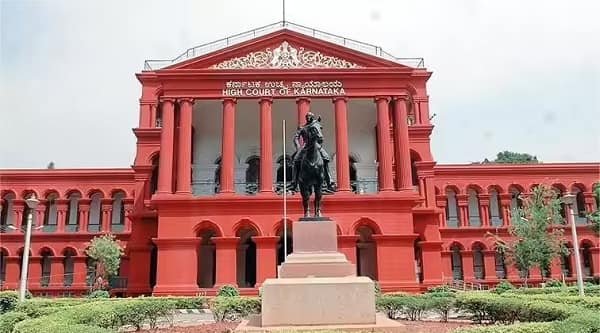
The High Court of Karnataka — seated at Bengaluru, the capital city of India’s Silicon Valley state — is one of India’s most historically layered and architecturally celebrated superior courts. Formerly known as the Mysore High Court, the court traces its origins to 1884 when the Chief Court of Mysore was created, making it one of India’s older superior courts outside the three Charter High Courts. It operates from the iconic Attara Kacheri — a magnificent red-painted brick building set against the lush greenery of Cubbon Park, directly opposite the Vidhana Soudha — and has the distinction of producing four Chief Justices of India, including the legendary Justice M.N. Venkatachaliah. With principal bench at Bengaluru and permanent benches at Hubballi-Dharwad and Kalaburagi, the Karnataka High Court serves over 70 million citizens across 31 districts from three strategically distributed seats.
History
The history of the Karnataka High Court can be traced to 1884, when the Chief Court of Mysore was created with three judges and designated as the highest court of appeal in the State of Mysore — the earlier name of Karnataka. In 1881, the office of the Chief Judge was created, and the court progressively expanded its jurisdiction to cover district courts, subordinate courts, and magistrate courts. In January 1929, the court was renamed as the High Court of Mysore by the order of Maharaja Krishnaraja Wodeyar III, and the Chief Judge was renamed the Chief Justice.
With the formation of the State of Karnataka through the States Reorganisation Act of 1956, the High Court of Mysore extended its jurisdiction to the entire reorganised state. The state was renamed Karnataka with effect from November 1, 1973, and the court accordingly became the High Court of Karnataka. The Golden Jubilee of the court since the reorganisation of the state was celebrated in 2006 — honouring former judges, senior advocates with 50 years of practice, and long-serving court employees in a series of ceremonies that reflected the institution’s deep pride in its heritage.
Structure and Composition
| Dimension | Detail |
| Origin | 1884 — Chief Court of Mysore |
| Renamed High Court of Mysore | January 1929 — by Maharaja Krishnaraja Wodeyar III |
| Renamed Karnataka High Court | November 1, 1973 |
| Principal Bench | Bengaluru — Attara Kacheri |
| Hubballi-Dharwad Bench | Operational August 24, 2013 — inaugurated July 2008 as circuit |
| Kalaburagi Bench | Operational August 31, 2013 |
| Sanctioned judge strength | 62 judges (47 Permanent + 15 Additional) |
| Working strength (2025) | Approximately 48 judges |
| Jurisdiction | Entire state of Karnataka — 31 districts |
| Chief Justices of India produced | 4 — including Justice M.N. Venkatachaliah |
| Supreme Court judges produced | At least 13 |
Architecture — The Attara Kacheri
The Karnataka High Court functions from the Attara Kacheri — a name meaning Eighteen Offices in Kannada — a stunning red-painted brick building set on the lush, sprawling lawns of Cubbon Park in the heart of Bengaluru. Built in 1864-1868, it stands directly opposite the Vidhana Soudha — the seat of Karnataka’s legislature — and the road between these two pillars of democracy is aptly named Ambedkar Veedhi, clearly separating the executive from the judiciary in both name and symbolism.
In 1982, there was a proposal to demolish this structure. In a remarkable act of civic intervention — itself historically significant in the Karnataka High Court’s history — a public interest litigation was filed to save the old building from demolition. The case was heard in the very building that was proposed for demolition, and ultimately the Supreme Court of India ordered the state government to stop the demolition. The building survives today as one of Bengaluru’s most beloved colonial-era architectural landmarks, with a museum inaugurated in 2006 housing artifacts and antiques of historical judicial significance.
Frequently Asked Questions
Q: When was the Karnataka High Court originally established?
A: 1884 — as the Chief Court of Mysore.
Q: Where is the principal seat located?
A: Bengaluru — at the Attara Kacheri building opposite Vidhana Soudha.
Q: What does Attara Kacheri mean?
A: Eighteen Offices in Kannada — the historic name of the High Court building.
Q: What is the sanctioned judge strength?
A: 62 judges — 47 permanent and 15 additional.
Q: Has the Karnataka High Court produced Chief Justices of India?
A: Yes — four Chief Justices of India, including Justice M.N. Venkatachaliah.
Q: When were the permanent benches at Dharwad and Kalaburagi established?
A: Both became operational in August 2013 — Hubballi-Dharwad on August 24 and Kalaburagi on August 31.
Q: What is the famous PIL connected to the court building?
A: In 1982, a PIL was filed — the first in the Karnataka High Court’s history — to save the Attara Kacheri building from demolition. The Supreme Court ultimately preserved it.