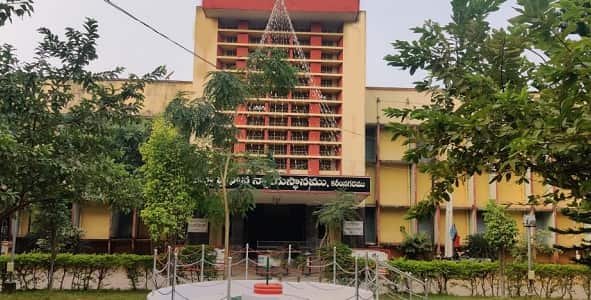
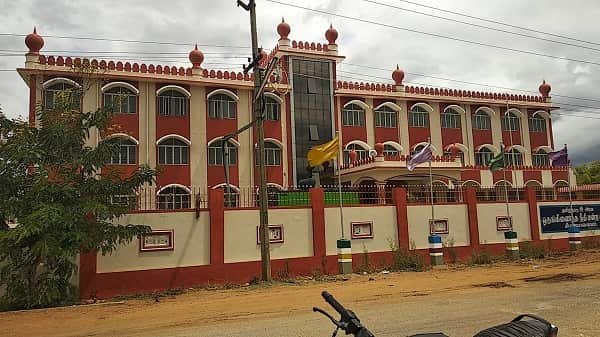
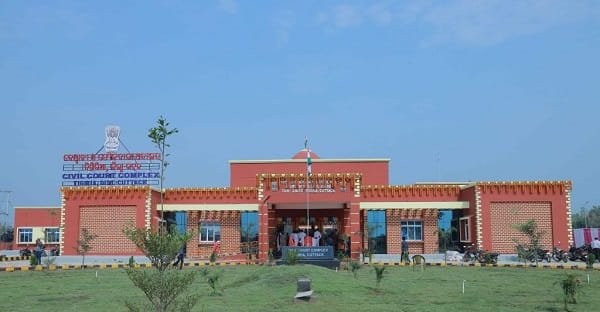
The District Court Cuttack — the apex trial court for the Cuttack Judgeship in the state of Odisha — serves one of India’s most historically magnificent cities, a millennium-old capital that has witnessed the rise and fall of successive empires across eleven centuries. The Judgeship has its headquarters in the City of Cuttack, which is known for its own history. The city was established way back in 989 AD and remained the capital of the state during the regime of so many rulers for centuries. The capital of modern Odisha was shifted to Bhubaneswar in the year 1948. Placed in the delta region of the rivers Mahanadi and Kathajodi, this millennium city was chosen as the safest military zone during the reign of so many kings of the past. The place was given the unique name Cuttack, probably because of its unparalleled character — this word is derived from the Sanskrit word Katak, which means a place established to defend military attacks. Under the supervision of the Orissa High Court — also seated in Cuttack, making the city simultaneously Odisha’s commercial, cultural, and judicial capital — the District Court Cuttack represents a uniquely layered judicial institution.
History
The present legal system is mainly the contribution of the British, who came in the name of the East India Company and over time took over the administration of the country. History says that the administration in Odisha was under two separate sets, popularly known as Gadajat and Moghulbandi. Odisha was part of the Bengal Presidency till the early part of 1912 and subsequently, with the State of Bihar, became a province till it assumed full-fledged statehood on April 1, 1936. As the records reveal, the first Judgeship of Cuttack started to operate at Cuttack and covered a huge area coming under the Revenue Districts of Cuttack, Balasore, and Puri as well as the Princely State of Dhenkanal in the same year 1936.
The Cuttack Judgeship underwent progressive reorganisation over subsequent decades — Puri and Balasore received their own Judgeships and the jurisdiction was progressively rationalised. Subsequently, the Cuttack Judgeship was confined to the Revenue District of Cuttack and Dhenkanal till 1977, when the Judgeship of Dhenkanal got separated. The Judgeship of Cuttack extended to the Revenue Districts of Cuttack, Kendrapara, Jajpur, and Jagatsinghpur from the year 1977. On June 26 and June 28, 2012, Kendrapara and Jajpur became separate Judgeships respectively. At present, Cuttack Judgeship consists of Cuttack Revenue District only.
Cuttack’s broader civilisational history gives the court’s setting an extraordinary depth — the city served as capital under the Ganga dynasty, the Gajapati dynasty, the Mughals under Shah Jahan’s Orissa Subah, the Maratha Empire that described its territorial extent as Attock te Cuttack, and the British who occupied it in 1803 and made it the capital of the Odisha division in 1816. It is also the birthplace of Netaji Subhas Chandra Bose — one of India’s greatest freedom fighters.
Structure and Composition
| Dimension | Detail |
| City established | 989 AD — Millennium City of Odisha |
| City name origin | Sanskrit Katak — place established to defend military attacks |
| First Judgeship of Cuttack | 1936 — covered Cuttack, Balasore, Puri + Princely State of Dhenkanal |
| Dhenkanal separated | 1977 |
| Kendrapara became separate Judgeship | June 26, 2012 |
| Jajpur became separate Judgeship | June 28, 2012 |
| Current jurisdiction | Cuttack Revenue District only |
| Location | Cuttack, Odisha — judicial capital of the state |
| High Court supervision | Orissa High Court, Cuttack |
| Court types | District and Sessions Court, Civil Courts, Criminal Courts, POCSO, Family Courts, VWDC |
| Special facility | Vulnerable Witness Deposition Centre (VWDC) |
| Digital services | eCourts Mission Mode — e-filing rules 2024, video conferencing rules 2020, live streaming rules 2021 |
| Museum of Justice | Located at Killa Fort (Barabati Fort), Cuttack |
Architecture — The Museum of Justice at Barabati Fort
The Cuttack District Court’s most historically remarkable associated structure is the Museum of Justice at Killa Fort — the ancient Barabati Fort that has stood in the heart of Cuttack since the 10th century as the physical embodiment of the city’s identity as Katak, the military defensive settlement. The Museum of Justice — established and maintained by the Orissa High Court at this historic fortification — is one of India’s most culturally resonant judicial museums, placing legal heritage within the physical remains of a medieval fort whose earthen mounds, moat, and gate represent over a millennium of Odia architectural and military history. The court has also established a Vulnerable Witness Deposition Centre, demonstrating its commitment to victim-sensitive justice delivery for Cuttack’s litigants.
Frequently Asked Questions
Q: When was Cuttack established?
A: 989 AD — making it a Millennium City over 1,000 years old.
Q: What does the name Cuttack mean?
A: It is derived from the Sanskrit word Katak, meaning a place established to defend military attacks.
Q: When did the first Judgeship of Cuttack start?
A: 1936 — covering Cuttack, Balasore, Puri and Dhenkanal Princely State.
Q: What is the current jurisdiction of the Cuttack Judgeship?
A: Only the Cuttack Revenue District — after Kendrapara, Jajpur, and Jagatsinghpur became separate Judgeships.
Q: Which High Court supervises the Cuttack District Court?
A: The Orissa High Court — also seated in Cuttack, making the city both the judicial capital and commercial hub of Odisha.
Q: What is the Museum of Justice?
A: A judicial heritage museum established by the Orissa High Court at the historic Barabati Fort (Killa Fort) in Cuttack.
Q: What is the birthplace claim associated with Cuttack?
A: Cuttack is the birthplace of Netaji Subhas Chandra Bose — one of India’s greatest freedom fighters.