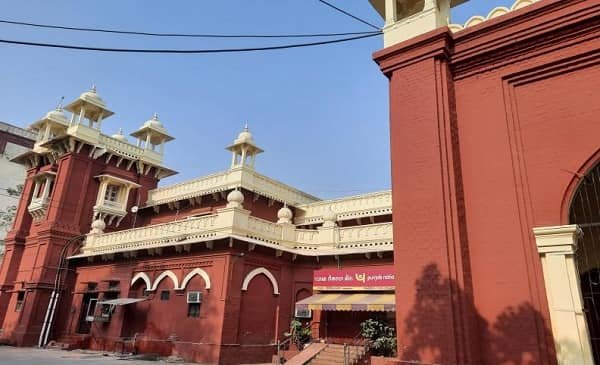
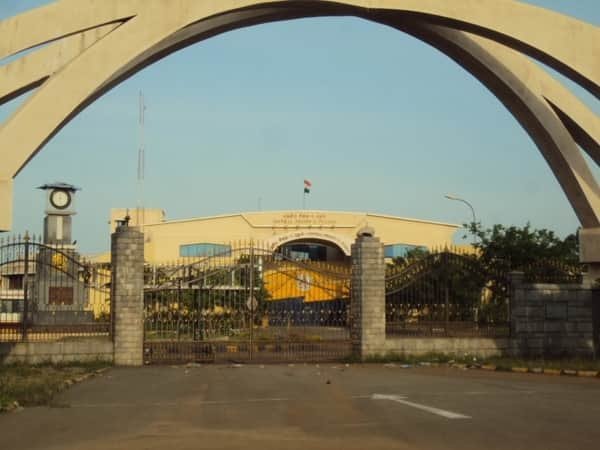
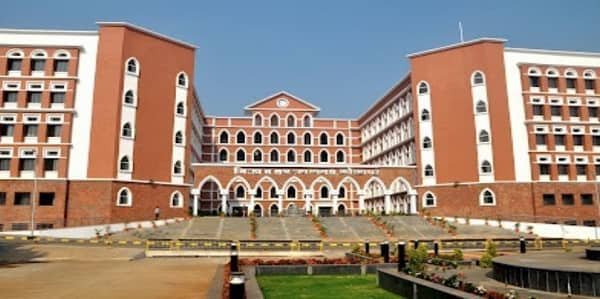
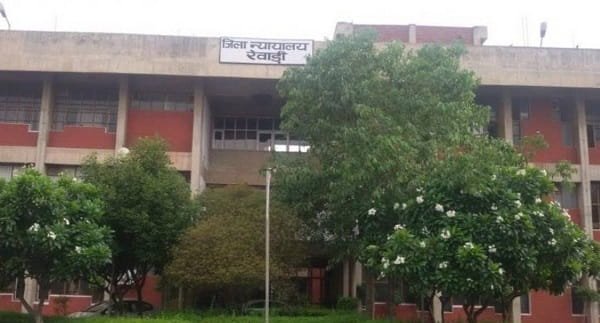
The District Court Rewari — the apex trial court for the Rewari Sessions Division in the state of Haryana — is a relatively young but institutionally significant district court serving a city whose mythological roots in the era of the Kauravs and Pandavs give it one of Haryana’s most fascinating origin stories. Rewari District came into existence on November 1, 1989, carved out of the areas which were previously parts of Gurgaon and Mohindergarh districts. Rewari is an old city, popularly known as the Brass City. It is situated at a distance of 82 kilometres from Delhi in its south-west. Under the supervision of the Punjab and Haryana High Court at Chandigarh, the Rewari District Court has grown from its pre-Sessions Division status — when the district was part of the Narnaul Sessions Division — into an independent judicial institution serving one of Haryana’s most strategically located districts, bounded by Jhajjar, Mohindergarh, and Gurgaon districts within the state and Alwar district of Rajasthan to the south.
History
It is believed that there was a King named Rewat at the time of Kauravs and Pandavs. He had a daughter named Rewati whom the King used to address as Rewa. In her name the King founded a city named Rewa wadi. Rewa was later married with Balram, the elder brother of Lord Krishna, and the city Rewa wadi was given by the King as dowry in her marriage. In the course of time, city Rewa wadi came to be known as Rewari.
The modern administrative history of Rewari is equally rich. The land of Rewari is also called Veer Bhumi because people of Rewari feel pride in serving the Indian Army. Rewari’s contribution to India’s first war of independence in 1857 is documented — Rao Tula Ram and Krishan Gopal were two warriors of this area who fought aggressively against the British rulers. Honble Sir Shadi Lal, who adorned the seat of Chief Justice of High Court of Judicature at Lahore from 1920 to 1934 and Member of Judicial Committee, Privy Council, London from 1934 to 1938, hailed from this place. This extraordinary legal legacy — a Chief Justice of the Lahore High Court and Member of the Privy Council’s Judicial Committee born in Rewari — gives the district a distinguished legal heritage that far exceeds its modest geographic size.
Sessions Division at Rewari started functioning on May 9, 2005. Earlier, Rewari district was a part of Narnaul Sessions Division. Sub-divisional court infrastructure expanded progressively — the court of Additional Civil Judge (Senior Division) at Kosli sub-division was inaugurated on October 22, 2005, by Justice D.K. Jain, then Chief Justice of the Punjab and Haryana High Court and thereafter a Judge of the Supreme Court of India. The court at Bawal sub-division was established and inaugurated on May 6, 2017.
Structure and Composition
| Dimension | Detail |
| District formed | November 1, 1989 — carved from Gurgaon and Mohindergarh districts |
| Sessions Division started | May 9, 2005 |
| Earlier Sessions Division | Part of Narnaul Sessions Division before 2005 |
| Location | District Court Complex, Rewari, Haryana — 123401 |
| Sub-divisions | Bawal and Kosli |
| Tehsils | Rewari, Kosli, and Bawal |
| High Court supervision | Punjab and Haryana High Court, Chandigarh |
| Kosli sub-court inauguration | October 22, 2005 — by CJ Justice D.K. Jain, Punjab and Haryana HC |
| Bawal sub-court inauguration | May 6, 2017 |
| Bar Association strength | 1,475 members (Rewari) + 163 members (Kosli) |
| Special courts | Permanent Lok Adalat and Samjhauta Sadan functioning at Rewari |
| Legal heritage | Sir Shadi Lal — CJ Lahore HC (1920–1934) + Privy Council (1934–1938) |
| Digital services | eCourts Mission Mode — e-filing, CIS, SMS alerts, DLSA QR code for cost deposit |
Architecture and Civic Identity
The Rewari District Court complex serves a district whose civic identity is built on the twin pillars of military service and brass craftsmanship. Rewari district consists of two sub-divisions — Bawal and Kosli — three tehsils: Rewari, Kosli, and Bawal, and five blocks named Rewari, Jatusana, Khol, Bawal, and Nahar. The Permanent Lok Adalat and Samjhauta Sadan — a dedicated alternative dispute resolution court — function within the judicial complex, providing litigants with mediation and conciliation pathways alongside formal court proceedings. The District Legal Services Authority has implemented QR code-based cost deposit through the SBCollect platform — allowing litigants to pay court costs digitally without physical cash transactions, a technology-enabled convenience that reflects the eCourts Mission Mode Project’s digital-first justice delivery approach.
Frequently Asked Questions
Q: When did the Rewari Sessions Division start functioning?
A: May 9, 2005.
Q: When was Rewari district formed?
A: November 1, 1989 — carved out from Gurgaon and Mohindergarh districts.
Q: What is the mythological origin of Rewari’s name?
A: King Rewat founded a city named Rewa wadi after his daughter Rewati. Over time it became Rewari. Rewati was married to Balram, the elder brother of Lord Krishna.
Q: What is Rewari’s famous legal legacy?
A: Sir Shadi Lal — born in Rewari — served as Chief Justice of the Lahore High Court from 1920 to 1934 and as a Member of the Judicial Committee of the Privy Council, London from 1934 to 1938.
Q: Which High Court supervises the Rewari District Court?
A: The Punjab and Haryana High Court, Chandigarh.
Q: What are the two sub-divisions under the Rewari Sessions Division?
A: Bawal and Kosli.
Q: What alternative dispute resolution facility exists at Rewari?
A: The Permanent Lok Adalat and Samjhauta Sadan — functioning within the Rewari judicial complex.