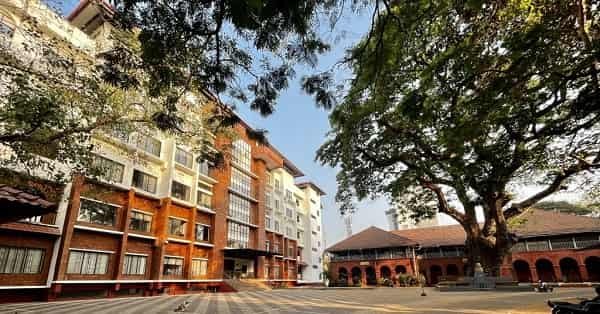
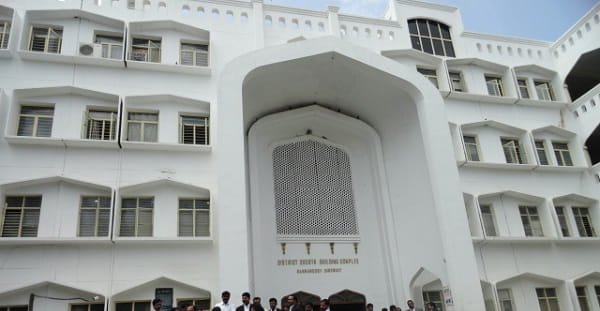
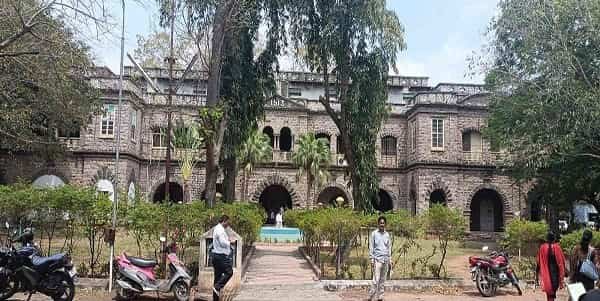
The District Court Guntur — the apex trial court for Guntur district in the state of Andhra Pradesh — is one of the most historically significant, geographically expansive, and institutionally complex district courts in peninsular India. Established in the year 1905, the Guntur District Court serves a district with a deeply layered history — one of the oldest inhabited regions of the Deccan plateau, home to the ancient Satavahana dynasty’s influence, the medieval Reddy kings, and the British colonial administration that formally constituted the modern Guntur district on October 1, 1904, just one year before the court itself was established. With 65 courts distributed across 18 court complexes spanning the entire geographic extent of the district, the Guntur District Court operates one of the most geographically distributed judicial infrastructure networks of any district court in Andhra Pradesh, reflecting both the district’s large area and the diversity of its population’s access requirements. Under the supervision of the High Court for the State of Andhra Pradesh at Amaravati — the capital located within Guntur district itself — the court is uniquely proximate to the state’s apex judicial institution.
History
The history of Guntur as an administrative unit carries considerable complexity and transformation. Prior to 1859, there was a Guntur District with its headquarters at Guntur but with a different territorial jurisdiction. In 1859, the district was abolished and divided between Machilipatnam and Rajahmundry districts — which were subsequently renamed as Krishna and Godavari districts respectively. Guntur’s absence from the administrative map lasted 45 years.
On October 1, 1904, Guntur district was constituted as a separate independent district once more — formed from the areas of the talukas of Tenali, Bapatla, Guntur, Sattenapalli, Narasaraopet, Vinukonda, and Palnadu from the old Krishna district, along with the Ongole taluk from Nellore district. The District Court, Guntur was established in the following year, 1905, shortly after the district’s reconstitution.
The district’s territorial extent underwent further change in February 1970 — when a new district was formed with Ongole as headquarters, parts of Bapatla and Narasaraopet talukas and the whole of Ongole taluk were transferred to the new Prakasam District. This left Guntur district with eight talukas: Guntur, Sattenapalli, Tenali, Repalle, Bapatla, Narasaraopet, Vinukonda, and Palnadu.
Guntur district carries extraordinary historical and cultural significance — it is home to Mangalagiri, one of the eight important Mahakshetrams of sacred significance in India, where Lord Vishnu is believed to have manifested himself. The district houses Nagarjunasagar Dam — the world’s largest masonry dam — built across the River Krishna with a storage capacity of nearly 11,472 million cubic metres and a height of 150 metres, with a 16-kilometre length. The Kondaveedu Fort, built by the Reddy kings in the 13th century, stands 17 miles from Guntur city as a major heritage landmark.
Structure and Composition
| Dimension | Detail |
| District Court established | 1905 |
| Guntur district constituted | October 1, 1904 — from Krishna and Nellore districts |
| Earlier dissolution | 1859 — district abolished, revived 1904 |
| Prakasam District carved out | February 1970 — parts of Bapatla, Narasaraopet, and Ongole transferred |
| Current talukas | 8 — Guntur, Sattenapalli, Tenali, Repalle, Bapatla, Narasaraopet, Vinukonda, Palnadu |
| Total courts | 65 — 15 District Courts, 15 Senior Civil Judge Courts, 35 Junior Civil Judge Courts |
| Total court complexes | 18 — spread across the entire district |
| High Court supervision | High Court for the State of Andhra Pradesh, Amaravati |
| Unique HC proximity | Amaravati — the AP High Court seat — is within Guntur district |
| Historical identity | Satavahana dynasty influence — Nagarjunasagar Dam — Mangalagiri Mahakshetram |
| Digital services | eCourts Mission Mode — e-filing, virtual hearings, DLSA remote point coordination |
The 18 Court Complexes — Geographically Distributed Justice
The Guntur District Court’s 18 court complexes represent one of Andhra Pradesh’s most extensively distributed district judicial networks. The principal District Court Complex at Guntur serves as the administrative headquarters, supplemented by a Railway Court Complex at Guntur, and 16 additional court complexes distributed at Bapatla, Chilakaluripet, Gurazala, Macherla, Mangalagiri, Narasaraopet, Piduguralla, Ponnur, Repalle, Sattenapalli, Tenali, Vinukonda, and other locations — ensuring that every major taluka headquarters and sub-divisional town has proximate civil and criminal court access for its population without requiring long-distance travel to the district headquarters.
Mangalagiri — home to the sacred Panakala Lakshmi Narasimha temple, one of the Divya Desams of Vaishnavism — houses a dedicated Senior Civil Judge Court Complex within the district judicial network, reflecting the commercial and administrative growth of this temple town that is also the site of several capital city infrastructure projects under the Amaravati Capital City programme. The Railway Court Complex at Guntur city handles the specific category of cases arising from railway-related incidents and disputes — a specialised court that reflects Guntur’s position as a major railway junction in Andhra Pradesh.
Frequently Asked Questions
Q: When was the Guntur District Court established?
A: 1905 — one year after the reconstitution of Guntur district on October 1, 1904.
Q: When was the current Guntur district originally constituted?
A: October 1, 1904 — from the talukas of old Krishna and Nellore districts.
Q: How many courts and complexes function in the Guntur district?
A: 65 courts across 18 court complexes distributed throughout the district.
Q: What are the three court categories at Guntur?
A: 15 District Courts, 15 Senior Civil Judge Courts, and 35 Junior Civil Judge Courts.
Q: Which High Court supervises the Guntur District Court?
A: The High Court for the State of Andhra Pradesh — seated at Amaravati, which is itself located within Guntur district.
Q: When was Prakasam District carved out from Guntur?
A: February 1970 — taking parts of Bapatla, Narasaraopet talukas and the entire Ongole taluk.
Q: What is the historical significance of Mangalagiri?
A: One of the eight important Mahakshetrams of India — where Lord Vishnu is believed to have manifested, attracting millions of devotees annually.
Q: What is the Nagarjunasagar Dam’s significance in Guntur district?
A: It is the world’s largest masonry dam — 150 metres tall, 16 kilometres long — built across River Krishna with a storage capacity of nearly 11,472 million cubic metres.